56. What You Need to Know About Intermittent Fasting for Women Over 40, with Adrian Mamikonian
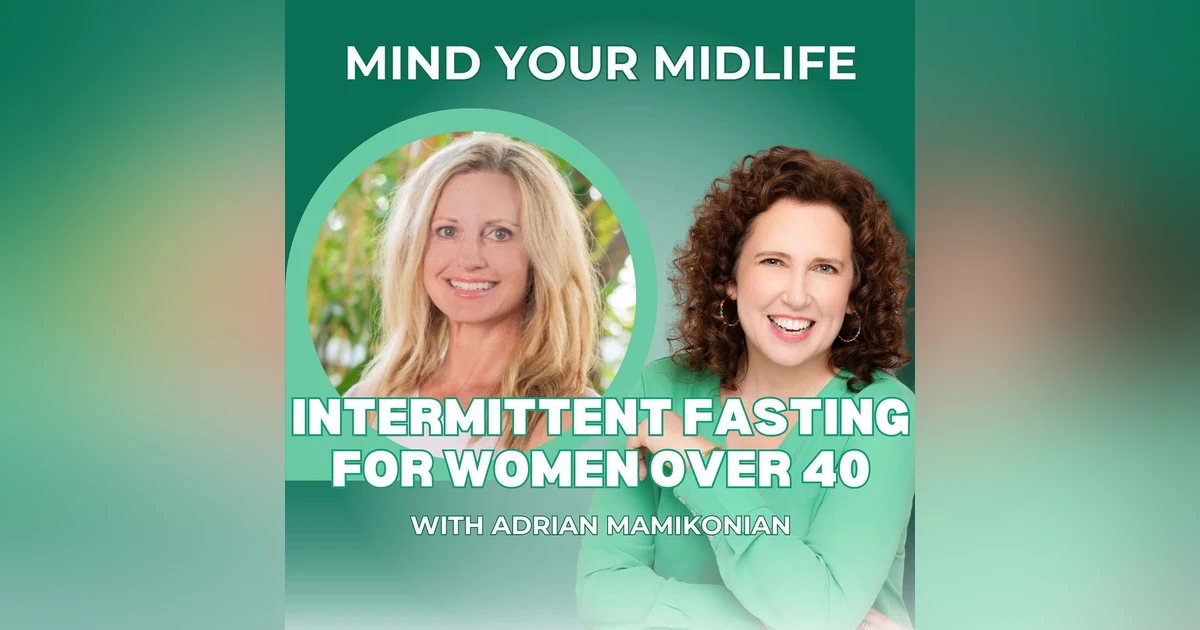


Intermittent fasting — it’s one of those topics that lights up every group chat. Is it healthy? Is it safe? Does it even work for women in midlife? In this episode, Cheryl sits down with Integrative Health Practitioner Adrian Mamikonian to get real about what intermittent fasting is and what it isn’t.
Spoiler: it’s not about deprivation or starving yourself — it’s about understanding how to support your hormones, gut health, and metabolism during this season of life.
Adrian shares how fasting can help regulate blood sugar, reduce bloating, and improve energy — when done the right way. She explains why your body needs both feasting and fasting, how to find the right eating window for your lifestyle, and why nutrition (especially protein!) has to come first.
In this episode, you’ll learn:
- What intermittent fasting really means — and why it’s not a diet.
- How fasting supports gut health, insulin sensitivity, and hormone balance.
- Why sleep, stress, and nutrition must come before fasting.
- How to break your fast for optimal energy and digestion.
- The truth about protein needs for women in midlife.
- Why lifting heavier weights (and eating more food) might actually boost your metabolism.
OMG Moment
Adrian reminds us that change doesn’t have to be drastic. Whether it’s fasting, lifting, or improving your nutrition, lasting progress comes from small, consistent steps — not all-or-nothing overhauls.
Take Action
- Join us in Mind Your Midlife on Patreon or Substack for Adrian’s 5-day meal plan and our bonus conversation about what to actually eat in a fasting window.
- Connect with Adrian on Instagram: @livingwellwithadrian or on her website
- Continue on this theme with Mind Your Midlife episodes on sleep and on hormone balance!
If you’ve ever tried intermittent fasting and felt awful, or if you’ve wonde
Text me to ask a question - I'll answer on the podcast!
Build Your Pitch with Ryan Cunningham: Go to www.cherylpfischer.com/buildyourpitch (or www.cherylpfischer.com/buildyourpitch2) to find out more and sign up! And use code GOLD10PERCENTOFF for 10% off!
🌸 Liked this episode? Share it with fellow Gen X women navigating hormone balance, an empty nest, and/or self-confidence!
🫶 Love this show? Leave a review to help more women over 50 find us.
💡Want menopause support, mindset shifts, or support with midlife transitions?
- Build a mindset for success with the private bonus episodes!
- Book a free Mindset Coaching / Intro Call: cherylpfischer.com/coaching
Let’s talk midlife body positivity, self-talk, and redefining aging for women — without the “midlife crisis” narrative. Every week I'm adding new success strategies for midlife women.
Connect with Cheryl, Midlife Coach: Instagram | LinkedIn | Website
00:00 - Welcome And Why Fasting Matters
02:16 - Defining Intermittent Fasting Clearly
04:16 - Choosing Windows To Fit Your Life
07:10 - Gut Health, Insulin, And Hormones
11:33 - Stress, Sleep, And Cortisol Context
15:07 - What Breaks A Fast And What Doesn’t
19:03 - Protein First And Women’s Needs
23:47 - Lifting Heavy And Building Muscle
26:44 - Who Should Modify Or Avoid Fasting
29:50 - Underfueling, Metabolism, And Set Points
33:44 - Sustainable Change And Next Steps
35:28 - Patreon Extras And Closing CTA
0:00 Intermittent fasting. I feel like I need to say that slowly to be careful. What a hot topic. Oh my goodness, when I mentioned to some friends that I was gonna be doing an episode about this, whew! Everything blew up. We all want to know. So today you're gonna find out. Let's talk about it. Welcome to Mind Your Midlife, your go-to resource for confidence and success, one thought at a time. Unlike most advice out there, we believe that simply telling you to believe in yourself or change your habits isn't enough to wake up excited about life or feel truly confident in your body.
0:41 Each week, you'll gain actionable strategies and oh my goodness, powerful insights to stop feeling stuck and start loving your midlife. This is the Mind Your Midlife podcast. I've known for some time that in order to have really ideal gut health, we need to give our gut, our digestive system, time, probably at night, to not only finish digesting whatever we've eaten that day, but also do a reset. And we're not really going to go into exactly what that reset is in this particular episode.
1:22 I need to do one about that too, but it needs to be a certain amount of time. And what I had heard was 12 hours was ideal. Now, unfortunately, I am a late dinner eater, and that happened because of going to the gym after work, kids' sports, all that stuff just over time. So my husband and I tend to eat dinner a little bit late. That being said, we could we could certainly have a certain window, whatever we want, and we could then eat breakfast at whatever time made sense for whatever this window was that we want. So I know we can handle it. And is that what intermittent fasting means?
2:03 Because I feel like there's there's research out there, there's people talking about it, making it sound very complicated, and you have to do it this way or you have to do it that way. So even though I knew a certain window of time, not eating was probably good, I really wanted to know a lot more. And I know that's the case for you too. So my guest today is Adrienne Mamakonian, and she specializes in empowering us, women over 40, to reclaim our vitality, to live life to the fullest. I'm on board with that, absolutely. She gives personalized guidance about living healthy, and a piece of that is intermittent fasting.
2:50 And so, welcome, Adrian. Thank you. It's so nice to be here. And I just I love this, all the conversations about midlife. And um, I'm so excited to chat today. I'm excited too. And as if you're listening, as you'll hear in a few minutes, I got so many people asking me questions about this topic. So I know we're gonna have a good conversation. We are diving into intermittent fasting today. And so initially, I think I'm just gonna say, first of all, tell us what that means, because I feel like it's a buzzword that we hear. Maybe we don't really know what it means, and then what's your experience with it?
3:30 Yeah, absolutely. And it is, I feel like, controversial right now in the market. You can kind of hear both ends, you know, of the spectrum in terms of opinions, and you might watch something and form an opinion just based on you know that one person. So I do think it's important to just like let's look at the research and and talk about what intermittent fasting really is. It's not something that is, you know, you have to be afraid of, it's not something that has to be extreme. Um, it's certainly not starving yourself or dieting. I think when people think of fasting, they think of really something very, very restrictive. And really all it is is an eating schedule.
4:11 So you're just picking a period of time in which you are consuming food. That doesn't even necessarily mean that you are reducing your calories. You're just picking a window in which you're eating them because I have many clients who, you know, have met their goal weight, are at their goal weight, and they want to maintain and they can still practice intermittent fasting as long as, and I tell all of my clients this, you get your nutrition in within that window. Because if you can't, then we need to extend it. So nutrition always comes first. We're not fasting, you know, at all costs, even if we feel horrible and our heart's racing and all of the other things, right? We really take a strategic approach to fasting.
4:55 And the purpose is really to have periods of digestive rest. And that's where all of the benefits come in with fasting. We want periods of feasting where we're eating and we're really building up those carbohydrates and fats and proteins, and periods where we are fasting to give our bodies that digestive rest. It's good for our gut, it's good for our brain, it's good for so many things, um, especially I'm, you know, in my opinion, in midlife. So I I am thinking that maybe the whole time this should have been called feasting and fasting, and then maybe people would be so much more excited about it. So the fasting is the window when you're not eating.
5:42 And is there is there a certain amount of time that that needs to be? Uh or is there kind of a sliding scale? Definitely a sliding scale, and there's different ways to do fasting depending on your goals, depending on your lifestyle. For many people, doing a 16-hour uh fast and an eight-hour eating window works very well for just your typical sort of American lifestyle. Um, but for some people it works better to not fast at all and then do a longer fast one day a week or two days a week. So it just depends what you're, you know, what you're looking to do, what your lifestyle is, you know, if you're doing shift work, if you get up at four o'clock in the morning to, you know, work out and then go to work, like you're not going to be able to last until 12 noon, you know, before you have something to eat.
6:33 So we really have to consider all of those factors when we come up with, which I do, you know, with my clients and come up with a window that really works for you. And just, you know, just starting off slow. I mean, if you're I mean, I when I started fasting, I was someone who I have to have my, you know, oatmeal or whatever, as soon as my feet hit the floor in the morning. I could not, you know, so for me it was a very gradual process and um in terms of introducing the fasting. Yeah. Okay, that makes sense to me. And it it seems like, and I I mean, I knew this a little bit before, but I'm gonna ask the question anyway. It seems like one of the really key benefits besides potentially losing weight is gut health.
7:17 So tell us a little bit more about why that is and how that works. Absolutely, yes. I mean, you know, I was experiencing bloating. I was on prescription acid reflux medication ever since I had for years and years and years after I was I had it when I was pregnant, and then I just never went away and I was never able to get rid of it. So that's one thing that just, I mean, it makes sense, right? If you're having periods where you're not eating, you're not having that constant acid, um, acid reflux, the the bloating dissipates because you're having those periods of digestive rest where your body is able to rest and repair those cells. It also causes our insulin to be more sensitive, which is what you know, we don't want insulin resistance, which leads to diabetes, which is those up and down and up and down of the blood sugar cycle.
8:08 So when we have, when our insulin is more sensitive, when we're more sensitive to insulin, I should say, we can absorb that, those carbohydrates, the glucose that's in our food more easily and keeping our blood sugar stable. So that's very helpful in terms of fat loss, but also, of course, gut health and um hormone health and you know, all of the other things. So that my brain is trying to understand it. So that's interesting because it feels to me like blood sugar would be less stable if we were eating less often, but you're kind of saying the opposite. Right. And I mean, not only that, but it it regulates our our hunger hormones, right?
8:50 The hormones that tell us we're hungry and the other hormone that tells us we're full, those are more regulated when you're just eating in that period of time because you're not having the constant up and down of your blood sugar. You're giving yourself that that time for repair and really almost mimicking it, although I mean, I'm no expert in ketosis or keto. I've never been successful at a keto diet ever in my life. But when we're intermittent fasting, we can sort of mimic that effect where it has a very calming effect on the nervous system. As long as, I feel like I need to put this big disclaimer, as long as you are, you know, not under a major stress.
9:32 You're sleeping okay, you have your nutrition in check. So those are very important things to consider when you know we're trying to get the the benefits of fasting, is it's it's not helpful if you are in a tailspin, you know. So that's one of the things that people talk about. Oh, midlife, it's fasting is really harmful because our cortisol goes up when we're fasting, and we don't want, you know, we don't want that cortisol spike. But I mean, our cortisol spikes every morning, right? Our cortisol spikes every day. To wake us up. Yeah, that's what gets us up and gets us moving in the morning. Um, and so that's okay.
10:13 Now, exercise is also a stressor, also increases cortisol. So there's lots of things in our day that increase cortisol, and fasting is one of them. So we don't want to be adding that on top of eating a lot of processed foods, not getting the proper macronutrients, not sleeping well, you know, if you're in the middle of a major, you know, life event, that is not the time really to introduce fasting. However, when you do it for a period of time, you really train your body to go into that fat-burning mode, which is relatively stable in terms of blood sugar. But if your body is in fight or flight and your nervous system is revved up, then yes, your your blood sugar and your cortisol are going to be affected by that.
11:03 Wow, that's really interesting. And and certainly in midlife, there's all this stuff going on. You're absolutely right about that. And in fact, today, on the day we're recording this, the episode that just came out of Mind Your Midlife is about sleep. And so I will link that in the show notes because that plus an episode from June or July with Dee Davidson about hot flashes and blood sugar. Both of them would be really well related to this conversation if you're listening. Yeah. Absolutely. So interesting. Maybe we need to fix the sleep and the stress initially, or at least be on that path. And then maybe this becomes an a good option.
11:43 Right. And I mean, it doesn't have to be one or the other, it can be together, right? So I mean, we want to be eating the right macronutrients and we can do that while simultaneously fasting and starting at the 12-12 fast because we all fast at night, right? We all fast while we're sleeping. So if, you know, but if you start with a 12-12 fast. So let's say you stop eating at 8 o'clock at night and you push your breakfast until eight o'clock in the morning. That's doable for most, you know, for most people. And that's still a fast. So let's start there. Let's really make sure you're getting your nutrients in. And I tell all of my new clients this when we start fasting in in my program, is I want to see your macros because I'm not going to permit like an extended fast until I see that you're getting in all of those nutrients because um we've got to have that, that's got to be a priority, you know.
12:39 And you know, the flip side is also true. So if people are like, oh, fasting is, you know, it's not working for me, it's making me feel horrible, and I can't, you know, we shouldn't be doing this and all this stuff. Well, like, let's look at these other lifestyle factors. Maybe it's not the fasting that's the issue. Maybe it's some of the other things, you know, about your overall health journey that we need to tweak some to make it doable and effective for you.
13:39 Yeah, that really makes sense. That really makes sense. And there's a reason to have to be working with someone to figure it out for sure. Yes, absolutely. Actually, one clarifying question for uh whoever is listening right now, when we say fasting, we're meaning that uh water is fine, but we're not eating actual food or uh is there anything else besides water that's okay? Yes. So what I tell my clients is less than 50 calories and no fiber. So you're not eating like half an apple. So for the purposes of fat loss and really most of the benefits that we want, the, you know, the brain function, you know, uh the digestive issues, the bloating, like all of those things.
14:25 We we don't have to be so extreme. If you're fasting for a medical condition, you know, that you're trying to improve, then you might have to be more strict. So I can have coffee in the morning, I can have a little something in my coffee. It's not gonna be coffee, mate. I'm sorry, to report if you if it has sugar, it will break your fast and that will send your blood sugar, you know. Uh you don't want to have the sugar and the caffeine and and do that while fasting. That's that is really gonna make you feel bad. So, you know, I have just I have either half and half. I we live in Europe, so our dairy is very, very good quality, so we can have the dairy here.
15:05 Um, so I have a little bit of whole milk or half and half, and you can put that in your coffee, or you know, there's all kinds of things out there that or or black if that's how you like it too. Right. Okay, okay. Green tea or something like that would probably work. Okay. Those are all fine, yes. And you can even, you know, in in my program, you know, once you've been my client for a long time, we might experience or experiment with some longer fasts, like maybe we do a 24-hour fast. And in that time, if you're starting to really feel like, oh, okay, like I really need some food, you can have a little bone broth. And that kind of helps too if you're really struggling to get through your fasting window and everything, you know, you've eaten enough the day before, you haven't had foods high in sugar, salt, and alcohol, you know, all those things.
15:52 Um, then you can kind of do that as you're easing into the fasting, your fasting program. It's giving me colonoscopy vibes, but I know that's not what we're talking about. The bone broth. But that's helpful actually. Maybe uh because I know that people have said to me, I've tried it and I I didn't have a great experience. I wonder if they were being too strict or they were going too hard at first or something like that. So I like your approach from that sense. Yeah, and I I think just again, it can't just be fasting. It's like I tried it and what? I tried it and I ate just salad and I didn't have enough protein, or I tried it and I had three margaritas.
16:33 And maybe I was like, what? I tried it and and what? Like tell me what your whole, you know, I need to know what does your whole day, what does your whole day look like? And that, and then I can kind of, you know, determine like, did you fast? So what happens sometimes is people will tell me, like, I fast, and then once I break my fast, I'm like, you know, I'm just inhaling the food because I'm so hungry. And what that tells me is something happened the day before that you were not set up for your fast today. You know, you didn't, you, you didn't eat enough yesterday, there wasn't enough protein, there wasn't enough healthy fats, you didn't sleep well, you didn't get enough hydration, you know, there's so many factors at play.
17:14 And it's not about being perfect, but if it's really, if you're really feeling like this is not something that I can do, there's something else that you know that we need to tweak. Okay. Okay. I like that perspective. Yeah. Okay. So I, as I often do, I put the word out to my Patreon community and ask them, what would you ask if you were interviewing Adrian? And so we're we're headed into some questions that I know they really want to know the answer to. So Karen and Jill asked questions both about protein. And the idea being, is it true that you should break your fast with protein? And if so, then what would be a good choice? And then also, I think this was Jill was saying, don't they look more at men for these studies about intermittent fasting?
18:03 And and women then end up not getting enough protein if they do this. So it seems like there's some kind of misinformation out there. But what do you think? Yes, for sure. So the first question about breaking your fast with protein, yes, absolutely. We want to be breaking our fast with really a combination of healthy proteins, fats, and carbs, right? Um, so we really want a variety of those macronutrients, um, but protein being the most important. And I would suggest I typically break my fast with a some sort of smoothie. So I like to do some berries because they're very low glycemic index. I do some coconut water because it's a natural electrolyte.
18:45 And when we're fasting, you know, we're we want to make sure we keep our hydration up. And then I add a little bit of almond butter and then my supplements, you know, the creatine, the protein powder. And that's a great, well-rounded, easy to digest. That's also key. You want something easy to digest, kind of first breakfast meal. And then a couple hours later, it's like, okay, I've had my first meal. I've, you know, my blood sugar feels stable. Then I'm gonna have, you know, either a salad with protein or I might just have a big, I'm I'm a big, like, I love a big snack. So I might just make a plate with some, you know, turkey or chicken and hummus and veggies and and things like that. And then I have dinner, of course, with my family.
19:27 So that's kind of you know how I like to plan my day, but it's really, you know, it's really up to you. I can't eat eggs, but eggs is a great way to break your fast too. That's another really kind of well-rounded protein. And then the other question about the I couldn't tell if that was about the the fasting or the um protein, but the the protein for women, the amount is really the minimum minimum for women should be 100 grams a day. And then of course it depends on your weight, but it's about 0.8 to one gram per pound of body weight, is how much protein that we're wanting to get in per day.
20:07 So that's a lot, yeah. And and so her Jill's question kind of makes me think that maybe intermittent fasting has been presented a little bit differently, like you have to you have to eat less, you have to you know take things out of your diet and that sort of thing, because otherwise, I mean it just seemed like she was saying, I feel like I'm not gonna get enough protein. I feel like women doing this wouldn't get enough protein. Yes. And so that's kind of interesting. Uh-huh. Yeah. And I think again, it's you we have to make nutrition the priority. So, I mean, when I'm eating in this eight-hour window, it's like I'm I've got to get it all in.
20:49 So that's why a smoothie is a great addition. We've got to be conscious of the types of proteins that we're eating. And when I teach my clients about macronutrients, like protein or sorry, peanut butter is not a protein, right? People often think like peanut butter and cheese are really good protein sources, but actually they're more of a fat. Fat has twice the calories as protein and carbs per gram. So when you're you'd have to eat a lot of peanut butter, right, to get the amount of protein that you need, and you're going to be way over on your calories. So we've got to be really strategic in what types of foods that we're eating within that window.
21:29 Because if we're just like not looking at anything but the protein, you could be way in a um in a calorie surplus because it could be more fat. So, like if you eat a flank steak, that's way different than a ribeye, right? It's gonna a ribeye is gonna have less protein and more fat because that's what it's uh consists of. But a flank steak is gonna be more lean. So we want to be thinking about those things when we're, you know, when we're choosing our nutrition for the day and and just being, you know, very, very conscious of it. So it takes a while, you know. It's not, I mean, if you're not gonna, you know, build up your protein that much on day one, but when you're combining these strategies with strength training, with high intensity interval workouts, and we're we're not just focused on the fasting.
22:20 It's like, okay, today we're fasting and we're doing a low carb macro day, still getting our protein in, and we're combining that with high-intensity interval training for 15 to 20 minutes maximum. And then we are reducing our glycogen stores. So then the next day we can do the same thing, but add in those carbohydrates back and reduce the fats, and all of that is going to build up your muscle, which is what determines your metabolism. It is the number one thing. So, aging, I mean, aging contributes, of course, but one of the reasons aging contributes to your metabolism reducing is because we lose muscle when we age.
23:00 So we've got to keep up that muscle strength. And once we get the muscle, I mean, you're gonna have the appetite. I mean, my client's eight, you know, your metabolism is gonna raise, you can afford more calories, and then you're gonna be able to get that protein in and really have a lot more energy. I I appreciate you saying this about aging because I have a family member who's going through a chronic disease where she was told you're gonna lose even more muscle and you better keep exercising, even just to maintain. But even for those of us that are healthy, it does get more difficult to build and maintain muscle as we get older. And while I hate to make statements like that, it's just true.
23:43 And so we need to be a little bit more focused on that. Absolutely, more diligent, lifting heavy, not five pounds, you know, until you fatigue. I would say you should be doing 10 reps, 10 reps maximum until you're fatigued. And if you can do 15 to 20 reps of a certain exercise, it's too light. You need to go heavier. So, which is kind of nice because it's it doesn't take so much time. You know, you don't have to sit there for half an hour, you know, doing the bicep curls. You need three to four sets, eight to ten reps, do it till you know, to fatigue, and you know, you can be in and out of the gym or your you know, home gym or whatever.
24:28 And I mean, it should not take you more than 30 minutes, really. That's a great point. I like that. Yeah. Because we're all busy. We quick is good. Quick is good, and multitasking is good too. If I can do if I can listen to a podcast or do something at the same time, even better. I agree. I agree. We can listen to this podcast. Okay. Pick up some weights. Exactly, exactly. Okay, so let's see. Lisa also had a question, and she was asking, are there certain types of body compositions who would be better suited to doing intermittent fasting, or certain people who maybe shouldn't try it?
25:09 Yeah, that's a great question. I would say, um, well, of course, as we mentioned earlier, we've got to make sure we have it's the whole package, the nutrition, the exercise. So if you're right now like eating fast food or eating a lot of processed foods and you want to introduce fasting, I would not recommend that. You have to do it in combination with diet, you know, nutrition, macronutrients. I can't say it enough. If you have a like hypothyroidism, some sort of immune condition, those are things that we can talk about together. I also have my integrative health practitioner certification, so I can help you through some of those things. Maybe it's a good fit for you, maybe it's not, maybe we don't try that at first, maybe we introduce it later or do a um a fasting window that's a little bit longer or a eating window that's a little bit longer, maybe a 12-12 or something like that.
26:01 And then if you are a if you are an athlete like really training for, you know, something big, you just want to be sure that you're getting all of your nutrition in and having time to get all of your nutrition in. So, and then of course, I mean, if you're growing, my child, I have teenagers, and I'm like, you're, you know, I am skipping breakfast, but you're growing and you know, you need to be eating in the morning. And so um, we talk about that a lot in my family because you know, they see me fasting in the morning, and I don't want them to think it's a diet. And so I talk to them about why I fast and how it helps me and why it's important that they eat breakfast because they're growing and they need, you know, they need that that support.
26:46 So I'm glad you're saying this because I'm gonna call out some listeners right now because over the past few weeks, for some reason, I have had conversations with multiple people in multiple different situations about how they just I'm doing air quotes, don't do breakfast. It's so kind, and I'm like coming across all these people all at once, and I guess this is why, so that we could talk about this. The problem is, what I'm hearing from you is they usually do do coffee or whatever. So I need if I'm gonna have coffee, which I don't have every morning, I need to eat something, otherwise, it bothers my stomach. And I suspect that that's probably true of a lot of people.
27:27 So this whole I don't do breakfast thing strikes me as not a great habit. Yeah, I mean, I think I, you know, I I don't skip breakfast, I just delay it, right? I mean, we have it later in the morning. There's nothing wrong with breakfast. I mean, that's what it means, right? Break fast. So there's nothing, you know, there's nothing wrong with but saying I don't do breakfast and then you're like drinking Diet Coke all day until three in the afternoon when you, you know, crash into you know the cookie bowl or whatever, you know, it's not it's not the answer. So um it's you know, it's tempting to say, like, oh well, if I fast for 16 hours, maybe I should fast for why don't I fast for 20 hours, you know.
28:12 We've we have to have that feasting and fasting the balance. Yeah. And if we don't give our bodies enough calories, that becomes a problem, doesn't it? Yes. So if we're not, if you're consistently, and which is why I'm so passionate, I should say, with my clients about getting enough nutrition, because it's such a different mindset for women, right? We're like we always want to be eating less, like the least amount possible. I mean, it seems like, especially if you're trying to lose weight, or you know, you've maybe been trying for a long time and you just think you should just be eating the least amount possible. But the problem with that is one, you're not gonna be moving as much. So this is something people I feel like is not talked about really enough, is that if we're not, if you're not eating enough, you're going to naturally be moving a lot less.
28:57 It might not, you might not even notice it, but food is energy. And if you don't have energy, you're not gonna be just naturally moving, fidgeting, moving around the house, doing things because you're not gonna have the energy. So it it kind of cancels itself out there. But the other thing that happens if you do that for a long period of time is well, one, you're gonna lose muscle, your metabolism's gonna go down, right? So metabolism is just that number that of calories that you can eat and maintain your weight, right? So if it's 15, let's just say for mass sake, it's 1500. So if you are, you know, say, okay, I'm gonna eat at 1300 because I want to lose weight, and then you do that for weeks and weeks and weeks, then 1300 is your new set point.
29:40 Ah I mean, how low can how low can you go? I mean, you know, it's like then it's like, oh my gosh, I want to lose more weight. Now I've got to eat a thousand calories, and you can't even hardly, you know, keep your head up during the day because you're exhausted. So my goal is always we want, I want my clients eating the most. I want you eating the most you possibly can because I want you to have the energy to serve all these people, right? I mean, teenagers who've got kids going to college, maybe they're even older than that. Um, and you're we're all, you know, these new phases of life. We've got parents that are aging, we've got, you know, it's a it's a lot going on during this stage of life, and we need the energy to be there for the people around us.
30:23 And we can't do that on 1200 calories. It's like it's such a mindset shift for my clients who come in just saying, like, tell me how much, you know, if I have to eat 1200 calories, I'll eat it. I'm like, actually. And want you to eat even more, and then we're going to build up muscle to support that metabolism. I really love that. It's you explain that really simply and clearly. And I think that's probably going to hit some people because we do try to diet and we try to deprive ourselves. And I don't because I get wacky in the head when I try to deprive myself. But I know people do. And it doesn't generally end up working, or or we kind of yo-yo back the other way or something like that.
31:07 Yeah. Yes. It never you will, I mean, you can white knuckle it through, you know, whatever diet. I mean, you know, there's a million out there for a few days, but it it will never work long term. Like the happy hour, the girls' night, the vacation, it will always come at some point. And then it's like, then what do you do? You have to find a way where all foods that you enjoy and that make you feel good fit. We can't have this where you can't have this. Okay, on this program you can have this, but you can't have this. Everything has to be allowed all the time. And I'm the same way when I feed my kids. Everything is allowed all the time. We can't be like, you can't have this, you can't have this, because then what do they do?
31:50 They, you know, or at least my daughter will, you know, find her way into the into the closet and and you know, eat it all because it's like the forbidden, the forbidden thing. Absolutely. Absolutely. I I like that we've taken kind of a holistic perspective with this. I think this is really going to be helpful. So uh while I am making sure not to forget, tell us where can people connect with you or find out more about what you do. Yeah, so Instagram is really the best. I have tried, I've had a couple websites, but really Instagram is where I'm the most active. You can message me. I always respond. It's always me responding. Um, you can kind of see what I have to offer there.
32:32 You can go to my link, and then I can, and then I can give you the link also to, you know, to the program that I coach, and we can start there. So I do a group program where I teach you intermittent fasting. I teach you, um, I'll set up your personalized macros for you, your protein, fats, and carbs, how much you need to be eating every day. And so I can coach you through all that. That really is the foundation of any health program, right? I mean, the supplements, all that stuff comes later, but really I want all of my clients to have that foundation. And then if it's like, okay, I'm really still experiencing this or that, then we can go on to some of the integrative health things and I can work with you individually on that. Okay, that's great.
33:13 Yeah, and I will put that information in the show notes so that it's easy to find. And then let's wrap up with kind of honestly my favorite question because I am always excited to see what people say. Yeah. Somebody is exercising with their heavy weights, or they're driving the car and they're listening to this and they're thinking this is all good, but how am I going to remember it all? What's the one thing that is most important for somebody listening to remember about this discussion? I think the most important thing is just take one small step at a time. It's we don't have to implement, it's like I can hear people listening, especially if you're like a little type A and you're like, okay, now I'm gonna be fasting and I'm gonna eat all my protein and I'm gonna lift weights, and it's like zero to, you know, no, which is what's one thing that you can do today?
34:04 If you're feeling overwhelmed with everything that we've talked about, um, what's one thing that you can do today to move yourself towards your goals, right? And all our goals are different. We all, but we all want to feel good, right? So in order to get you feeling really your best, what's one thing that you can do? It's about small steps consistently, not something drastic. I really, really appreciate that and definitely agree because oftentimes we try the drastic stuff and we don't stick with it long anyway. I'm I'm a testament to that. I was thinking I was like whole whole 30, like whole 24 hours, I think is how much how long I lasted.
34:46 Yeah, it's tough. It's tough to throw it all at the wall at the same time. Yeah. Okay. Well, Adrian, thank you so much. This has really been helpful. And I know that uh if you're listening, I know you learned a lot. So thanks. Thank you. Thanks for having me. I really, really, really appreciate Adrian's answer that we need to make a change kind of one piece at a time because it's so common, isn't it, that we find out about this new theory, this new great thing, it's gonna be the solution. You have to change everything. You have to start 10 new things every morning and 27 new things every night, and you only eat in this window, and you only eat those things.
35:26 And then we do that for a day or five days or whatever, and then we kind of freak out. So I do take 30 days every now and then, and I am a bit more careful about what I eat in that period, and I make sure that I eat things that give me energy and that aren't hard for my body to digest. And then most of the time, outside of those windows, I am eating what I know gives me energy. For example, I don't usually eat gluten because it makes me tired, but I make the decision at the time, right? If somebody's gonna give me a cookie or something, I'm probably gonna eat it. I'm digressing.
36:08 My point is, I agree with her that if we try to revamp everything all at once in a very strict or complex way, we're we're likely kind of shooting ourselves in the foot. So try something. Certainly go find Adrian on Instagram, get the link in the show notes, find out more, ask her questions, and then guess what? She gave our Patreon community a five-day meal plan. And we had an extra interview talking about what exactly would we eat during the day. So make sure that you come hang out with us in MindYour Midlife Patreon.
36:48 That's patreon.com slash mindyourmidlife in the collective, and you will be able to grab that. And we we really had a great discussion there as well. I hope this episode really gave you some clarity on a really hot topic. If you are listening on Apple, if you would take just a minute and go to Mind Your Midlife and scroll down and hit the five stars and write a little review. It doesn't have to be anything fancy, a couple sentences is great. It makes such a difference in telling the app to share these episodes with more people. And if you're on Spotify or something else, if you tap the five stars, that would be amazing.
37:33 And I will see you again soon. In the meantime, slow down, notice what's going on around you, what's going on in your head. Let's create something amazing.
Integrative Health Practitioner
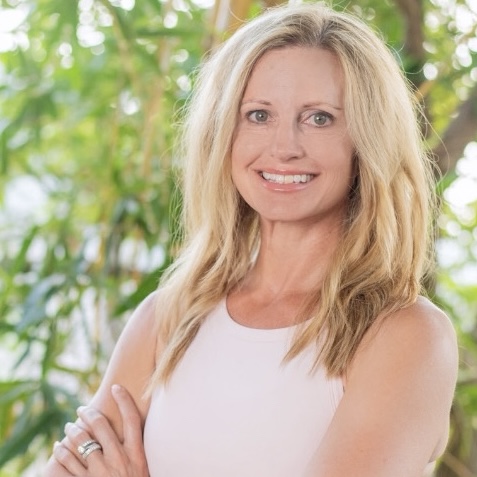
Adrian specializes in empowering women over 40 to reclaim their vitality and live life to the fullest. Through personalized support and guidance, she addresses a range of concerns including perimenopause symptoms, fat loss, energy levels, sleep quality, stress management, recovery, and resilience. Her holistic approach helps clients overcome these challenges and rediscover their true selves. By working with Adrian, women not only regain their vitality but also find the energy and resilience to support those around them, ultimately leading more fulfilling lives.