How Midlife Women Can Recognize Domestic Abuse, Build Confidence, and Help Other Women, with Tiffiny Newton (Ep. 44)
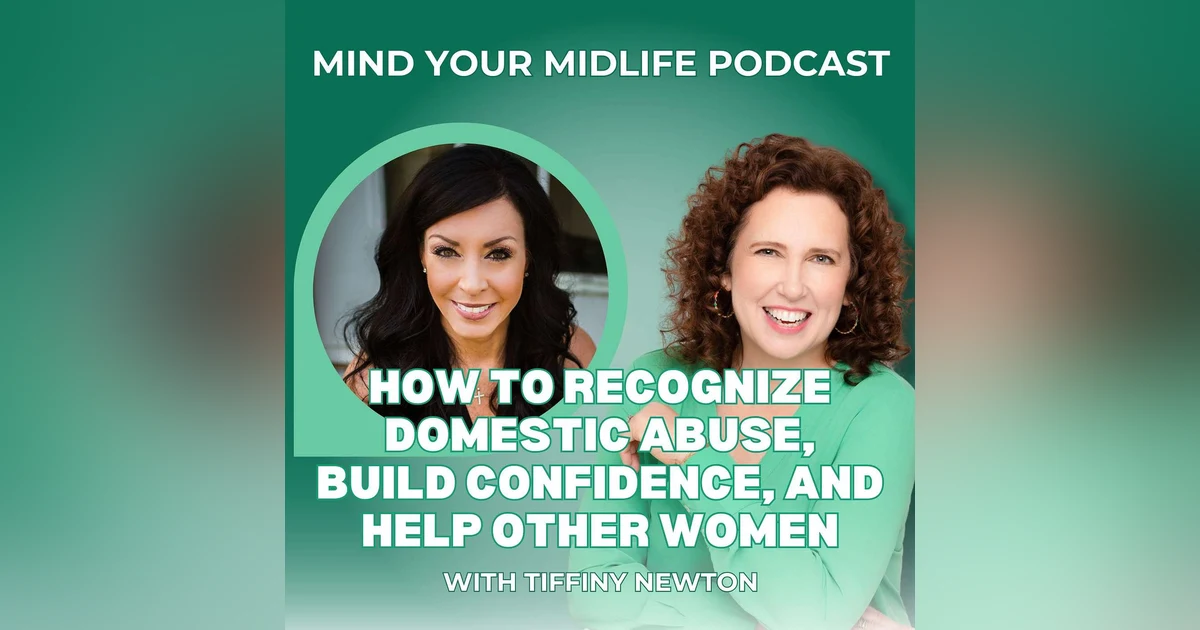

Whether or not you've personally dealt with abuse, you most likely know someone who has. In this powerful episode of Mind Your Midlife, I talk with domestic abuse survivor and advocate Tiffiny Newton about how women over 40 and 50 can recognize the signs of abuse, protect their self confidence, and reclaim their joy. Tiffiny shares her personal journey of leaving an abusive relationship and transforming that pain into purpose—helping women spot red flags, set boundaries, and understand that r...


Whether or not you've personally dealt with abuse, you most likely know someone who has. In this powerful episode of Mind Your Midlife, I talk with domestic abuse survivor and advocate Tiffiny Newton about how women over 40 and 50 can recognize the signs of abuse, protect their self confidence, and reclaim their joy.
Tiffiny shares her personal journey of leaving an abusive relationship and transforming that pain into purpose—helping women spot red flags, set boundaries, and understand that real self care starts with safety. This conversation is heavy, but it’s one every midlife woman needs to hear.
BY THE TIME YOU FINISH LISTENING, YOU’LL DISCOVER:
✔ Why abuse isn’t just physical—and how emotional and psychological abuse can quietly strip away your self confidence
✔ The red flags midlife women should watch for in dating and long-term relationships
✔ How to support a friend or family member you suspect is experiencing abuse
✔ Why silence and shame keep women stuck—and how awareness becomes your superpower
✔ The difference between healthy disagreements and dangerous control
🎯 OMG Moment: Abuse thrives in silence. If you’re questioning whether something in your relationship is abuse, that’s the answer—trust your gut.
Take Action
Pause and check in with yourself. Are disagreements in your relationship rooted in respect and safety—or do they make you feel fear, shame, or powerlessness? If something feels off, listen to your instincts.
And if you suspect someone you love is struggling, the simplest words—“I’m here if you need to talk”—can open the door.
Find Tiffiny's book, Behind The Smile, at cherylpfischer.com/read.
Join Cheryl and Tiffiny in Patreon (https://patreon.com/mindyourmidlife) for tips on how to talk with younger women and teens about abuse, personal strength, and protecting themselves.
Why This Episode Matters
Midlife women deserve joy, fulfillment, and healthy love. But too often, fear and silence keep abuse hidden. By talking about this openly, we make it safer for women to recognize abuse, break free, and build a stronger mindset toward confidence and healing.
🎧 Hit follow now and don’t miss next week’s episode where I’ll share a simple, free self care tool you can use during stressful times—a practice called tapping.
Text me to ask a question - I'll answer on the podcast!
Subscribe to receive bonus episodes at cherylpfischer.com/bonusepisodes.
🌸 Liked this episode? Share it with fellow Gen X women navigating hormone balance, an empty nest, and/or self-confidence!
🫶 Love this show? Leave a review to help more women over 50 find us.
💡Want support through menopause, mindset shifts, or midlife transitions?
- Join the collective by subscribing on Patreon or grab the bonus episodes!
- Book a free Mindset Coaching / Intro Call: cherylpfischer.com/coaching
Let’s talk midlife body positivity, self-talk, and redefining aging for women — without the “midlife crisis” narrative. Every week I'm adding new success strategies for midlife women.
Connect with Cheryl, Midlife Coach: Instagram | LinkedIn | Website
0:00 We're going to talk today about something that is really, really important. It's a heavier topic than what a lot of Mind your Midlife episodes are about, and the reason we're talking about it is that the actual act of talking about it and knowing what is going on and understanding what we can do and what we can look for is the key, is the key to solving this, and what I'm talking about is domestic abuse, and it might be physical abuse, it might be mental, emotional, psychological. It might be very obvious, it might be very hidden.
0:45 The key is awareness, knowing what to look for, knowing how to help, because that is a tricky, tricky thing, and you're going to hear my guest and I talk about that, so stick with me. This is an important one. Welcome to Mind your Midlife, your go-to resource for confidence and success, one thought at a time. Unlike most advice out there, we believe that simply telling you to believe in yourself or change your habits isn't enough to wake up excited about life or feel truly confident in your body. Each week, you'll gain actionable strategies and oh my goodness, powerful insights to stop feeling stuck and start loving your midlife.
1:32 This is the Mind your Midlife podcast. I am so grateful when it comes to this topic of domestic abuse, that I have not been in a situation where I have had a relationship where abuse was involved. I am so grateful for that Because you're going to hear today, it's very, very common, and so the goal is to know what to look for and know how to help if someone who's important to you in your life potentially could be in a situation like this and know how to recognize the signs that maybe this new person that you met when you went on the over 50 dating app isn't actually all that they seem.
2:22 We want to know what to look for and we want to know how to help. So today's guest is Tiffany Newton. Six years ago, tiffany left an abusive relationship and she has transformed that pain into her purpose. She's a life insurance broker. Her purpose she's a life insurance broker. She's the founder of New Tide Consulting LLC, and she's also the president and co-founder of Ignite Her Inc. And one of the things you'll hear her talking about is that she is getting certified to teach Brazilian Jiujitsu because she is doing self-defense classes equipping women to protect themselves.
3:09 She is actively a domestic violence advocate and has served on various response teams and task forces. Sharing her story she believes helps others of us recognize the signs of abuse, develop safe exit strategies and reclaim our strength. And I could not agree more and I really believe this is going to be an important discussion. So welcome, tiffany. Thank you. This is such an important conversation to have, but it's something that also, I guess, could be kind of overlooked or certainly hidden. Can you give us an idea of how big of a problem domestic violence is, how many women are affected, how often it happens and all those kind of basic pieces?
3:58 Being raised up and in most women this is potentially the case. I'm not going to speak on behalf of all women, but so many of us are like, raised on the nurturing side, we're handed dolls and you know the feminine things. So speaking up to protect ourselves isn't what we were brought up saying and speaking out Right. So you know framing it in that way. I don't think the reported numbers are true numbers because there are so many that don't get reported and these numbers are just the reported. It's reported that one in three women will experience some form of domestic violence or domestic abuse in their lifetime.
4:46 Wow, and that's only reported, one in three. And abuse isn't. You know, as you and I've talked, abuse isn't just broken bones and black eyes and bruises. It's all encompassing of fear and control and manipulation, and that it happens in every community. It doesn't matter the income level, it doesn't matter the race, it doesn't matter the gender, every background, every income level. It encompasses all of it. And the craziest thing is that most victims, when it starts, most victims, don't even realize it's abuse, especially when it's emotional or psychological, because it starts out so little, right it's.
5:33 They're chipping away like you would whittle something in wood, right, you don't hack it. If you're trying to be delicate and chip away at something, you do small little movements and that's kind of how it all begins. That's why I even got into, you know, talking about all of this, because all of those are dark corners. It it's embarrassing, it brings up guilt and shame, and I want to be able to help women recognize those signs so they can protect themselves before it escalates. Get out before it escalates, protect yourself. And so we're used to talking about this, I think, with regards to physical abuse, which we can certainly talk about, but you point out that there is also emotional and there's also psychological.
6:24 Point out that there is also emotional and there's also psychological, and so can you talk us through what those are and the differences between them? I guess Sure. I mean physical. I mean that's what we all are accustomed to, right? We don't think it's abuse if it's not physical, right? So that's easy. Hitting, strangulation, slapping, restraining, kidnapping, I mean all of that kind of falls into that category. Emotional abuse is way more quiet. You don't really know what's happening. Constant criticism oh, you're going to wear that. Why are you getting more dressed up for work than you do with? You know, for me, gaslighting?
7:06 No, that never happened. That wasn't me. Why are you? Why are you taking that so out of context? You're, you know, you're, you're crazy. Isolation of you know, oh, they don't have the best, their best interest in you. Or if you do, go out with friends. Or, in my case, I went to go get my haircut and he was blowing up my phone while I was getting my haircut because he didn't want me getting my haircut. So he found a hairdresser that would come to the house and do my hair. Wow, so isolation, right. And it chips away at your self-worth. It's actually like a false sense of self-worth because you think it's getting built up because, oh, I have your best interest at heart.
7:51 I'm going to do something special for you. I'm going to send you to the spa, I'm going to bring someone here to do your hair. See, I care about you, right? So they're elevating your sense of self-worth and you feel so important to them, but they're stripping it away. It's like the magic trick of, you know, whipping out the tablecloth out from underneath the dining set, right? So that is you know. You just feel so special, not realizing, and there's a quote I'll tell you kind of as we wrap up, that really impacted me. It hit me really hard when I realized this. But you just feel so special, but you don't realize, you're not, you're not, you're getting groomed, you're not.
8:37 It's not actually a special feeling, it's another feeling that you should be listening to, but it's not you feeling special. And then, of course, the psychological is about the control and fear, right, the threats, the stalking, the I need to see your phone I who are you cheating with, destroying personal property? He took things of mine and threw them on the ground while I was gone at work and I would come home to things broken. I don't know. You must've done that when you move the towel off the counter, or like blaming things again, gaslighting, going back to gaslighting. And then, of course, like I was mentioning, you can utilize the legal system for the psychological side of it, Right, but it's all.
9:19 All the psychological stuff is designed to make you feel powerless, right, but they could all overlap and that's very, it's a very dangerous recipe. It really sort of clarified for me when you said that the person in this situation may feel like, wow, this person really is so into me and that's very validating, or I'm struggling for exactly the right word. It feels good maybe to think, wow, this person is it's like you're on your honeymoon. Yeah, they're so focused on me, they're so into me. I can see how that would be a trap for sure. Yeah, I mean that becomes the trauma bond.
9:59 So you feel so like, wow, this is an amazing feeling. But you don't realize what that feeling is. Right, it's actually your gut telling you to get the hell out of Dodge, but you feel like you're so wrapped up in like this amazing, like attraction and this chemistry and this honeymoon tornado of what they're dragging you through until it's too late, Like if that trauma bond gets stronger and stronger with each day that they say something to you or chip away or build you up. You are just holding on for that hope to get back to the person that you met when you first met them.
10:42 And I know in your situation, there was something that kind of flipped the switch for you and you realized that you needed to get out. Is that a common part of the story for someone who's escaped from this or recovered from this? I think you're so. On average it takes seven to eight times, and some places say seven, some say eight. So I'll just say it's kind of right smack in the middle. So maybe 7.5, right. But it really does take multiple times to leave that person because that trauma bond is so strong and the feeling of hope that you're holding on to when they'll be good to you again is super strong.
11:25 That's when hope becomes dangerous. The first time you leave, oh, maybe I overreacted. Right, they're telling you you're overreacting. Maybe I looked at this wrong. Maybe I need to look at it from their point of view. Maybe I was doing this wrong. Maybe it is my fault. You go down this rabbit hole of blame, fault, like you go down this rabbit hole of blame, you blame yourself, and then there just becomes a time and it it could be throw a dart at one of the times. Right, it really depends on your own situation where it is okay, I'm awake to what the heck is happening to me. I know I'm not crazy. How do I get myself out of it?
12:05 When? Because that last, that last question is when you start putting together a strategic plan to get out right. It could be as as minimal as I'm going to put the keys in my purse and I'm going to have my purse by the door and as soon as they leave for work, I'm grabbing it and going. I'm not leaving any time. It could be that minute. It could be a much more developed plan of I need to get this from the bank account. I need to do this. I need to make sure my mom or my friend or my sister or my brother has these items. I need to make sure X, y, z is in place before I do that. So it can be a small safety plan. It can be an involved safety plan.
12:46 It all depends on your own situation. Right, your body will say OK, I'm done. You reach a certain point. Yeah, it's no longer am I at fault anymore. You realize that it's not your fault. You have done absolutely everything humanly possible because they tell it's your fault. They tell you it's your fault. If you were to act like this, we would be fine. If you were to do this, we would be fine. It got to the point where I said I need to see a therapist. I feel like I'm going crazy. You know what, tiffany? If you go see a therapist, you're wasting your money. All they're going to tell you is to please your partner and you'll be fine.
13:27 Wow, again, gaslighting, right, yeah, putting themselves in that spot. And when he said that, I was like what? I don't think that any professional, because I've. You know, I went through therapy after my divorce back in 2010. And, having that experience, they're not going to just say that like no. So you start to wake up a little bit. Right, the fog kind of lifts from your. It's like in the cartoons where the sun is here and the fog or the clouds are across. You just kind of see the light. Right, it's kind of the fog lifts from your brain and you see that things are happening that you need to get out of that.
14:10 You are now in a dangerous situation. Yeah, and in your book I know you talked about what happened to you and kind of how that became more obvious to you. For sure, yeah, I don't know if this is PG-13 or you know, r or X rated, you know. But yeah, there was a phrase said to me and I was like, oh no, I'm done, I'm done. Yeah, well, and luckily in your case it was before anything even worse could happen, and that, I know, is not always the case for everyone. I mean he was very careful. We lived on the beach, so I was in a bathing suit, we were, you know, I was in a bikini whenever we were on the beach, so he had to be very careful with with things.
14:52 He had punched me in my chest, he had cornered me into corners. Like he's 6'2", like 240, big dude, double my size. All right, I'm five foot four. So him like over me, bully behavior, ripping things out of my hands, throwing me to the ground, trying to get into my work computer that had health protected information, hipaa information, because I worked at a medical facility. Thankfully it was password protected and he couldn't get in. He stretched those boundaries as far as he could go, wow. But he grabbed my dog and I was like put her down. He's like see, if you were to stick up for me, like you're sticking up for your dog, we would be fine, like those are the kind of things he would say why didn't you step in for me?
15:40 Why didn't you get that for me? Why is it? Is it you and me against them or are you against me, like always using that manipulation? Yeah, which from the outside, doesn't make sense, but from the inside, yeah, I see that. So then let's talk about. I imagine that if you're listening right now, you could be thinking about this for yourself, or you could be thinking about this for someone that you know and wondering if they're okay. So tell us a little bit about some things that we should watch for, some red flags that we want to really be aware of. I. So one of the first in my therapy session, one of the questions that she asked me first is if you were to look back on, what is the biggest red flag that stood out to you from the very beginning.
16:31 So this one always takes. The first stage is the love bombing and the grooming. So right after we started dating was Valentine's Day. So we started dating in January and then, you know, within two weeks is Valentine's Day. So he got me like the sapphire and diamond bracelet, love bombing, right. And then which I thought was thoughtful because my birthday is in September, it's sapphire, right. And then he was like let's go on a trip to Miami. There's something that he wanted to do down there anyway. So he's like let's go to Miami. I'm like, oh, this is amazing. Right, we get down there. And he's like I want to take you shopping. Let's buy you a pair of shoes. He picks I'm like you pick out the pair of shoes.
17:12 I have no extra need for any additional shoes at this point. I'm not like a. I like shoes, but I'm not that girl that has a bazillion pairs. So he picks out the shoes. We go to dinner. He expects me to wear them at dinner, which I didn't expect, and we're sitting at dinner and this was kind of like the big thing that was so revealing through my own therapy. We're sitting at dinner. It's a beautiful night in Miami. We're on Lincoln road, which is all like cafes and restaurants. It's like a walkable shopping area. We're sitting there at dinner. The wind is nice, it's a nice temperature, it's February, it's beautiful. And I have like this smile on my face, not like a teeth smile, but like a pleasant, I'm enjoying myself smile.
17:56 And he looks over at me and he goes why are you not happy to be here with me, dear? I'm like what do you mean? I like second guessed myself. Like am I smiling? Was I frowning? Like what was on? What was my face doing? Was my brain not talking to my face? Like I was second guessing myself. That was grooming 101. Like saying something and expecting me to react how he wanted me to react, not how I was reacting. Wow, okay so that was like full on manipulation right there of you know, I'm happy, I'm smiling. So I then had to prove myself to him that I was happy.
18:36 Right, you have that feeling of what was my face doing. Now I have to overly exaggerate because maybe my face and my brain aren't talking to each other. I had no idea. But that was the biggest thing for me was the love bombing early on and the grooming of what I thought I was doing. He said I wasn't doing so the gaslighting even in that, right. Right. So when you say grooming, I guess in general it's saying or doing things to cause you to question that what you think or your reaction is not the right one, something like that.
19:16 Grooming, as in if we're in a specific thing, he expects me to act a certain way. So he was trying to like funnel that down. Okay, right. So if we were in the gym, I was not like he would like line these things up. Like. If I was in the gym, I was not to even look up at a guy. I had to, like, either look at him directly or down at the ground. Wow. So he had expectations of how I was to behave and that's how he, through little manipulations, devised it that way. Right, if I looked somewhere, who are you looking at? Why are you looking at them? I'm right here.
19:57 Who else do you need to look at? Are they more important than me? Why are you not paying attention? It just became like consequences to each thing that he felt I was doing wrong, whether I was doing something wrong or not. It didn't matter. I'm just trying to think out loud now. So, obviously, if we're in a relationship with someone and I guess it's not necessarily always a romantic relationship that we're talking about but we might disappoint each other with how we react to something, or, you know, we do something for the other person. We thought they would love it. They don't love it, but what you're talking about is like a step beyond that where you need to show the reaction that they want you to right.
20:37 It's not the five love languages, right. It's like the five demonic love languages, right. It is a step beyond what I mean. There's normal human behavior, right, and each person I was brought up in you accept how other people are. You may not agree with them, but that person is unique and different and weird in their own way and accept all the unique and different and weird. That's beautiful. That's what makes each person so amazing, right, and you ask questions and you get their point of view. You may not agree with it, but then you have something to talk about or debate on, like a healthy debate, right.
21:19 But it is the step beyond. I mean, even into the jealousy side. There's normal jealousy and then there is psycho jealousy of I need access to your email. I need access to all your social media. Why are you trying to date on LinkedIn Like all of the crazy? He sent me to work several times without my phone. He even took my phone and broke it in half once, just so I wouldn't. I couldn't respond to someone, even to the point of we went to Charlotte to get dental work done for him. He had to go under anesthesia for dental work. The night before we were going to his dentist. He accused me of being in Charlotte for another reason to see another guy, to the point where I couldn't sleep and I went into the bathroom to lay down on the floor.
22:08 I slept on the floor that evening. He walked in, stepped over me and pissed over my head into the toilet. Goodness, no, he hates women like my head into the toilet. Goodness, no, he, he hates women like hands down, yeah, and and all of these things you're describing, I guess the other key, as you said, is it doesn't happen right away that he's insisting on being in your social media. It's a, it's a small, it's a phased thing, right it? started off with why? Why aren't we dating on Facebook yet? Well, I like to keep things private until I'm pretty sure of what's happening. But he wanted to make sure, but he didn't change his status. He expected me to change mine, but he didn't change his status.
22:51 He expected me to put up a picture of him and I as my profile picture, but he didn't change his picture. Anytime I posted on Facebook. He had a rule it always had to be about us and how grateful I was to be with him. That's the only thing I could post about. Yikes, yeah. So the controlling behavior, all the monitoring. If he left town on a trip for work, he was in my social media, in my email, hunting for something to yell at me about. It was a hunting game, yeah, which I had nothing to hide, right? I never cheated. I wasn't flirting with anyone on the side, nothing.
23:33 So for me, I'm like, whatever, I'm an open book, right, I could see that I don't care. So for me, I'm like whatever I'm an open book Right, I could see that I don't care, but for him that was something totally different because he when he left town he was cheating. I found With a man. He hired a man. Which is just mind blowing. I mean, and I have proof, so no one can ever say oh, as he said, she said. He even denied it. When I showed him to his face he was like that wasn't me. I have proof. A narcissist will totally lie, despite the proof you had yeah, yeah, that's what I realized that I was dealing with a different behavior of someone oh my goodness, okay, I can laugh about it now. But don't get me wrong, like that is why the title of my book is what it is Right Behind the smile, like I was dying inside as I was finding this stuff out.
24:24 But he kept me so trauma bonded with everything Surveillance cameras everywhere, even when he was out of town. He was like watching me sleep to make sure I wasn't checking my phone like crazy, crazy, crazy things. But when I got to work I was nothing but smiles. Nothing's wrong at home, everything's good. I was on the phone with my parents Everything's fine, everything's good. But it's kind of how you have to be to protect. That was a protection measure. He was testing me so often I had to just pretend like nothing was happening, which was a whole other issue, because then you compartmentalize and you go past it and you almost forget, until you have to go back and dredge it up and say, no, this is a part of all of this that I need to get out of.
25:09 Yeah, and that that takes us in a really important direction, because I'm sure you are well in your case, you were hiding it. You were not wanting people to see that, and I'm sure you're right that that's very, very common. And so I put the question out to my Patreon community and asked them well, what would they ask you about this topic? And Jill asked well, what would you do if you do suspect that a friend or someone in your family is a victim? How do you approach the topic? Or maybe, if they're definitely not open to talking about it, how can you support them?
25:52 And that's a tricky thing. And I wonder, now that we're talking about this, I wonder if, even if it's gotten to the point where people suspect it, it must already be quite serious, because I'm guessing that most people do try to hide this. Yeah. Jill, thank you for your question. I want to acknowledge that that was amazing that you thought of other people in asking this question and that is kind of the direction of how I wrote my book is because one of my clients, her daughter, ended up in the hospital from abuse and didn't know how to approach it because she kept getting isolated. And that's why I wrote the book is for people who don't understand everything involved in domestic abuse and domestic violence.
26:35 How can they learn more? Number one, and then how can they create an environment that is safe for their friend, family member, coworker, whoever it is, that you become that safe space for them and when they're ready they will come to you because you do feel safe. So it's talking about boundaries. What will you accept, what won't you accept? Understanding the mutual respect of people in relationships right, and what emotional safety is? We're not talking about a fairy tale, romance. Those don't exist. Romance novels don't exist in real life. You're not going to. You may have like fireworks with someone, but a lot of times my own experience included the fireworks relationships are typically the more dangerous ones.
27:23 You want something that's more dependable and that may not start with fireworks. It may build to fireworks, and I've had a lot of discussions with healthy relationship couples on that kind of thing. But knowing that love doesn't control I mean that's in the Bible, right, let's look to the Bible even on that one. Disagreements should never feel dangerous, never, never never, never. My parents were married for 48 years before my mom passed away. They would argue don't get me wrong, but that's healthy. Sometimes, if you are the person that keeps to yourself, you will explode. But there's a difference of an argument and danger.
28:05 Absolutely so, knowing what that looks like, knowing what that feels like and being alone is better than being broken, because when you are in these types of relationships, you are broken. You are a mirror that has been smashed to pieces. Don't get me wrong. You're still beautiful, right, you can be put back together and you can still be beautiful. You'll be a total work of art, but you won't be that brand new, fresh mirror. And that was held against me and my own relationship. I want you to go back to the way you were. I want this, I want that. Well, I can't, because he'd already done so much damage. Right, yeah.
28:46 And then, to those that know someone that they suspect is in a situation, probably one of the best things to say I noticed that you haven't been feeling yourself or you haven't seemed yourself lately. Just know that whenever you're ready, I'm here to talk. Oh, that's great, yeah, right, it's not threatening, it is not bringing up abuse, there's no blame and it's not a dangerous sentence that if they go back to the abuser because you will, four months into my relationship, someone said you're in an abusive relationship and I said no, I'm not and I told my abuser. Oh wow, that's what you do right, you're not recognizing it's abuse in the early stages, right.
29:30 But other people can see it. You can't because you're in the tornado, but saying you don't seem like you're yourself lately, whenever you're ready, if you want to talk, I'm here to help you. Give them a hug, tell them you love them. You know, don't do that to a coworker if you're not that close with them, but you can still say I'm here for you if you ever want to talk. Yes, you don't have to bring up the word abuse or violence or anything like that. You don't have to say any of that and it's non-threatening. So even if they go back to their abuser, all they're going to say is apparently I seem like I'm acting a little different and that's not threatening, right, right. Because that could be anything. I agree, yeah, it could be stress from work, it could be whatever right Stress from something, so it's.
30:16 Those are non threatening ways to just really help and understand that that it is out there. It's way more prevalent than than we talked about, Because even in the early stages of me writing the book and me starting my nonprofit to help domestic violence you know, abused women and children I asked people hey, if you know someone? And one lady responded I don't know anyone who's going through that. One of our mutual friends was going through it. I knew for a fact because they reached out to me. People are dealing with things that you for a fact because they reached out to me. People are dealing with things that you have no idea because they're embarrassed, they're full of shame, they're full of guilt and they don't want to talk about it.
30:59 They're not ready to talk about it. So just being a safe space for them is so important. Yeah, that's a great point and that principle really extends even beyond this topic, that people are always going through something that we don't know and they don't want to tell us because they're embarrassed or whatever it is Always there's always a story behind everything. Yeah, I mean children in school. You know whether it's, and especially now in and this is a whole other rabbit hole. But especially now in, like middle school and high school, like when kids are getting sexually active, strangulation is very big in masturbation and sexual intercourse and it's all over TikTok as five finger necklace is talked about all over the place.
31:42 It's so disturbing but that's not normal. Like that is a discussion you know, along with the here are the birds and the bees. That is a discussion you know, along with the here are the birds and the bees. And then don't do this because this is dangerous. Strangulation causes traumatic brain injury. Strangulation six to eight seconds. If they're holding on for six to eight seconds you can go unconscious. I mean, those are conversations to have with young children of. This is not normal. You may see this and you're probably going to hear about it at school because kids are talking about it with masturbation and sexual contact. I've been on umpteen Zoom calls that we've talked about it. So, having that discussion early on to not get yourself in that kind of a situation because someone, especially in an adult relationship, if you've been strangled by your partner, you are now 750% more likely to die from that partner.
32:34 Oh my gosh, it's a lot. So it's a dangerous slope, because what if they hold on too long? And I actually put something on TikTok and a lady responded. My sister-in-law died from this. Someone held on too long and I would have to go look at it, but both her and her sister in law were impacted. Oh my gosh. So it is a huge topic to get behind and advocate the safety of. There's no safety in strangulation, right? And it does not have to be part of a healthy relationship in any way. Absolutely it is not a part of a healthy relationship in any way. Absolutely it is not a part of a healthy relationship. Yes, that's what I meant to say.
33:15 It is not. It is not. Yes, very, thank you for fixing my words. And again, I'm glad we're smiling and laughing, but gosh, this is a heavy issue and so I'm glad we're kind of bringing all of it to light, for sure. So, before I get to the what's the big thing people need to remember, tell us how can somebody who's listening connect with you, learn more, find out about what you're doing and all of that? Yeah. So if you're in the state of Florida, I have a nonprofit that we do in-person self-defense classes at no cost you do have to travel to us, but we bring in certified instructors.
33:59 We also have someone that talks about the mental health aspect of things and, when they're available, we do bring in law enforcement to ask specific questions on, like, if 911 gets called, who gets arrested, like those important things that typically cause people to be scared to call right. They can also go to my author website, which is tiffanynewtoncom. You can find my book on Amazon. You know any of the retail sites you can find me. Reach out if you have questions. Message me on social media, ms. So Miss Tiffany Newton is my social media handle across TikTok, instagram, facebook, etc. If you're in a situation, don't hesitate to reach out.
34:41 I can at least point you in the right direction if you're in a different state than I am. I appreciate that and I will make sure all those links are in the show notes so people can find them easily. This has been a great discussion. If somebody's been listening and doing 10 things at the same time, what is the one thing that you really, really want them to remember from what we're talking about today? Abuse thrives in silence. So awareness is your superpower. So if you're questioning whether something in your relationship is abuse, that's the answer. You're already questioning it. Trust your gut, speak up, ask questions, reach out. The more we talk about it, the more we can protect each other.
35:24 That's the biggest thing. I love that and that's why I wanted to do this episode. For sure is, the more we talk about it, the better. I fully agree. Yeah Well, tiffany, thank you so much for joining me. This has really been a powerful discussion. Yes, thank you. Even if we change one person's life, that means the most to me. The more people that can become aware, the better. I agree 100%. I want to pull a couple things out of what Tiffany and I were just talking about. I want to pull a couple things out of what Tiffany and I were just talking about. Number one having an argument with someone or having a disagreement with someone does not mean it's an abuse situation. You heard her say that the key is when you are able to solve the argument respectfully, or when you say no to something and the other person accepts your no, accepts your boundary.
36:18 That's just a disagreement model for the next generation as well the ability to argue, the ability to disagree, the ability to say no and it's going to be okay because respect is involved. This is not what we're talking about when we talk about abuse. There's not respect, there's not acceptance of a no, there's further manipulation, and that's what you heard her saying. Another thing that really stuck out to me is that there really is never a situation in a healthy relationship where you will feel endangered or unsafe or fearful.
37:10 If you are in situations, or you have seen someone in your life in a situation where they were afraid for their safety, in that relationship there is something wrong. You can be mad as heck at the person you're in a relationship with and they can be mad as heck at you, and in a healthy relationship, feeling fearful for your physical safety does not come into it. There's the line, and that was powerful for me as well. And then the third thing that I want to point out is that Tiffany and I took this discussion of how do we speak to the next generation about relationships, healthy relationships, relationship safety.
37:56 You heard her briefly talk about strangulation, which is mind boggling to me. We took that into a separate discussion for midlife. Pivot on the Patreon community. So go to patreoncom slash mind your midlife and you'll be able to hear that extra discussion I had with her about how do we talk about this with younger women who we might have an impact on whether it's daughters or nieces or any younger group of women that you might be impacting in your life and you'll want to hear that. She made, as you would imagine, some great points there to keep in mind.
38:37 So I'll see you in Patreon for that. Thank you for listening to this episode. It really the more that we bring this into the open and make it okay for people who are in a situation they need to get out of, to bring this into the open and not feel embarrassed and not feel like it's their fault, the better, and make sure you've hit the follow button. This was a bonus episode this week and so, coming up on Friday, we have another episode talking about tapping. And if you are going through a stressful situation, if you are going for a goal, if you are trying to move past some limiting beliefs or make a decision, tapping is an easy, free way that you can help yourself through that.
39:27 So I'll see you then's going on in your head and let's create something amazing.
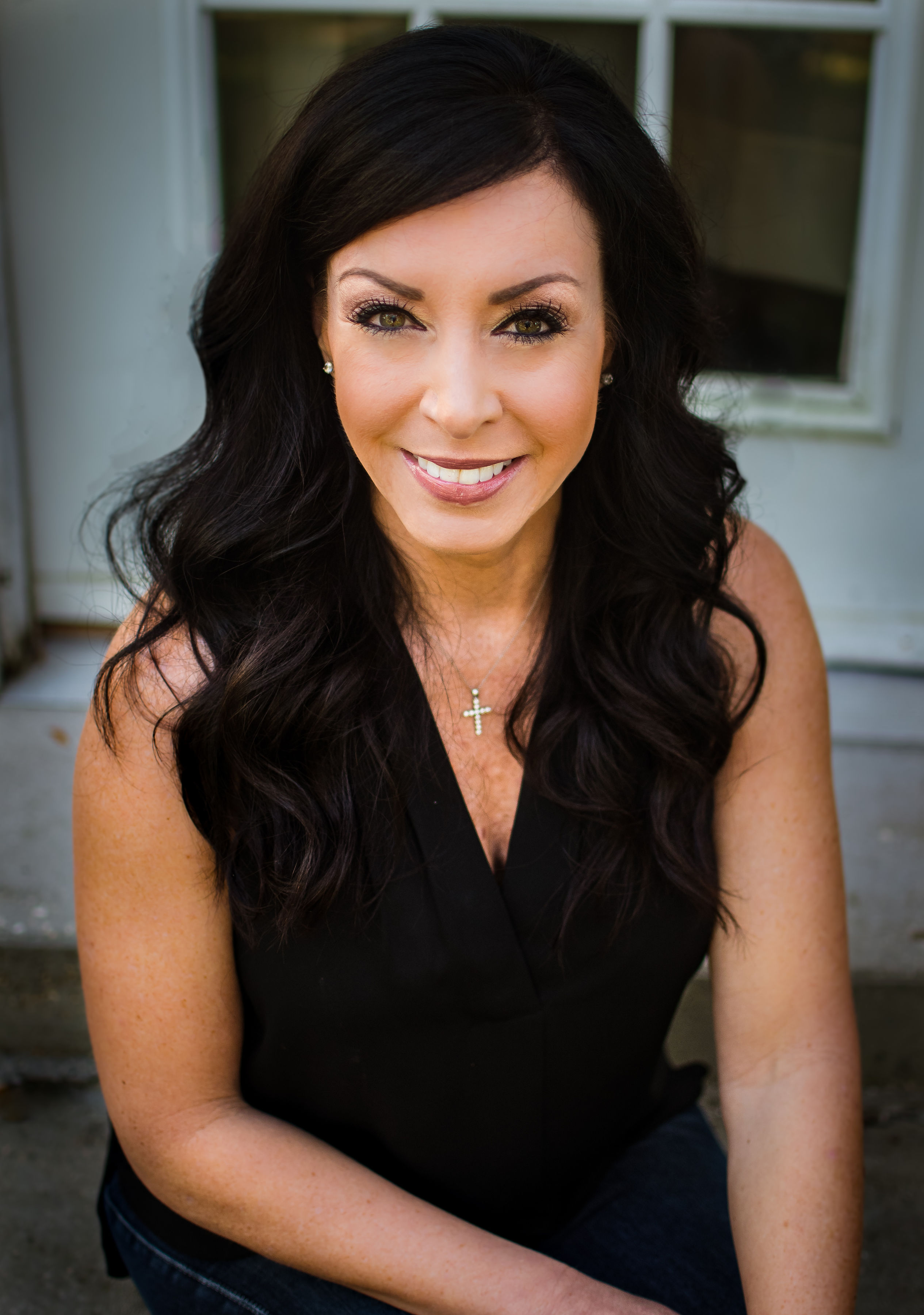
Six years after leaving an abusive relationship, Tiffiny Newton has transformed her pain into purpose. As an independent life insurance broker, founder of NewTide Consulting LLC, and President and co-founder of IgniteHer, INC., she empowers women through their journeys of healing and self-discovery.
Tiffiny is pursuing certification through Gracie Jiu-Jitsu Largo's Women Empowered program to teach self-defense, equipping women to protect themselves. She actively participates in domestic violence advocacy, attending key conferences and serving on local Sexual Assault Response Teams and Domestic Violence Task Force.
By sharing her story, Tiffiny helps others recognize the signs of abuse, develop safe exit strategies, and reclaim their strength. Her mission is to provide women with the tools to build independent, fulfilling lives, proving that resilience can lead to empowerment and a brighter future.