71. How Acupuncture And Chinese Medicine Ease Perimenopause And Midlife Stress, with Damon Iacovelli
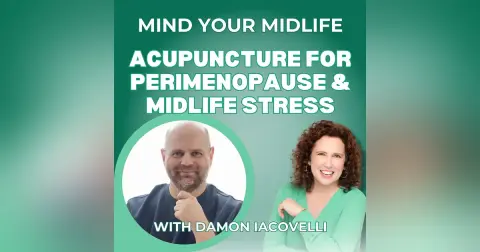
Are you riding the "bumpy ride" of perimenopause and wondering if there is an alternative to Hormone Replacement Therapy (HRT)? You’re NOT alone — and you have more options than you think. In this episode of Mind Your Midlife, Damon Iacovelli, a Master of Acupuncture and Oriental Medicine, joins me to break down the science behind acupuncture, Traditional Chinese Medicine (TCM), and how these ancient practices offer a modern solution for hot flashes, sleep issues, and midlife anxiety. I...


Are you riding the "bumpy ride" of perimenopause and wondering if there is an alternative to Hormone Replacement Therapy (HRT)? You’re NOT alone — and you have more options than you think.
In this episode of Mind Your Midlife, Damon Iacovelli, a Master of Acupuncture and Oriental Medicine, joins me to break down the science behind acupuncture, Traditional Chinese Medicine (TCM), and how these ancient practices offer a modern solution for hot flashes, sleep issues, and midlife anxiety.
If you are curious about needles but afraid of pain — or if you are looking for a safe, non-hormonal way to regulate your body and calm your nervous system — this episode is for you.
What You’ll Learn:
✔ The Science of Acupuncture: How it affects pain and inflammation
✔ Nervous System Reset: Why acupuncture is powerful for switching your body from "fight or flight" (high cortisol) to "rest and digest"
✔ The HRT Alternative: Why acupuncture is a safe, effective option for women who cannot take hormones due to breast cancer history or blood clotting disorders
✔ Does It Hurt? The truth about needle sensation and why many patients actually fall asleep during treatment
🎯 OMG Moment:
"Women in Chinese culture are the center of the family... that becomes the foundation of the culture and the society." In Traditional Chinese Medicine, your symptoms are valid, and your health is prioritized because when you are healthy, the foundation of everything around you is stronger .
Take Action Today:
- Connect with Damon Iacovelli: Visit allevaacu.com (Alleva Acupuncture) in Northern Virginia or call 571-388-7028.
- Find a Local Practitioner: If you aren't in the DC/NOVA area, use the NCCAOM database at nccaom.org to find a licensed acupuncturist near you.
- Trust Yourself: If you feel something is off in your body, believe it. You deserve care that validates your experience.
Why This Episode Matters
Midlife symptoms like hot flashes and anxiety aren't just annoyances; they are signs of dysregulation in the body. Acupuncture offers a way to treat the root cause rather than just masking the symptoms, proving that you don't have to just "muscle through" this season of life.
Take a little bit better care of yourself in midlife.
*Start your day with Energy Fizz and GreenSynergy Elixir: cherylpfischer.com/recommendations (and use the code ARBONNE10)
🌸 Liked this episode? Share it with fellow Gen X women navigating hormone balance, an empty nest, and/or self-confidence!
🫶 Love this show? Leave a review to help more women over 50 find us.
💡Want menopause advice, mindset shifts, or support with midlife transformation?
- Book a free Mindset Coaching / Intro Call: cherylpfischer.com/coaching
Let’s talk health after 50, self-talk, and redefining aging for women — without the “midlife crisis” narrative. Every week I'm adding new success strategies for midlife women.
Connect with Cheryl, Midlife Coach: Instagram | LinkedIn | Website
00:00 - Framing The Midlife Problem
00:29 - Show Welcome And Mission
02:31 - Guest Introduction And Credentials
03:30 - What Acupuncture And TCM Include
04:40 - How Acupuncture Works In The Body
07:19 - Building Lasting Effects With Treatment Plans
09:05 - Does It Hurt And What To Expect
11:01 - Stress, Sleep, And Modern Pressures
11:52 - Midlife Women’s Symptoms And Estrogen’s Role
13:50 - Regulating The HPO Axis And Blood Flow
15:00 - Hot Flashes, Night Sweats, And Bone Health
16:13 - Why Hot Flashes Signal Dysregulation
17:19 - Options When HRT Isn’t Safe
19:22 - Personalized Chinese Herbal Medicine
22:10 - Being Heard And Individualized Care
23:21 - How To Find A Qualified Practitioner
25:31 - One Takeaway: Trust Your Experience
26:38 - Closing Reflections And Bonus Series CTA
0:00 Hormone replacement therapy, vitamin supplements, hypnosis, breathing exercises, sleep therapy. What about acupuncture? There's all these options for those of us that are having, may I say, a bumpy ride through our 40s and 50s? Perimenopause, menopause, all the things. What about acupuncture? Maybe it can help. And that's what we want to find out today. Let's talk about it. Welcome to Mind Your Midlife, your go-to resource for confidence and success, one thought at a time. Unlike most advice out there, we believe that simply telling you to believe in yourself or change your habits isn't enough to wake up excited about life or feel truly confident in your body.
0:50 Each week, you'll gain actionable strategies and, oh my goodness, powerful insights to stop feeling stuck and start loving your midlife. This is the Mind Your Midlife podcast. One was wanting it to help heal scar tissue in an area of the body where he had had surgery and everything still felt quite tight. One was using it for minimizing pain.
1:30 Somebody else was using it for supporting depression treatment, just all of these different ways that I have known people who went to acupuncture and really felt like it made a huge difference. And I wasn't sure whether or how acupuncture might potentially help us in midlife with perimenopause, menopause symptoms. Was there something that would help related to acupuncture? And we're going to expand it a little bit, and you'll hear my guests say that in a few minutes, to traditional Chinese medicine, meaning herbal treatment, massage.
2:14 It all kind of comes under that heading. And guess what? It actually can make a difference to you as a midlife woman. And if that's true, we need to talk about it. My guest today is Damon Iacovelli. He is a master of acupuncture and oriental medicine, a licensed acupuncturist, and a licensed massage therapist. And he focuses on traditional Chinese medicine. And interestingly, his key focus is women's health. And he works alongside his wife in their practice together, focusing on a modern approach to traditional Chinese medicine.
3:02 I love that he is in a husband and wife team, and I'm excited to talk to Damon today. Welcome, Damon. Hi, Cheryl. Yeah, I really appreciate this opportunity. Thank you for having me on your show. I am really looking forward to talking about this because it's one of those topics where everyone has heard of it, but I think very few people really know that much. So we're gonna help them. Absolutely. Yeah. Okay, so today we are talking about acupuncture. And let's just start from the very, very beginning. Can you give us an overview of what acupuncture is or how it works?
3:44 Sure. So acupuncture is kind of become a generalist term now for I think many different therapies that are used in kind of traditional Chinese medicine. So there's acupuncture itself, which is the insertion of very thin, sterile needles, almost painless, into very specific sites in the body, and they provoke a reaction in the body that we could talk about a little bit, but is very healing for the body. Then we also use Chinese herbal medicine, which is using many different uh plant and mineral substances to also promote healing in the body. We use uh Chinese therapeutic body work. You can think of it as massage, it's not quite the same as a spa treatment, a little bit more medically oriented.
4:27 We use a lot of uh use a lot of dietary therapy as well. And then there's also exercises that we give people, uh, often called qigong, uh sort of meditative and moving together to really help promote healing in the body. So one of the ways that uh acupuncture has been found to work, and there's been a lot of uh investigative science into this over the last 50 years, there's been about 13,000 uh medical studies done into acupuncture around the world, not just in the United States, but in China and Europe, many other places. And what they've discovered is with the insertion of the needles, is that it has an effect to stimulate the local nerve endings in the tissues. So we put needles in the arms, the legs, the torso, that sort of thing.
5:09 And that has an effect on the central nervous system, and it it downregulates the pain receptors in the brain. So by putting needles in various locations in the body, not just necessarily where you have pain, it helps to inhibit the pain response uh in the brain itself. The second thing that they've discovered is that it downregulates the sympathetic nervous system, which is responsible for the fight or flight mechanism. Very much right now, cortisol is in vogue. People talk a lot about cortisol response and stress response and everything like that. And the sympathetic nervous system is responsible for that. And so by downregulating the sympathetic nervous system and upregulating the parasympathetic, which is also known as the rest and digest system, we promote healing and relaxation, improves sleep, it improves digestion.
5:58 And then one of the final mechanisms that they found that is very uh one of the ways that acupuncture works is that it helps to uh upregulate and produce uh a chemical in the body called adenosine. So I don't know if you remember back to your Krebs cycle in high school biology, but there's a compound called ATP. Yeah, nobody remembers any of this. I don't get too technical. Yeah, you're just listening. Yeah, I was making a paste. I won't get too technical, but basically, every cell in the body contains adenosine and is responsible basically for cellular metabolism. So acupuncture has a way of upregulating cellular metabolism, making the the cells operate more efficiently so that they uh produce more energy with fewer calories, and that this also then has a role in reducing inflammation in the body and promoting healing by regulating the immune system as well.
6:50 So those are the three main ways that it seems to work. That's really incredible. And I appreciate that sort of scientific explanation, because if anyone's listening who sort of wants to really actually know why things work, they will appreciate that as well for sure. And so let me go back to the nervous system for just a second, because I talk about the nervous system a lot on this podcast and sometimes refer to rest and digest, sometimes sympathetic and parasympathetic. So are you saying that acupuncture then can help us stay in that rest and digest state more often, slash longer, even not during the treatment?
7:35 It's helping our body kind of learn how to be more calm more often. Is that fair? Yeah, absolutely that's true. So acupuncture is like any other kind of medical treatment. It's quote unquote dose dependent. So its effectiveness is influenced both by the frequency and the duration of treatment. So if you come in for one acupuncture treatment, most people are gonna find it to be quite relaxing. They might even take a nap on the table. But within a day or two, most of those effects are gonna kind of wear off. So the way that we develop treatment plans is we typically have people come in, you know, if it's for a chronic problem, maybe once a week for about four to five weeks.
8:16 And then we start to notice that uh from one treatment to the next, the effect starts to last longer and longer and longer until we go from uh one treatment and then seven days later the next treatment, and they still get that similar that similar benefit. And then once we achieve that, then we start to space out treatments. Uh two every two weeks, out to a month, we go into a maintenance schedule over time. And so acupuncture is actually can be curative in nature and not just, you know, you don't always have to come in. It's not like getting your monthly massage or something like that. You feel good for a while, but then all of your pain starts to return. Acupuncture actually has an effect to change the body and to have the body's immune system and health regulatory system start to change and improve our own health.
9:02 Really interesting. Okay. Yeah. Okay. And I I think probably there's somebody listening who is thinking, well, does it hurt? Am I gonna feel the needles? Am I gonna am I gonna should I be stressed about that? So what would you say to that? Yeah, I mean, that is the number one question that we always get when we're talking with uh, you know, prospective patients or anyone who has any interest in acupuncture is does it hurt? And I deal with a lot of people who even are quite needlephobic. Um they're very afraid of needles, they've had bad experiences and that sort of thing. And so I'm always honest with patients. I never mislead them. So what I say about acupuncture is that it is not painful, but it's not, it's also not without any sensation or any feeling whatever around the needles.
9:50 And so the vast majority of our pain receptors are our nerves that feel pain or just right in the very surface of the skin. And so we use a very quick insertion method. We get the needle right through the skin very quickly. It's not really painful, but patients are gonna feel that. But then once the needles are set, most people we let them relax for about 15 or 20 minutes with the needles. Most people find it to be quite calming and will actually take a nice nap. We usually have heat in the room, we have heat lamps, infrared heat lamps, we put on a little bit of relaxing music. People take a nice nap. We come back, we take out the needles, and we do a little bit of massage and body work, try to work out some of the problems that they have, their neck, their lower back.
10:33 They find it to be a very pleasant experience. And if anything gets people to come back, is it is that it feels good. It's a bit of a zen moment. They get to just kind of come in and leave the world behind for about 45 minutes and just really enjoy themselves and relax. Well, and I like the fact that you're adding massage and and whatever other treatments too. Then it really feels like this whole, I don't know, spa almost. Yeah, absolutely. So we we we try to be a little bit more than just a spa treatment. We try to actually treat medic people's medical conditions and we treat some very serious uh medical conditions, you know, people who've just recently had heart transplants or are recovering from cancer or those sorts of things.
11:17 But a lot of people do just come in because frankly, it's a very stressful time in our country right now. There's a lot of crazy things that are going on, and it's a it's a challenge. There's a lot of political divisiveness, the economic, um, especially here in the local Washington, D.C. area, there's been a lot of economic changes, and stress levels are at an all-time high. And we know how impactful stress is on people's health. So the more that we can do to re- reduce stress and make people feel better, get better nights' sleep, we know that overall this will have a tremendous benefit on improving their health. I agree with that for sure. And that's actually a very good segue into let's let's head to talking about women in midlife because that's who's listening, most likely.
12:03 And so for women in their 40s and 50s, I think that there are some ways that acupuncture really can specifically help with symptoms that we might be having or or certain medical issues, menopause-related issues. So tell us how how the acupuncture can make a difference. Yeah, absolutely. So I think one thing that's not commonly understood is how broad of the effect of estrogen is in the woman's body. So I think most women understand that estrogen is is uh very influential on reproductive health, uh, but it also has an effect on the cardiovascular system and the blood vessels.
12:46 It has an effect on metabolic health, it has an effect on the digestive system, on the skeletal system, things like osteoporosis and all of these sorts of things, even in the tendons of the body. Very common for women in their 50s to start developing things like frozen shoulder or hip pain, um, you know, often often caused, called like bursitis in the hip and those sorts of things. And so acupuncture, as well as especially things like Chinese herbal medicine, is very good for helping to regulate what's called the hypothalamus pituitary ovarian axis. And this is kind of where the nervous system in the center of the brain meets the hormonal system of the body.
13:28 Chinese medicine, we talk a lot about the yang and the yin, the yin and the yang. People know about these things, they've heard of that. So the yang is the the transformational aspect of the body, the warming aspect, the motivation, the movement of the body. And we think about that as the nervous system or even cellular metabolism. And then we talk about yin, or specifically for women, we talk about blood. But blood is a metaphor, it's not just the blood substance, but it is the hormones that are contained within the blood. And so acupuncture can be very effective in helping to regulate this hypothalamus pituitary ovarian access, uh axis, I should say.
14:10 And um, by doing this, we make we both upregulate the production of estrogens, which is very important for regulating um, you know, menstrual cycles, but all these other things that we touched on. But we also help to uh reduce inflammation and improve blood flow, especially to the pelvic organs, the ovary and the uterus and that sort of thing. Wow. Okay. So is that something that if a woman is experiencing, I mean, goodness, there's such a long list. I hate to list them out, but all these different uh symptoms of perimenopause in their late 40s, let's say, is this something that can help minimize some of that?
14:52 Because you you're saying that we could kind of stimulate the production of estrogen in the body and that will help. Yes, absolutely. So, I mean, a lot of the most common symptoms, hot flashes, night sweats, absolutely help with acupuncture, Chinese herbal medicine, irregular menstrual cycles. We help with that. Now, obviously, menopause is a natural process. We can't ever stop that. We wouldn't want to ever completely stop that, but we want to make it a very simple transition, an easier transition for women. But then just a lot of the emotional and stress responses that come with uh irregulated or dysregulated estrogens, we can help with different kinds of digestive complaints, the body pain that may come.
15:35 I have helped many women too improve their bone health, but with herbal formulas and that sort of thing, kind of uh take them from osteoporosis into lesser conditions like osteopenia, strengthen their bones. So, yeah, definitely if if you name a condition, more than likely acupuncture can have an effect. That's amazing. That's amazing. Yeah. And I'm remembering a prior podcast guest, this was a while back, uh, who was talking about some stress reduction techniques and talking about the fact that hot flashes really aren't just benign and we just deal with them. She was saying they're really, to a certain extent, harmful and we'd really rather find a way to avoid them.
16:19 I wonder what your opinion is on that. Yeah, absolutely. I mean, it it really demonstrates a primary dysregulation. So the the hypothalamus is kind of the master gland of the body. It's located deep in the center of the of the brain and has a big effect on uh on temperature regulation in the body. So these kind of unprovoked temperature spikes that are occurring in the body are really demonstrating that there's something fundamentally awry in both the central nervous system and the hormonal system of the body. So it's it's absolutely key that this gets regulated. Yeah. Definitely we see this lead towards uh depletion of what we call uh fluids in in Chinese medicine.
16:59 Basically, um, you know, women suffer a lot during menopause from dryness, whether it's in their skin or their hair. Um, but they also might start to notice um certain sexual dysfunctions. They might uh develop vaginal dryness or lack of elasticity in the vaginal tissue, make sex very unpleasant and those sorts of things. So this endogenous heat, this very strong heat that gets produced during menopause is something that's um quite damaging to the body. Yeah, okay. That's it, I I suspected that's what you might say. And I think that's a wake-up call for maybe a lot of us who are just sort of muscling through it and not looking around to find out how can we make this better.
17:41 So I appreciate that. Yeah, absolutely. And something else you mentioned to me previously that I definitely think we want to talk about is that women who maybe aren't indicated for hormone replacement therapy, maybe they've had breast cancer or some other condition that means hormones would not be something that they would have the option to do, maybe can help be helped by acupuncture. And so I'm gonna ask you to tell us more about that. So, yeah, there's many different uh reasons why um hormone replacement therapy, HRT, is not um warranted for women. Some of them can be various kinds of cancers, uh, usually estrogen receptive cancers, breast cancer, ovarian, uh endometrial, or family history of such.
18:28 I've had some patients whose sisters had it, and so they can't get HRT. They've had blood clotting disorders, you know, they have uh D vein thrombosis or pulmonary embolisms or a history to stroke in their family. They have cardiovascular disease. There's a whole host of reasons why HRT is not necessarily going to be the best safe and effective treatment for women. Again, just sort of like we were we were discussing before, this regulation of the hypothalamus, pituitary, ovarian uh axis, that's really that's that's the key to women's health, is that ingoing nervous stimulation into the center of the brain then causes a cascade of hormones that ultimately culminates in the over uh the ovaries producing uh estrogen.
19:12 And there's just been a whole host of research that shows that acupuncture, but especially Chinese herbal medicine, is very effective in kind of upregulating estrogen production and mimics many of the effects of hormone replacement therapy with very few of the risks. We still need to be careful, especially with a woman who has a history of estrogen-related cancers and using certain kinds of herbs. Again, I just want to, I'm always very honest and upfront with my patients. Um, but acupuncture itself, the insertion of needles, is primarily safe and there is uh less less cause of concern uh when dealing with hormone-related cancers and that sort of thing. That's great.
19:52 And and that's why I throw that disclaimer in there every time uh we get into a medical conversation on the podcast, because of course someone needs advice personalized to them 100%. So tell me a little bit more about this Chinese herbal medicine that you do. I don't know whether this is something we can discuss without going into too much detail, but is that supplements that women are taking? And are there any that are maybe somebody might recognize or commonly know of?
21:18 Yeah, so we do use uh some commonly recognized ones, might be a substance called Dong Gui or sometimes called Dong Kwai. Um it's sometimes called the female um ginseng, that sort of thing. Um, there are many hundreds of thousands of different substances that the Chinese over the over its long history of Chinese medicine, about 2,000 years now, have categorized and they all have these medicinal properties that are commonly understood. But what really differentiates Chinese herbal medicine from supplements or even pharmacology, Western pharmacology, is that we create a formula that is completely customized to the individual's condition.
21:59 We uh someone might come in and say, I have hot flashes, I might have night sweats, I have stress, whatever it may be, and we just don't reach for a bottle and pull it off the shelf and say, here you go. What we do is we we take a complete and detailed history, we examine the tongue, we examine the pulses, which gives us a good idea of internal dysregulation, internal disharmony in the body. I won't go too much into detail about that. That's a very uh esoteric kind of idea around Chinese medicine. But from all of that, we pull together probably about 10 to 14 different herbs that we use in different combinations to specifically treat uh the individual.
22:43 Some women might have hot flashes and digestive complaints, or some women might have hot flashes and frozen shoulder, some women might have hot flashes and difficulty sleeping. And so from the different kinds of complaints, we pull together a formula that is uh More effective because it takes their individual constitution and their individual condition into account. That's why it's uh much more effective than just taking supplements. I appreciate that. Actually, that I think is gonna really resonate with a lot of listeners because as women, oftentimes we also find that when we go to any type of practitioner, really, uh obviously not true of everyone, but we often are just sort of handed, just do this, just do this, just do this.
23:28 And it's not personalized, or sometimes we don't even feel like we're listened to. So I appreciate that you're saying that is your goal to listen and figure it out in individual treatment. Absolutely. So I know that you are in the Northern Virginia District DC area. Tell us how can someone find you if they are listening to this and thinking, okay, I need to find out more. Or what about someone who's not in the area? Uh is there information that would be helpful for them and where could they find that? Sure. So to find us, probably the easiest way is to go to our website, which is allevaacu.com. So that's A-L-L-E-V-A-A-C-U.com, or you can Google Alleva Acupuncture and that'll come up as well.
24:16 You can call us at 571-388-7028. That's our office number. Uh, we're around six days a week. We have evening and weekend hours as well. We know how busy people are, and um, we're we're there. We try to be there for our patients as much as possible. And then if you're not in the DC area, not in northern Virginia, uh, one way that you can potentially find practitioners is to go to nccanom.org. That's the national certification and credentialing organization for acupuncture. And they, everyone who gets basically gets licensed in the United States is in their database. So you can put in your zip code and find a local practitioner.
24:57 Or the other way too is you can try to find a local acupuncture school. Just about every state in the country has at least one, if not more than one, acupuncture schools, and they will keep also databases of their graduates who are low in the local area. Or you can even, if you're if cost can be an issue, you can go into the clinics for in acupuncture schools and get very cost-effective treatment from um from new student interns, uh, people who are just learning to practice, but they always practice under the care of very experienced doctors. Wow, creative. Yeah, I like that. And I will put all of those links in the show notes. So if you're listening, you can grab whatever is appropriate for you. And okay, Damon, let me let me sort of allow us to wrap up with my question that I always ask, because uh people are listening to this podcast while they're driving or doing laundry or whatever.
25:50 And so while they're probably very intrigued, sometimes we can't remember everything that we've heard. So, what is the the one thing that you really want someone to take away from what we've been talking about today? Yeah, that, you know, women in their 40s and 50s, I think they're experiencing a whole host of new symptoms and conditions. And they're often downplayed by their doctors and that sort of thing. But in Chinese medicine, that is all valid. Everything that you experience is actually a quite a valid and important consideration in terms of your overall health. So, really, what I want to encourage women to do is to trust themselves and to believe in what they're actually experiencing, and that through things like acupuncture, Chinese herbal medicine, and these other therapies that we use, there can be solutions for your problems.
26:43 That these are, you know, the the very first gynecological manual written in Chinese medicine was written around 600 AD, right? So about, you know, what is that now, uh 1200 years ago, a little bit longer than 1200 years, 1400 years ago. Um, so Chinese medicine has a long and very detailed history in trying to understand women's health. Women are in Chinese, Chinese culture, are the center of the family. And so uh they've long ago focused on keeping women healthy because that is the foundation of the family, that becomes the foundation of the culture and the society. And that's the kind of ethic and belief system that we bring to our practice of this medicine is that women are really the foundation of many of uh the things that are important in our culture.
27:33 And I think too often they're overlooked. And we want to validate women and let them know that what you experience is real and that we think that we can help you when you things aren't going right for you. Amazing. And if you're listening, I know you're thinking the same thing. Amazing. It's very, very true that as women, we often feel like our concerns are sort of what do I even want to say, second rate, kind of. And when we don't fall into the typical category, then we we there's no solution. And so I'm excited to hear you say that because I think this is going to make a difference for a lot of people listening for sure. Yeah, that's our hope. That's why we we primarily focus on treating women from all stages of life.
28:16 Do a lot of work around fertility, but then we do a lot of work for the later stages of life, uh perimenopause, menopause, and then into later aging and all that sort of thing. It's very important for women to get the care that they need and deserve. And I'm glad you mentioned fertility. We didn't focus on that today because the audience is really probably past that phase. But if you happen to be listening, that's another area to certainly look into with regards to acupuncture and traditional Chinese medicine. So thank you for that mention for sure. Absolutely. And Damon, thank you for joining me. This was really a fascinating discussion, and I do think it's gonna make a difference. But I really do appreciate uh you having me on and you know, give me an opportunity to talk about how Chinese medicine can help women.
29:02 Did you catch that Damon said the one thing to remember is trust yourself? Good heavens, yes, that is a fantastic one thing to remember, and that is what I've I we we've talked about this before. Your self-belief, your self-empowerment, your just belief and position that you matter and that you know your body, and that you have input into what's happening with your body is the mindset that will get you so much farther through the challenges we face in midlife.
29:46 So much farther. So I love that acupuncture and maybe even this broader heading we talked about of traditional Chinese medicine can be something that is personalized for you or for me and does make a difference, making this path through midlife a little less bumpy. So make sure to find either Damon and his wife in their practice, and the link will be in the show notes, or follow his advice and find someone in your local area and talk to them. See what potential they see in order to help you with some of the concerns you've had.
30:28 Now, let me ask you have you subscribed to the bonus episodes yet? Every month we have a new mini-series with weekly episodes to help you be more confident and love this stage of life. It's called the Confidence Deep Dive. And right now we are finishing a four-part series on body image that has been super powerful. And then next week we will be going into how to stop being your own worst enemy. So head over to CherylPFischer.com slash bonus episodes, or if you're listening on Apple Podcasts, just click right there at the top of the Mind Your Midlife page where it says subscribe. Easy peasy.
31:09 And in the meantime, keep remembering midlife is your time to just take a little bit better care of yourself. On the outside, the physical part, and on the inside, that's the mental and emotional part. Just a little bit more care makes a huge difference.
Acupuncturist
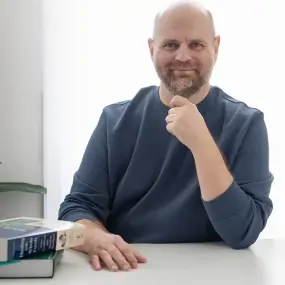
Damon Iacovelli
Master of Acupuncture and Oriental Medicine | Licensed Acupuncturist | Licensed Massage Therapist
Hi, I’m Damon, Tai Chi enthusiast, health advocate, and board-certified acupuncturist, Chinese herbalist, and medical massage therapist.
My passion for Traditional Chinese Medicine was born from my travels to study qi gong meditation and martial arts with monks in the mountains of China. I have had the privilege to study under many highly respected doctors from China with specialties in neurology, women’s health, oncology, and orthopedics – including doctors of the Chinese Olympic Team. Under these practitioners’ direction, I was honored to contribute to groundbreaking acupuncture research conducted by the National Institutes of Health (NIH).
Working alongside these doctors, I witnessed firsthand how time-tested treatments can transform a person’s quality of life and discovered an underlying old-world wisdom that holds true today: The human body has an incredible capacity to heal itself. By treating the whole person instead of a set of symptoms, we can often relieve pain, restore balance, and support recovery without relying on pharmaceuticals or surgery. This deep commitment to helping patients heal naturally, effectively, and holistically has been the project of my career.
Today, I bring decades of clinical experience to our practice here at Alleva, where I promote a modern approach to traditional Chinese medicine. My methods combine the best of contemporary diagnostic tests, such as MRI or lab work, with the less invasive and more holistic … Read More


