64. Hormones, Health, And Vibrant Aging - Putting It All Together, with Dr. Prudence Hall
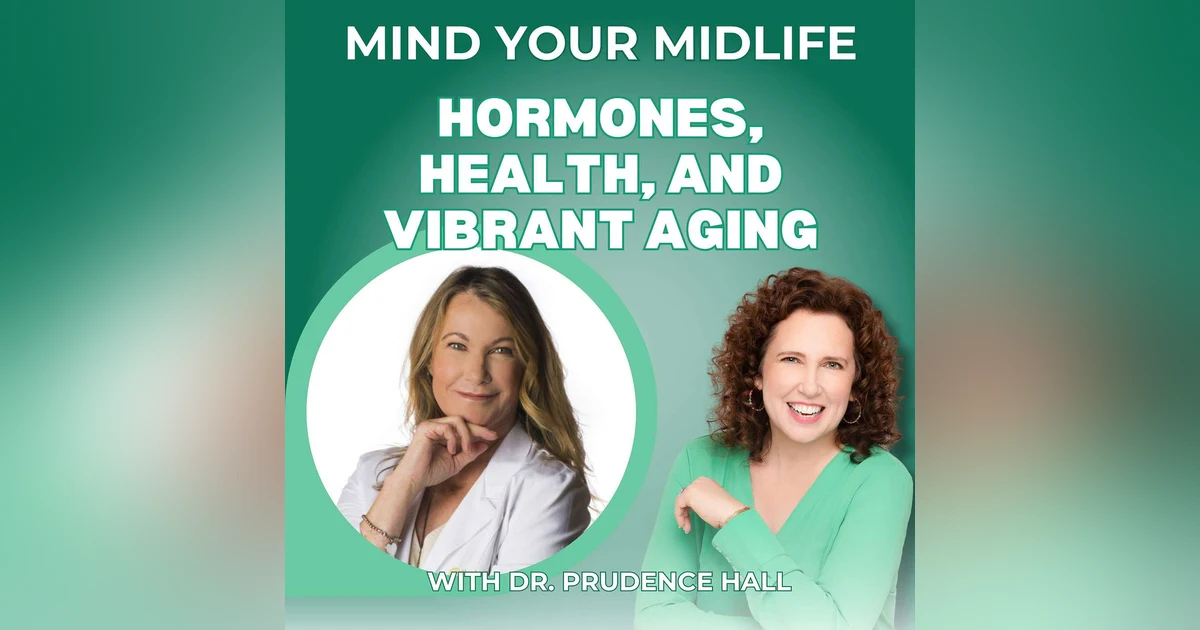


Ever wondered what it would look like to age with energy, clarity, and confidence instead of decline? What if midlife—especially menopause—wasn’t something to just “get through,” but an opportunity to feel better than you have in years?
In this episode of Mind Your Midlife, I sit down with renowned OBGYN Dr. Prudence Hall to talk about what she calls vibrant aging—a holistic, empowering approach to perimenopause, menopause, and life beyond it. This conversation builds beautifully on last week’s episode where I shared my own hormone journey, and together they paint a much bigger, more hopeful picture of what’s possible for women in midlife.
Dr. Hall shares decades of experience working with women to optimize hormones, reduce inflammation, restore energy, and reconnect with purpose. This is about so much more than symptom relief—it’s about reclaiming joy, passion, and confidence in your 40s, 50s, and beyond.
BY THE TIME YOU FINISH LISTENING, YOU’LL DISCOVER:
✔ What “vibrant aging” really means—and why aging doesn’t have to equal decline
✔ Why menopause can be a powerful turning point rather than a midlife crisis
✔ How hormone balance affects sleep, mood, weight, brain health, and confidence
✔ Why many chronic diseases associated with aging are not inevitable
✔ How purpose, passion, and self-trust play a critical role in women’s health
🎯 OMG Moment:
How you handle menopause now can shape the next 40 to 50 years of your life—your energy, your health, your confidence, and your joy.
Take Action
- Listen to episode 63 and episode 50 for related HRT topics
- Find Dr. Hall's recommended books at cherylpfischer.com/read
- Catch the bonus episodes here (or subscribe on Apple podcast)
- Connect with Dr. Hall at https://www.drprudencehall.com/
Why This Episode Matters
So many women over 40 and 50 have been told that exhaustion, weight gain, sleep issues, and loss of motivation are “just part of aging.” This conversation challenges that belief in a big way. Vibrant aging is about informed choices, self-care, mindset shifts, and believing that you deserve to feel good in this chapter o
**Find bonus episodes by subscribing where you find Mind Your Midlife on Apple podcasts - or go to cherylpfischer.com/bonusepisodes.
🌸 Liked this episode? Share it with fellow Gen X women navigating hormone balance, an empty nest, and/or self-confidence!
🫶 Love this show? Leave a review to help more women over 50 find us.
💡Want menopause support, mindset shifts, or support with midlife transitions?
- Build a mindset for success with the private bonus episodes!
- Book a free Mindset Coaching / Intro Call: cherylpfischer.com/coaching
Let’s talk midlife body positivity, self-talk, and redefining aging for women — without the “midlife crisis” narrative. Every week I'm adding new success strategies for midlife women.
Connect with Cheryl, Midlife Coach: Instagram | LinkedIn | Website
00:00 - Setting The Stage For A Series
01:45 - Why These Two Episodes Connect
03:38 - Introducing Dr. Prudence Hall
05:22 - Defining Vibrant Aging
07:58 - Emotions, Adversity, And Resilience
10:15 - Aging Without Disease Is Possible
12:03 - Patient Transformations And Lifestyle
14:11 - The Turning Point: Magic Of Menopause
17:22 - Hormones As Fast Catalysts
19:25 - Heart Health, Cholesterol, And Estrogen
21:31 - Safety Misconceptions And Evidence
23:53 - Perimenopause, Birth Control, And Testing
26:25 - Purpose, Healing Trauma, Finding Bliss
29:22 - Coaching, Direction, And Reinvention
31:27 - The Book With Suzanne Somers
33:00 - Where To Learn More And Free Book
34:20 - One Big Takeaway: Balance Hormones
36:05 - Host Wrap Up And Action Steps
39:20 - Share, Subscribe, And Bonus Content
0:29 On last week's episode, I shared with you my story so far with hormone replacement therapy. And I've gotten so much positive, curious, interested feedback from that episode that we're gonna make a little series. It's a series of two, but that counts as a series. And today I'm pulling in an interview that I did with a very well-known OBGYN who talks about vibrant aging. And this is gonna go really nicely now that we're digging into this topic already. Let's talk about it. Welcome to Mind Your Midlife, your go-to resource for confidence and success, one thought at a time.
1:17 Unlike most advice out there, we believe that simply telling you to believe in yourself or change your habits isn't enough to wake up excited about life or feel truly confident in your body. Each week, you'll gain actionable strategies and, oh my goodness, powerful insights to stop feeling stuck and start loving your midlife. This is the Mind Your Midlife podcast. There's no one size fits all solution to moving through perimenopause and menopause in a smooth, less bumpy, less painful, and upsetting manner.
1:59 There's no one size fits-all solution. And that being said, I want you and me to be as informed as we can be. And so if you haven't listened to the previous episode of Mind Your Midlife, make sure that you do that. You don't have to pause right at this moment and go listen to that one. You can do it after this, but I want to make sure that you're aware they go together. You will see the link in the show notes, or you can just scroll right down. It's a previous episode. And listen, that's my story. This interview I actually recorded a while back when I was still starting to make a lot of the decisions that I was making for where I was gonna go with my story.
2:44 And so knowing that, I think you're gonna see how I ended up where I did. That's why I say these two go together. And right now, as these episodes are releasing, it's the holiday period. Maybe you have a little extra time to go for a walk and have a listen. Maybe you need a break from whoever's at your house. So listen to both. And I also had an extra conversation with today's guest about what she actually eats because you're gonna hear us talk about healthy and anti-inflammatory eating and kind of allude to it a few times. We went into that in more detail, and she had some really cool advice and cool ideas and tips. And so that extra piece is going to be in the confidence deep dive bonus episode series this week.
3:30 Now, this month, you may or may not know, the series is how to stop being your own worst enemy, and it comes out every Wednesday on the private podcast on Apple, or you can subscribe if you don't use Apple at CherylpFisher.com/slash bonuse episodes. But I'm taking a little break from that series this week, and I'm going to throw in this discussion I had with her about ways of eating in an anti-inflammatory way that could be really, really meaningful and powerful for you. So make sure you check that out. My guest is Dr. Prudence Hall. She is a pioneer in what she calls vibrant aging.
4:11 Now, to me, vibrant aging means I can do what I want to do during this period of life. I can go exercise at bar class here in my neighborhood where there's lots of 20-somethings, and I can hang with them in that difficult bar class, which if you don't know what that is, it's like Pilates, sort of. And Dr. Prudence feels the same way. She is a physician, a gynecologist, and she believes aging doesn't mean decline, it means opportunity. And she uses a holistic approach, not simply a medication approach. She looks at sleep, movement, nutrition, optimizing hormone levels so that we can have energy, creativity, and confidence.
4:59 All right. Let's keep learning more of that, right? She also co-authored a book with Suzanne Summers that you are going to hear about. Grab it from the show notes. And let's jump in. Tell us you talk about vibrant aging, and we've talked about it before we've recorded. And coming back to ourselves, and this is mind your midlife, so of course I'm interested in this. But what does vibrant aging really mean to you in practice? Yeah. Well, it means a whole bunch of things. But first of all, I would say there's a childlike kind of um aspect to it.
5:41 For example, you wake up after eight hours, nine hours of deep sleep, and it's a summer's day, and you're excited and ready to play, ready to learn, uh, ready to say, hey, that's a good way of doing it rather than this way, very flexible, sort of like a child. And so that is uh kind of the feeling of radiant or vibrant, vibrant aging. And then there's on the physical level, there's the uh an absence of disease. So not growing old and developing heart disease and high blood pressure, dementia, autoimmunity, cancers, all you know, so many different diseases that are normally accepted as diseases of older aging.
6:23 No, that that's optional generally, and to to not have those kind of ages, uh aging diseases are, I think is a very important part of vibrant aging. And then on a spiritual level, feeling connected to ourselves or to the no-self if we really exist, and to consciousness and to feel secure in uh expressing love, in giving love, which I think is the primary reason that I'm here. So all of those things lead to a life that's just full of uh passion. Joseph Campbell once said, follow your passion. You know, what are you passionate about? And that is a really important element of vibrant and radiant living.
7:08 I agree. And it's interesting how life can kind of beat us down and we sort of forget about the passion part, you know, or just robots going through day after day after day. And even though I said, okay, that happened in the Palisades fire, okay, that happened. I accept that. Then there's all the stuff with the insurance companies that I'm still saying, okay, it just happened. There is a lesson in this. So I think approaching adversity with a sense of what is new that I needed to learn. Was it, you know, a non-attachment to possessions? Was it just, was there something better out there for me?
7:49 And I I really am now seeing in some ways why personally my house might have built, I mean, burned and have given me a gift. But it's it's uh, yeah, those things arise and then we struggle with them and we work through them, and we can still be vibrant and radiant. And I would just throw in there that it is okay to be mad about them at first as well. Yeah, because if somebody's if you're listening and you're thinking her house burned and she's getting something good out of it, I'm sure that wasn't the case at the beginning. That was the case. And actually, I I'm I'm I I I actually that was the case.
8:32 However, other things can get to me, and it's not the case. So I don't, I I wouldn't advise our listeners or either you or I, as you well know, to stuff emotions and say, I am not feeling this way. You know, it's like total grief, total loss. Okay, let it come through. That too. I I didn't actually feel that with the house, but it with other things, especially a loss of love, I can really feel that way. And then it's just like, okay, I'm surrendered to it. Yeah. Just let's work it through. Yeah. Yeah, feel it and work through it. Yeah, I agree. And I want to come back to something else you said because you said I can't remember if this was the exact phrase, but you said the absence of illness, basically.
9:17 And I just want to say that again because it it almost feels sometimes like we think that as we get older, we're going to have chronic diseases and problems and illnesses, and that's the way it is. And you're saying that's not the way it is. That is absolutely not the way it has to be. So we mind the bottom line with our physicality, and that means a lot of different things. It's kind of a puzzle that's put together as to how do we depart, do we avoid these diseases as so many people uh have when they get older? And there's there's a very, I think, a clear path, and it takes some effort and it takes some knowledge, but we do not have to age with diseases.
10:09 I everybody who's listening, hear that. I just like I want everybody to hear that, including myself. When it happens us to move it fast. Yeah. Yeah. We do not have to age with diseases. Okay, so what about some of your patients maybe who have had had either physical or kind of emotional mental concerns, kind of felt lost in midlife, and you've worked with them on this concept of vibrant aging and on the different ways that they can make changes. How have you seen this help them? Oh, uh dramatically. So patients will come to me with a very high cholesterol, high blood sugar, and I measure the hemoglobin A1C that's like how much uh you know sugar is surrounding the cells.
11:00 So that's over the last four months. And they come with all kinds of problems hypertension, uh, autoimmune diseases, and by balancing their hormones back to youthful levels, and there are a lot of hormones that I balance, uh also setting up an exercise program or something that they love to do in terms of movement, and how to really eat an anti-inflammatory or a low inflammation, pretty low carbohydrate, natural diet, you know, from the land, pasture-raised, organic as much as possible. Uh Cheryl, I've seen them change from not wanting to leave the couch to being active and dancing and writing novels and traveling the world, setting up uh all kinds of um of beautiful things to help people in the world, schools for children where there's no education in some countries for children, and stopping the sex trade, you know, things like that.
11:55 So really powerful things. Once we get our energy and our confidence back, and we start believing that our passion and what's actually inside of us, you know, those desires and that yearning and who we actually are, that we might be afraid to ever show anyone, once we start really working with that true being, magic happens. Just magic. Yeah. What do you think is the turning point for a lot of people when this kind of starts to really change things for them? Is it that they start eating better, they start exercising? I mean, probably the real answer is everything, but is there some period where it where it flips?
12:38 Yeah, yeah. So I I would call the turning point for many women, rather than the misery of menopause, the magic of menopause. Because when you go from feeling uh fairly immense suffering and and decline in the physical body and a decline in joy and our emotions, to really feeling wonderful, 35, 30, when we had all these dreams in life. So that's the turning point. So menopause strips us of energy, health, uh, emotional well-being and balance, and a lot of other things. You know, we gain 30 or 40 pounds, we can't sleep, we're irritated, we're just moody as heck.
13:20 And we take it out on our loved ones, and then we feel more and more alone. So isolation is a very common menopausal or perimenopausal symptom. And menopause starts at 44 to 48 and perimenopause at 35 to maybe 43. So it can start, it starts a lot earlier than when I started this work four decades ago. Um, and then hormones. That's that's why I'm still doing this, Cheryl, after four decades, balancing women's hormones because it happens so quickly. When you think about detoxification, you know, detoxifying the body, that's important, very important, and we do feel better, but it takes six months, eight months, rebuilding the gut, uh, you know, getting into a good exercise program and losing 30, 40 pounds, doing that.
14:10 I mean, that really helps bring our energy back. But hormones affect everything, they help to detoxify us, they help to rebuild the gut, they make us want to exercise, they build muscles much more quickly. So I would say, and I started in different ways. I started saying, okay, we're just gonna work with diet. Now that's Jeff Bland's functional medicine approach, and it is highly effective. When he started out, uh, the Institute for Functional Medicine and the whole um, you know, integrated way of looking at health, they got miraculous results simply by changing the diet. So that's a really close second. I would say a first or a second, you know, eliminating the things that are causing inflammation and uh, you know, changing back to a very healthy, good, yeah, very primary basic diet.
15:04 Yeah, yeah. I think you've said or referred to hormones as kind of the body's software. And hormones, as we know, are regulating cell function in the body. They're regulating everything, I dare say, in the body. So you're saying that when you are able to balance hormones for women, it's a really fast improvement. Did I hear that correctly? Absolutely it is fast. It doesn't take a week or two, but within a month, a month and a half, two months, women are saying, I definitely feel better.
16:24 I'm sleeping deeper, the hot flushes are gone, I feel much, much better. If not, it's like I'm jumping back on with them, you know, more quickly because we check in at a couple of days, we check in at three weeks, we I see them at two months after the first visit. So if real magic is not starting to happen, I know exactly the direction to go to. Yeah. Because I look at their hormones each time, and I'm looking at all of their hormones. I I to me it that's such a cool answer because we're we're hit with all these things. This could happen and that could happen, and blah, blah, blah, blah, blah. But there's something out there that could make us feel better and it will happen quickly. Like, oh my goodness, amazing.
17:06 And on top of it, it is a major way to prevent heart disease, hypertension. 85% of high blood pressure comes from a meta of our metabolic diseases like high blood sugar, too much insulin. And 85%. So you change the diet, and estrogen will lower inflammation. It also lowers uh stress. Stress is a huge factor in disease formation. Uh, it lowers our LDL cholesterol, as well as the subparticles of LDL that are strongly associated with heart disease. That's LP little A and Apo B, apolipoprotein B, APOB. And it also, so less inflammation, less stress.
17:51 Oh, and it lowers our blood sugar. So those are the core root causes of most diseases, including cancer. So hormones will lower all of those quite statistically, quite significantly. I I'm sitting here, listener, with my jaw hanging open, because I have over the past few years seen my LDL cholesterol start to go up. And there's no reason for that. I eat a very healthy diet, or at least a medium healthy diet. And so I found that frustrating and I refuse to take medicine for it. So I'm getting ready to head out on this quest to figure it out. And you're saying that maybe it could be a hormone balance issue.
18:34 It frequently is. 10% of our diseases that we get are genetic, the rest of it is lifestyle and hormonal and uh toxicity based. So yeah, Cheryl, I think I think that's something really worth looking at. Yeah, and obviously we're not giving medical advice here. So well, we're talking about uh trends and what we can do for ourselves to help our our bodies to grow younger and more vibrant and more healthy. And uh it's it's more passing on information because I think a lot of women feel, and men, I take care of men too, but as a gynecologist, it's mainly women, that I think that women feel, well, hormones are dangerous, and I'm gonna develop more breast cancer.
19:21 Well, that was, you know, with primerin, the pregnant mare's urine, uh, and it it was not a bioidentical hormone, it wasn't our hormone, and really it was the synthetic progesterone, madroxy progesterone, that was the carcinogen, increasing breast cancer quite significantly in that study. But now it's we are not using those hormones. I haven't used those hormones for well, four decades. Yeah. Yeah. So, well, let's go into that a little bit because I I do think that doing an episode about this topic is kind of doing a service in the sense that a lot of women still believe or have heard, or even I feel like doctors still think that there's a lot of controversy about hormone replacement therapy or hormone therapy.
20:12 And it sounds to me like that's not necessarily true, but maybe we just don't have the updated information out there or the updated knowledge. So for three decades, I was lifting this thing on my shoulders and, you know, saying it and saying it and saying it. And then it tipped, I would say, about seven to eight years ago, where it's like everyone woke up and said, Oh my god, there's years of literature showing how this is a way to really prevent Alzheimer's disease. Dr. Dale Bredison, brilliant, brilliant researcher. He headed the UCLA clinics for uh Alzheimer's disease, Parkinson's, and other forms of dementia.
20:57 And he's personally told me, Prudence, keep prescribing that estrogen for women because it helps their brain so much. And testosterone for men's brains is really critical. So I we woke up actually as a field, you know, as a field of research and and Medical knowledge and and um clinical knowledge to to understand that if you lose all your hormones, you are going to die quickly, maybe a day that you would live. So when our hormones are imbalanced and these risks, these these root core causes of aging rise, it is not good. It is really dangerous because how many women die of a heart at a heart attack?
21:42 Yeah, so it's the number one cause of death in women. And in my practice of almost 40,000 women now, I've had four heart attacks. Uh, no deaths, they're all alive, they're all vibrant. One of them probably didn't have a heart attack, so it's probably more like three. But that number is an extraordinary number in terms of where are all these women dying from heart attacks? They aren't in my practice. And it also has to do with eating well and exercising. But even people who say I'm going through a real stressful time and the eating went south, and the hormone, you know, my exercise is kind of on hold for now, they still are doing well. And I've had one patient with a stroke, and thank God she had that stroke.
22:24 She lost a hundred pounds and she got married, and she is so happy. It was like with Ram Das, you know, he's one of the gurus of the 60s and 70s. He said it was a stroke of luck. And um, you know, I don't want anyone else to have a stroke of luck, but there's one stroke in the four heart attacks, all doing well. So, anyway, the numbers are behind that. You know, research is behind those numbers and supports this kind of happiness over hormonal balance. So I don't want women to be afraid of hormones. There's a lovely book out there to read, aside from my book, Reading Again Forever, and that's free for everybody to get online. But if if uh you are afraid, I would say that the seminal book on hormones are safe was written by Avram Blooming.
23:14 And Avram was an oncologist. He recently retired at USC, that's my alma mater too for my medical school and residency in gynecology. And he says, in the book, all the studies that show that estrogen doesn't increase hormones. And he said, I mean, he says in this book, you know, all the wonderful things that are are very helpful, I think, in terms of not feeling afraid for hormones. Even he said, even if my daughter had breast cancer and now she's an approaching menopause, I would tell her that it is safe to use hormones in spite of that history of breast cancer. Wow. Now that's that has not been the standard of care.
23:56 And when people come to me who have had breast cancer, I make sure that we have an excellent oncologist who says it's okay for her to take hormones. You know, the only hormone that was really implicated was progesterone. I mean, that that's a hormone that when it's a natural progesterone, it's actually preventative of breast cancer. Yes, it was the natural is good, and the progestin was the problem, correct? Exactly. Yeah, exactly. Yeah. I it's it's such a lingering misconception. And I actually a few months ago had a uh physician's assistant on the podcast, and she just really felt like there was maybe a generation of doctors out there who never got any instruction in this.
24:45 And I don't know if you would agree with that because of that study that came out 20 some years ago. Yeah, 2001. And then they repeated that study without the progestin, and breast cancer was significantly, significantly lowered with women only on primerin. But still, it's not a hormone that decreases inflammation and gets the, you know, lowers the LDL cholesterol and does all of that other wonderful beneficial stuff. So yeah, I would say a lot of doctors don't know about perimenopause. And women come in and and they put them on the birth control pill, and I've measured many, many hundreds of women, probably thousands of women at this point, uh, on the birth control pill, and their hormone levels look like menopausal women, except for one hormone, that the FSH, which says that they have good amounts of eggs left, so they're fertile, but everything else looks like a menopausal woman.
25:42 And they come in complaining of symptoms of menopause. So I would say don't go on the birth control pill if you're feeling perimenopausal or feeling like you're going into menopause. It's not a it's not the correct solution. Uh wow. Uh again, that was my story, actually. I was having some issues, and this was uh probably four years ago. I'm in menopause now, but I was having some issues that I wasn't happy, and that was the solution I was offered to go on the pill, and I said, I don't want to do that at this age, and I just suffered through it for a couple more years. So I think that's a common story, unfortunately. Yeah, yeah, it is.
26:23 But I urge our listeners and viewers to educate your doctor. I have I have patients who bring in my book to them or to Dr. Avram Blooming's book to them, and and uh doctors are catching on. They're catching on that this is an important step to take. I would say start measuring your hormones around age 30, because menopause is now about 10 years younger than it used to be many decades ago. Wow. Okay. Yeah, I think it's lifestyle, Cheryl. I think it's increased stress, uh opening packages in terms of eating or going to fast food restaurants, uh, a lack of sleep, um, toxicity, not knowing how to eat.
27:06 Oh my God, there's so many ways of how to eat out there. I think everyone is fairly confused. Um I think it's more lifestyle kinds of things that are creating earlier menopause. And that's fair. Uh, one of the things I'm always saying to my coaching clients is we just need to take a little bit better care of ourselves at this point in life. Just a little bit better. It doesn't have to be hard. Just be a little bit kinder to yourself. You deserve it. And certainly the way we eat is a piece of that, a huge piece of that. Okay, so let's come back then to this.
27:48 Let's put all of this together, is how I'm gonna say it. Let's come back to this idea of vibrant aging, because certainly it's about hormones, it's about what we're eating, it's about moving. You also mentioned purpose, and maybe that's having the energy, having the creative ideas, feeling good about yourself. It's kind of all wrapped into that. So, how do you help people, or how do you what advice do you give for people who need to kind of get that peace back, that passion and confidence? That is a huge piece, Cheryl.
28:29 It is the the difference between having a life that's well lived and a life where we say, gee, I was afraid to do that. Right? I wish I hadn't have held back. Yeah. So I say a little bit, be a rebel in your life. Really get to do your do your um, you know, the the painful work of dealing with past trauma because that gives us so much less weight on our shoulders. Because we don't want to always be triggered. You know, somebody says something, something we're triggered, and it brings us back to that sort of helpless spot. So I encourage women and refer to some very good people who do this, heal the trauma as much as you possibly can.
29:11 Do the inner work, and the inner work is knowing what's inside of you. How might I react? What is my deepest longing? What do I need to do in in terms of knowing that that I'm happy and that I'm and I'm not uh feeling like a victim. So I've done so much work like that, Cheryl. And I think that certainly what you do in terms of your profession is enormously helpful to people. Right. You know, we almost need we need someone to help guide us a lot of times. Yes. And as I mentioned before, Joseph Collins says, follow, uh Campbell says, follow your bliss. Yeah. And so I work with them about what they love and what what makes them tick, and when do they during the day do they feel the happiest or the most as though they're on purpose?
29:59 What do you need to do in your life that's gonna fulfill that that person inside who has that longing and that desire? Yeah. And I I went through that with being a doctor. I I I don't have any family members who are doctors. And I I just when I really did some work in college at the university, I I realized that I just love helping other people. Some people are gardeners. I'm a gardener of human souls, and I I love people in my patients to discover who they are and what brings them happiness, and then how little by little they can add that into their life and auto-correct the path that they're going on.
30:42 Do they want to go down this path or do they really want to go down that path? And when we feel passionate about something, it's not money that's driving us, it's not status that's driving us, it's not how good we are looking to everyone else, it's how we feel inside. Yeah. And uh, you know, these are conversations and healers that I refer people to, or different seminars that I refer women to. And people absolutely should see you. I mean, being a wife coach. I sincerely, absolutely sincerely know that when women and men are coached, they can it achieve extraordinary things. And without coaching, we're kind of you know, bobbing back and forth.
31:22 It's hard to have that forward motion. Right. It's creating a direction, and it really comes out of us, but we need someone to kind of help us get that out. Yeah. Absolutely. Thank you. And it really, we're all we're not just, you know, the pills we take, we're not just the food we eat, we're not just the job we do. It's all of it, everything together. And I I do want, if you're listening, I do want you to hear that at this point you're in your 40s, your 50s, your 60s, you can have you can continue your passion if you're already doing it. You can have a whole new one, you can change everything and do a whole new thing. It's not too late.
32:03 You can do it. So that's that's kind of what I hear and what you're saying, too. This is very much so, Cheryl. Very much so. Yeah. Okay, so before we run out of time, tell us just a little bit more about the book that you co-authored with Suzanne Summers, Radiant Again and Forever. One day Suzanne took me to task and she said, Prudence, it's time to write your book. I've written five already. You're a writer, Suzanne. You're a writer. Come on. And she said, You are a writer too. And I know it because you're always telling me all the things you've written. So she told me what I had to do. She said, Each chapter is a different hormone that you're we're going to discuss with patients. And that choose a patient, a real patient, that has that hormonal imbalance, and what you did, and what her complaints were or her symptoms were, and how you talked to her and how it was resolved.
32:52 Beautiful uh light in her that really inspired me. So we can do this for each other. And and I'll make sure that the link is in the show notes so that that's easy to find. And in fact, tell us while we're on this sort of topic, how can people find you and learn more about what you do as well? My website is uh The Hall Center or Prudence Hall MD. I'm in the uh process of kind of building that Prudence Hall MD better. Oh, Dr. Prudence Hall, sorry. See, I don't even know Dr. Prudence Hall. So both of those. And uh my book is for free. If you want to download it, you just put your email and it downloads to your to your email so you can read it. I have so much compassion for the pain and the loss of ourselves in not understanding what's happening.
33:39 I mean, women come to me still and say, I think I'm crazy. And so I hope we're all pretty crazy, frankly. But I hope that this craziness, this intense suffering is not going to be permanent. It's not gonna be permanent. I fully agree. I fully agree. And if you're listening and you're not seeing the video, I just want to say that she does not look like she's been out of menopause for 25 years. Thank you, Cheryl. You are welcome. Well, you are welcome. Okay, so let me ask you this to kind of wrap us up. I always say, you know, people listen to podcasts while they're driving, they're doing the laundry, doing the dishes, whatever, whatever, and they can't remember everything.
34:24 So, what is the one thing that you really want the listener to take away with her, even if she can't remember everything we've talked about? What's the key thing? Because hormones are the primary thing that I do in my profession, I think it's very important to know that how you handle your menopause will dictate the next 40 to 50 years of your life. What diseases that arise, how you feel, uh, whether you get divorced or not divorced, whether you find your new true love or not, whether you have a good, fulfilling life. And it should not be minimized. It must not be minimized because if we just sort of say, oh yeah, well, we'll get through it.
35:09 What happens is we don't get through it. Minipause stays there, and it just stays there for 20, 30, 40 years. So get your hormones balanced, find a wonderful doctor who's going to support you and who knows, you know, basic stuff. This is not so hard, Cheryl. It's not such a complex field. I still have a couple of hard cases, but most of them are so easy. Somebody who really loves and wants to help you balance your hormones and then bring them back to youthful levels. Yeah. So your body will function efficiently and effectively and joyfully, and you'll have the energy to have a great 30, 40, 50 years of your life left. I that was really impactful for you to say what we're doing now is going to affect that 40 to 50 years.
35:53 Dramatically. Thank you for saying that. And that's going to stay with me, which means it's, I'm sure it's going to stay with everybody listening as well. Thank you so much for joining me today. This has been such a powerful conversation, and and I know it's going to make a difference. Well, thank you, and you make a difference. Together, we're making even more of a difference. So I love, I love partnering, and it's so lovely being invited to speak to both of our audiences through your guidance. You know, so often our guests give us these the one thing you have to remember moments that are just mind-bogglingly powerful.
36:34 Mic drop. The fact that Prudence just described menopause in a way that is empowering is my favorite thing. So if you are not feeling yourself in all the different ways that might be happening, you can solve it. How empowering is that? And not only can you solve it, and I'm gonna link in the show notes the episode I did with Adrian Thompson about the same topic. You will love hearing both. We went into some of the more kind of detailed pieces on that one. So listen to them together for sure. But not only can you solve it, you should.
37:17 Because Dr. Hall just said what we do now is going to affect the next 40 years. How we feel, what we can do, the illnesses we get or don't get. Oh my goodness. OMG. That was a mic drop. I hope that you feel empowered to grab the book, listen to the other episode, find a practitioner who is knowledgeable about menopause, reach out to Prudence and find out more. Take action. That's what I'm learning, that's what I've heard, and I hope that empowers you.
37:57 Now I also know that you have friends and connections who need this information. So maybe take a screenshot of this episode right now, put it out on your stories on social media, tell people to listen, or just copy the link from whatever podcast app you're listening on, send it to your friends, tell them they need to listen. This could potentially make them feel better. And sharing is such a powerful way for us to be able to get the word out for the podcast as well. You can always simply go to mindyourbidlifepodcast.com and make sure you remember that there is a secret private podcast mini series happening every month for paid subscribers.
38:46 And Prudence and I had a little extra conversation about exactly what she eats that will be there as well for our paid subscribers so that you can get a little bit more detail. And she gave some great ideas in that conversation. So I will see you over there. The links are in the show notes. And remember, midlife is your time to take just a little bit better care of yourself on the inside and the outside. Just a little bit better makes a huge difference.
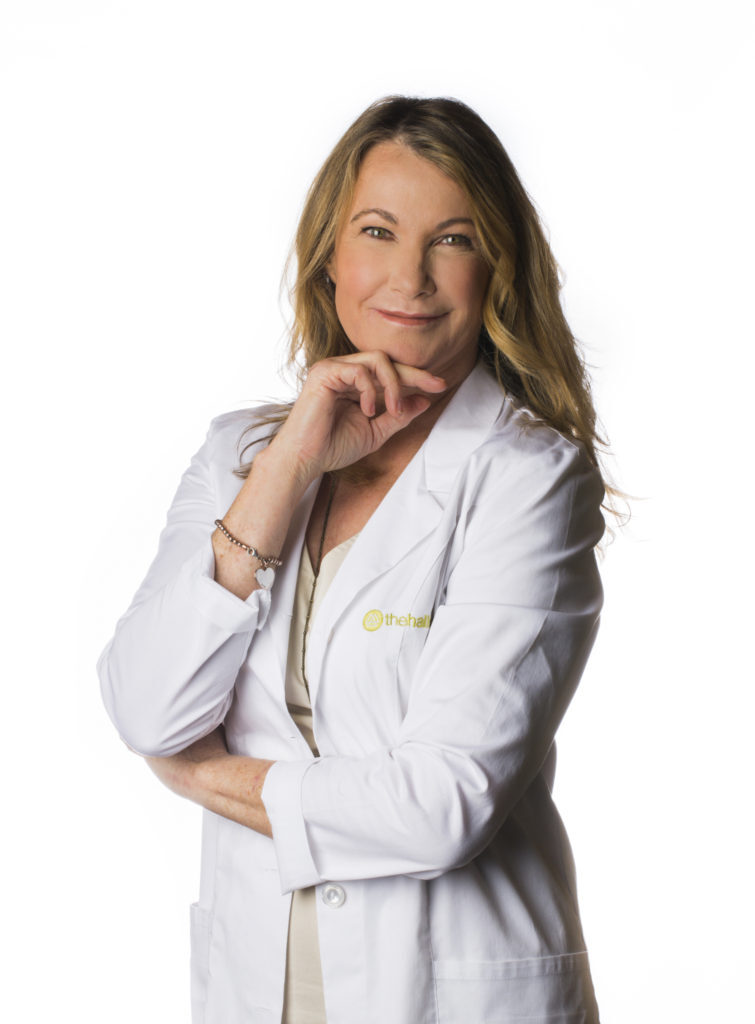
Medical Director & Founder at The Hall Center / Author
Dr. Prudence Hall started as a traditional gynecological surgeon and transitioned her career to focus on regenerative and integrated medicine. As the founder of The Hall Center in Santa Monica, California, she saw a critical need to address the problems confronting women and men experiencing the stubborn and often debilitating symptoms associated with aging.
Her practice is focused exclusively on regenerative medicine, looking into the root causes of conditions and diseases rather than simply treating symptoms. She strives to help clients achieve optimal health and actively prevent disease without the use of pharmaceutical drugs when appropriate.
As a health consultant, she strives to help clients achieve optimal wellbeing and actively prevent inevitable decline using proven natural, regenerative methods. She is also the author of Radiant Again & Forever.