95. Depletion vs Burnout and How to Reclaim Your Energy in Midlife, with Stephanie Malia Krauss


The constant, crushing overwhelm of modern life affects so many of us in our 40s and 50s, yet we tend to internalize it as if it's our personal issue. We often feel like we are failing to balance it all, caught between caring for aging parents and raising children, all while dealing with our own midlife body changes, career pressures, and a 24-hour news cycle designed to keep us hooked.
In this episode, I welcome author, speaker, and strategist Stephanie Malia Krauss. Stephanie is the author of How We Thrive, a book exploring the urgent need to protect our "human essentials"—like sleep, connection, and play—which modern life constantly restricts. We dive deep into why midlife feels like "compressed, catastrophic living," the four "storms" of modern life that are depleting us, and how to practice "rehumaning" to finally replenish your energy.
What You’ll Learn:
- ✔ The Four Storms of Modern Life: How being overtapped, overworked, overstimulated, and overwrought combine to create extreme volatility and drain our energy.
- ✔ The "Third Quarter" Squeeze: Why navigating a 100-year lifespan means midlife women are managing complex obligations for themselves as well as loved ones in their first, second, and fourth quarters of life.
- ✔ The Practice of Rehumaning: How to protect your 14 human essentials through reflexive, routine, radical, and rapid everyday choices.
- ✔ Depletion vs. Burnout: The empowering realization that feeling depleted is not the same as being burned out, meaning you actually have the power to be replenished.
Episode Chapters:
00:00 - Constant Stress In Modern Midlife
02:25 - Grab The Self-Care Menu
06:10 - Why These Storms Hit Caregivers
12:30 - The Four Over Conditions Explained
20:10 - Humane Tech And Breaking The Hook
26:20 - What Rehumaning Means In Practice
33:40 - Easy Wins For Sleep And Connection
39:50 - Reflexive Routine Radical Rapid Rehumaning
44:40 - When You Need Help Or Change
47:20 - Depletion Not Burnout Final Takeaway
Links & Resources:
- Cheryl's Free Self-Care Menu: cherylpfischer.com/selfcaremenu
- Stephanie's Website & Free Resources: rehumaning.com
- Stephanie's Book: How We Thrive
Why This Episode Matters By understanding that your exhaustion isn't a personal failing, but rather a reaction to an unnatural modern world, you can begin to reclaim your human essentials. Small, simple shifts can right-size your life and replenish your spirit for the decades to come.
Take a little bit better care of yourself in midlife.
Join me on Substack! The benefits are growing as we grow. Subscribe here: mindyourmidlife.substack.com.
Find the GreenSynergy Elixir and Energy Fizz duo at cherylpfischer.com/greens. Grab your water bottle, add these, and enjoy!
Grab your Vitamin G pixie sticks for detoxification and wellness at cherylpfischer.com/vitaming.
🌸 Liked this episode? Share it with fellow Gen X women navigating hormone balance, an empty nest, and/or self-confidence!
🫶 Love this show? Leave a review to help more women over 50 find us.
💡Want menopause advice, mindset shifts, or support with midlife transformation?
- Find out more about the Midlife Recharge at cherylpfischer.com/coaching
- Join the inner circle by subscribing on Substack: mindyourmidlife.substack.com
Let’s talk health after 50, self-talk, and redefining aging for women — without the “midlife crisis” narrative. Every week I'm adding new success strategies for midlife women.
00:00 - Constant Stress In Modern Midlife
03:05 - Grab The Self-Care Menu
06:50 - Why These Storms Hit Caregivers
13:10 - The Four Over Conditions Explained
21:43 - Humane Tech And Breaking The Hook
27:53 - What Rehumaning Means In Practice
35:13 - Easy Wins For Sleep And Connection
41:23 - Reflexive Routine Radical Rapid Rehumaning
46:13 - When You Need Help Or Change
48:53 - Depletion Not Burnout Final Takeaway
Constant Stress In Modern Midlife
Cheryl Fischer
Sometimes I wish that we had the words to describe the sort of constant stress and angst that we're dealing with at this point. And some of that is because of the state of the country, the state of the world. But I'm not talking about politics. It just seems, no matter what your views are, that we're always sort of waiting for the next shoe to drop. And we're stressed by just being able to afford life and by not having downtime and by having this little, I'm grabbing my phone, this little computer in our hands at all times, telling us terrible stuff and maybe sometimes funny stuff because that's great. But it's always there. And then, of course, the stress of midlife. I today have invited a guest to join me to give us a term for how we can create a better situation for ourselves in dealing with all these things. Let's talk about it. Welcome to Mind Your Midlife, your go-to resource for confidence and success, one thought at a time. Unlike most advice out there, we believe that simply telling you to believe in yourself or change your habits isn't enough to wake up excited about life or feel truly confident in your body. Each week, you'll gain actionable strategies and oh my goodness, powerful insights to stop feeling stuck and start loving your midlife. This is the Mind Your Midlife podcast. Now, before we go too far into this, I want to make sure that you grab the self-care menu that I have created for you. And this is a free resource. You can go to Cherylpfischer.com/slash self care menu and you will get it in your email. And it's going to give you options to pause and take care of yourself that only take a minute if that's all you have, or five minutes, or 10 minutes. I'm giving you a little menu. Save it on your computer screen, print it out and save it somewhere that you'll see it a lot. It will help you take a breath, maybe even literally take a breath.
Grab The Self-Care Menu
Cheryl Fischer
And we want to see what we can do that is enduring, right? How can we best handle all the stress of this period of life with body changes and parental changes and kid changes and career changes and the existential dread that a lot of us are feeling? And every time we open a browser being hit with terrible news stories that are trying to draw us in and make us scared, how do we handle all that? What can we do? And why do we feel like it's so overwhelming? Well, my guest today, Stephanie Malia Krauss, is going to help us with that. She is an author, speaker, and strategist focused on rehumaning. She works a lot with kids and young adults, rehumaning childhood, and then with all ages as well, which of course we're sticking with midlife today. Her newest book is called How We Thrive. And that book is exploring the urgent need to protect human essentials. And by that we mean sleep, play, connection. You've heard us talk about that on the podcast, all of those, that modern life restricts or maybe even rejects to a certain extent. She has been an educator and a social worker who has gone from the classroom to Congress, advised states, districts, and national organizations on how to prepare and care for kids. And she is the best-selling author of multiple books. Welcome, Stephanie. Thanks for joining me.
Stephanie Malia Krauss
I'm so excited to be with you, Cheryl, in part because as a middle-aged human myself, this is my first podcast where I get to only focus on me and my peers. Oh, is that really true? That's cool. Yeah. So I've had, you know, all kinds of podcasts. I often go in and talk to folks who are thinking exclusively about kids, or I'll talk about general things like, you know, the state of being a working person or well-being, but I'm so eager to focus on our particularly complex period of life.
Cheryl Fischer
So thank you for inviting me. Boy, is it complex. Oh my goodness. What a and what a good starting point that is. So if you're listening right now, you know that I say this all the time. And that's partly because it's true. But there's so much going on during this period of life. So much change, typically, so many pressures. We've got aging parents, we've got kids who are doing who knows what, changing and growing and becoming adults. We've got body changes, we've got retirement on the horizon, is everything all at the same time. So that is why we focus on this period of life. And you also talk about what you call the storms of modern life. And so I feel like we're about to pile on to everything I just said, but what are some of those storms?
Stephanie Malia Krauss
Yeah, so I think it's helpful to kind of take this in a context that I've really been thinking about for quite some time. So my background is in human development, really thinking across the lifespan. So the early years to the elder years. And there are a couple of researchers out of the UK who have increasingly been talking about us having a 100-year life.
Why These Storms Hit Caregivers
Stephanie Malia Krauss
And I find for my work, breaking it into these quarters can be really helpful. So my consulting shop, for example, is called first quarter strategies. I'm really thinking in my work about what are all the things that young people need in the first 25 years of life to support their well-being and their well-becoming. Well, I'm in my third quarter of life. And in that sort of middle space that we're in, whether it's the end of the second or the beginning of the third, what we can kind of think about is we have, you know, when our kids are in the first 25 years, they're really only responsible for themselves largely. Now that starts to change as they get into young adulthood. But for us in this third quarter or the end of the second quarter, we have obligations often that stretch into other individuals in the first, second, and fourth. So when I think about my life, I actually have a living grandmother who was a teenager when she had my mom. So I have two teenage boys who I'm responsible for in the first quarter of life. And then all of the things for myself individually, as I'm developing in my own human, and then my partner, my spouse, you know, everything that he's going through, all of our things as a unit. And then I have a mom, a dad, my in-laws, and this living grandparent. And so in that hundred-year life, when we hit this stage, even without the timely troubles, there's a timeless quality to the complexity because we have demands that really obligate us to care about so many parts of life for so many different people. And so I think about this as kind of compressed, catastrophic living that we have it's not just complexity, it's compression. There's so much that has has to get fit into a day or a week. So that's just life during any time. But the problem is why so many of us feel so overloaded and overwhelmed and depleted is that we're living in a time when we're also in the middle of what I talk about as the dangerous weather of modern life or these particular storms. And the way that you can think about this, it's really impacting different groups extraordinarily. One group are our kids, and another group are caregivers of any age or stage. And those storms are the kind of combination of, for folks who are listening to this on audio, I'm going to use air quotes here, the like weather conditions that are happening all at one time. So one of the weather conditions of modern life, we can think about this like really heavy rain in our lives symbolically, is the sense of being overtapped, that more than ever before, there is a time and resource scarcity. Everything is more expensive. Everything seems to cost so much money. I went to my son, he's on a tournament baseball team, my 15-year-old. So we paid for him to be on the tournament team. And then we show up to the tournament and they're like, it's going to be $15 per adult, $10 per kid per day. So my husband and I had binoculars, like we were bird watching in the cheap seats in like a muddy ditch outside of the fence, because life is so expensive because we had just spent hundreds of dollars, you know, at two different grocery stores. And then we had an electric issue happen in their house. And so, right, the electrician, all of these combinations of things. So that's the overtapped, but also overtapped the time scarcity as never-ending task lists, crowded calendars, the sense that some researchers call this social jet lag, that our schedules and calendars are out of sync with our biological rhythms, with our biological calendar. And there's um there's a weathering or an eroding effect to that, constantly needing more sleep or feeling out of sync with when we should eat and when we should exercise and when we should work. So that's being overtapped. The second weather condition, we can think about this as like the sheer wind shafts, is being overworked. It is the chronic constant busyness, obviously a close cousin to being overtapped. We don't have enough time, we don't have enough money, and we live in a culture and we live in a context where there is so much pressure to constantly perform and produce. You and I both come out of this original career as educators, and we feel this intensely in human helping professions. We feel this intensely at home. There is a researcher and writer, Bridget Shulte, who I interviewed for my book that I talk about these weather conditions in, how we thrive. And she she talks about how in the United States, as an example, we work one and a half to two times more in paid and unpaid labor than anybody else. So we're constantly in need of time and money that we don't have, and we're constantly chronically too busy. Well, the third weather condition is that in addition to needing more time and money and needing less to do, we are really overstimulated with toxic tech. There is an infiltration of the kind of technology that demands our
The Four Over Conditions Explained
Stephanie Malia Krauss
attention and then depletes us of the little bit of energy that we have. And it feels so often inescapable. You can imagine when I talk to kids or talk about kids, the impact of social media, but it's just as much for us, whether it's the platforms that we have to be on for work or the fact that we are so absolutely exhausted that it just feels good in an addictive way to zone out. And then we get stuck on platforms designed to hook and harm us. So we'll call that the like hail of our lives. And then the last um is the feeling of being overwrought, the kind of existential dread or fear for our lives that sometimes is in the background, just kind of like background noise, but can be ratcheted up at any second. And so our nervous systems and just our nerves were kind of constantly on edge. There's a hyper-vigilance to living right now. Um, there's an anxiety and angst to living right now, what we've lived through, what we think is always on, we're always on the cusp of another crisis. And so if you put those together, you know, when I think back to my childhood, there were times where our family didn't have enough resources. We were overtapped, but I wasn't overstimulated by toxic tech. Um, you know, there were times when I, in my early career, was really overworked, but I wasn't enduring a global pandemic or the current political crisis. I wasn't overwrought. And so the the difference today, I think the reason why we feel so depleted is that this weather on top of the intensity of what this life stage would have been anyhow.
Cheryl Fischer
Yeah.
Stephanie Malia Krauss
It just has a wear and tear effect. And what happens is we're so eclipsed by what we have to do, what we don't have, what we've got to get done, zoning out on the tech, what could possibly happen, the next crisis, the next challenge that it keeps us from the parts of life and the parts of being human that actually are responsible for replenishing us that have always historically been there to replenish us.
Cheryl Fischer
You know, there's so many ways we could go with that, because I agree with everything you're saying. And what's kind of coming to the top for me is I have said over and over again, I really blame 24-hour news networks and social media for this movement to the extreme in terms of news and politics, sure, but it's all news. It's everything. And you said it, it's because they want us to keep watching, they want us to keep scrolling. It always has to hook us. Everything has to hook us, and so everything goes just extreme, which is harder to process and is creating exactly what you're talking about. And I've been saying that for ages. Now I realize the irony that I am creating something that is going out there for people to listen to as well. But hopefully, I feel like podcasts are more you can make your own choice, the things you like. It's not quite the dopamine hit of social media. I look at it a little bit differently. I don't know.
Stephanie Malia Krauss
Yeah, I mean, I think that's right. There is, I always think about it this way. Very often, especially in conversations about technology now, there is this sense that the antidote to addictive toxic tech is the absence of technology. And what I would say is sometimes, but more than that, it's the abundance of the good stuff. And when technology can bring you closer to the connections and experiences and information that you're craving, the good stuff, then that is humane tech. And what a gift that we have that opportunity. But when technology pulls us further away from the experiences and relationships that we need to feel nourished and healthy and happy and hearty, then that's toxic tech. So the way that I think about podcasts are really about the content creator. But if you're creating content about something that you are passionate about, that other people are passionate about, and they are opting in, and you are not using behavioral science in a way to hook and harm people, you're pretty good. Um, now that that said, it is actually no secret what tech companies are trained in. There was a book I read that I don't recommend when I was researching how we thrive that was written by a Stanford professor for anyone, New York Times best-selling book on manipulation science, on the actual like matrix of so you're making a tech platform. And it started with like, you know, there were like four quadrants that, you know, what kind of creator are you? And the first one was entertainer, but the fourth one was user or dealer, sorry, dealer. Um, so this idea that like there are content creators across platforms who are explicitly and knowingly hooking us and looking at it as being a dealer. So all of that to say, you know, the difference here, if we are if we have living parents and we talk to our parents about the challenges we're facing at this stage in our life. Every generation has had challenges. But the difference is I live in Tornado Alley and I I think about that combination of different weather conditions, or you think about hurricanes, when different weather conditions come together at one point, that convergence is what creates the volatility. So if we think about, again, the being overtapped as the rain, the being overworked as the wind, the being overstimulated as the hail and sleet, and then the being overwrought as like the extreme heat or extreme cold, it's when those things pair up or combine that we're also still living our lives. And so what happens is hard lives and hard times are harder. But then even times of stability still feel really stressful. And so then the question is well, then what do I do? I think like the tension of my work, Cheryl, is always in like there's something deeply liberating in having language to describe the overwhelm and depletion that you're feeling. Because I think a lot of us can feel like it's a personal failure. Why can't I balance it all? Why can't I do it all? We all go through this. And so to understand that there are weather conditions that are way worse and different than others have experienced before, in addition to the complexity of our lives. And in fact, they make everything more complex and a little bit more intensified. Well, now it's not a personal failure,
Humane Tech And Breaking The Hook
Stephanie Malia Krauss
it's a navigational issue. We have to learn to navigate the weather, figure out when we need to just actually get out of there and go seek safe harbor. And then how the heck do we still have a life that not just is something we can endure, but is something we can actually enjoy?
Cheryl Fischer
Right, right. And and I promise, I if you're listening, I promise you we're never gonna end an episode after just listing all the bad stuff. We're going to the good, we're going to the tools and the good stuff. But yes, I agree with you. And there's something very, I guess the word is comforting when I see this in my coaching clients all the time, when people realize that something is not a personal failing of just their self themselves. And they feel, oh wow, I'm in a whole group. It's like a I get to be in a tribe and I'm comforted, and this isn't my fault, and I'm comforted. So I definitely agree with you on that. Absolutely. And so what you talk about that is the way forward is something that you call rehumaning. So tell us what you mean by that.
Stephanie Malia Krauss
Yeah, so what uh where rehumaning comes from is this need that I heard in working with adults who predominantly care for kids, teachers, coaches, counselors, parents, grandparents around the US and globally, who were talking about these small and big ways they were trying to reclaim their lives, whether it was reclaiming their sleep or reclaiming finding times to focus or finding times to connect with loved ones, people who were making major changes, some were leaving their jobs. Or moving to be closer to family. And there was a desire to say what they were doing. Like, what can we call this? And so that's where this language of rehumaning came from. It's this idea of actively, like as a practice, protecting the essentials that humans have that we're born with, these natural inborn capacities that have the best chance to help us be as healthy and happy and whole as we can be. So I call these things human essentials. So rehumaning is just the everyday practice of protecting and prioritizing our human essentials. And those human essentials are things that have to do with our bodies, like our capacities to sleep and move. There are essentials of the mind, like our capacities for creativity and focus or flow. There are essentials of the heart, so our capacities to connect and belong. And there are essentials of the spirit, capacities to contribute to like have purpose or meaning, capacities for celebration. So there are 14 in all when we look at the science of human development and when we also look across human history. But what I have learned as a researcher of human development and human thriving, and a writer who gets to go out and interview people who are thinking about human biology and human psychology and development and all of these things is that we can't just assume that they're going to happen, that this modern life, that the weather we're in, is going to either restrict or even reject that. So if we look at sleep as an essential, the weather that we're in, the modern world that we're living in, is going to actively like have us restrict the amount of sleep that we can get, or even reject it. You shouldn't be sleeping as much. Or how how could you sleep in until 9:30? You're supposed to be working at this particular time. And so rehumaning then is the reclaiming or right-sizing of how we're living our life. And what is so cool from a science perspective is that very small shifts can have outsized impacts because they're the conditions that we crave. And they're the conditions humans have been around for 300,000 years that are like at our actual cellular level, our bodies then know what we're working with. And so they kind of go, oh, oh great, we're moving. Now we can focus more and we can connect more and we can feel better, or oh great, we're connecting with other people in a healthy way. And, you know, there are all of these benefits that show up rather quickly when we create the conditions. But like exercise, there's knowing it's important, and then there is the practice of actually doing it.
Cheryl Fischer
So true. So true. And I think I think, in my opinion, I'm curious what you think about this. We have to make it easy at the beginning to make changes like this. Because I always talk about taking a walk. Take a walk for like five or ten minutes. Don't make yourself go on a five-mile walk every day. You're not going to do it if you haven't been doing it. Or you mentioned sleep. I started sleeping with a sleep mask because I could not get my room dark enough. There's always light. And it made such a difference. And it was so simple. So there's these little things we can do, and I agree they have a huge, huge impact. And we have to make sure it's easy because otherwise, yeah, if I suddenly say I'm going to start exercising for an hour for five days a week, are you really at the beginning?
Stephanie Malia Krauss
Yeah. You know what I love so much about rehumaning is there are activities that we can do that often we enjoy doing that this idea gives us permission to prioritize. So if I have
What Rehumaning Means In Practice
Stephanie Malia Krauss
dinner with my family outside on our porch at summertime right now, and we take time after dinner to play a game, play a card game, or just talk, continue talking. Well, in just having dinner, which we have to anyway, but doing it together, I have the opportunity to light up many essentials all at the same time without having to put any new time or effort or investment into my life. I don't have to fit something new in. I just have to make space for something I want to do anyway. So, you know, in the course of that dinner experience with my family, I am getting the food that I need. So our capacity to eat fresh food is one of the essentials. Um, I'm regulating, it's a deeply regulatory experience. I feel safe, I feel good and bonded with my kids. So I'm connecting. There's love, there's belonging. If we're making up stories, it lights up creativity, but also wonder. I'm radically curious about my kids and what's going on in their lives. There's flow doing dinner for the sheer pleasure of it. We're just sitting and we're talking. There's a level of celebration or contribution. You know, there's purpose. Everybody kind of has a job. You do this, you do that. We're celebrating something that happened. Um, intense love. And it didn't cost anything except for this intentional carving out of space. So, one of the things that I do at home since writing How We Thrive and really immersing myself in the research, because I had my own transformational experience as a middle-aged woman, a mom, a caregiver, writing this and seeing how desperately I need to rehuman my own life is that I'll sit down with my husband and we kind of call this the daily download. And we just go through, it takes like 10 minutes. We don't do it every day, but like go through body, mind, heart, and spirit. So it does require that you learn what these 14 essentials are, which we all should because it's not Stephanie's prescriptive program. It's human history and human development. Right. And I go through and I'm like, okay, Evan, how's my body? I need more sleep. Like, how can I get to bed 20 minutes earlier tonight? Can you help me? You know, like movement. Okay, I I got out to swim, but I really want to go for a walk tomorrow. Can you support me in doing that? Or, you know, here's my plan. And then I move on to mind. Um, and I go through the body, mind, heart, and spirit, each of those 14 essentials, which folks can find at rehumaning.com. And um that's really helpful. Like just even the simple practice of like quickly inventorying, because then, like you said, I don't have to do all the things all at once. It can be as easy as saying, like, geez, sleep comes up every single time that we talk. How can I get to bed earlier?
Cheryl Fischer
Mm-hmm. Yeah, recognizing the patterns for sure. Absolutely. And and just a little tiny change. Maybe it's 10 minutes earlier to take that example. And maybe that matters. And then maybe it's 10 minutes earlier again in, you know, a week or two. Who knows? Yeah.
Stephanie Malia Krauss
Yeah, that's right. I mean, we if we look at sleep, one of the researchers that I interviewed um for How We Thrive, her first book was about the power of naps, which I'm not a napper, but I was really compelled by this research of a nap should always be before 5 p.m. And it can be from five minutes to 30 minutes. It shouldn't be longer unless you're sick or you know, something's going on. Otherwise, it can disrupt your sleep, but you don't actually have to fall asleep to derive the benefits. So if I can figure out a way just to take a rest, and I'm not like sometimes I'm like, oh, I feel so lazy if I'm gonna nap. But I think I can get behind the rest. Like I'm gonna take a 10-minute rest. And and you can still, your body just gets that down state that it needs that has incredible benefits, and that just took five to 10 minutes and again costs nothing. So sometimes, you know, I I think about rehumaning as in a couple of different ways. As a former teacher, I tend to alliterate. So the way that I think about this is reflexive rehumaning. What are the things that we do in the moment? So if I have the option at a restaurant between fresh food or fake food, in the moment I might remember the benefit to me of having fresh food. And I'm gonna choose this meal over a different meal or this restaurant over a different restaurant. Then there's routine rehumaning. I'm gonna look at my daily habits, my weekly habits, my monthly habits, and I'm gonna make some intentional goals, just like exercise, right? I want 20 minutes more of sleep a day. I'm gonna turn my notifications off for an hour a day to try to protect some space for flow. I'm going to call a lifetime girlfriend, a different girlfriend one time a week while on a walk. Like you can kind of set these intentions and goals. So that's routine rehumaning. And then there's um radical rehumaning. What are potentially some of those big shifts to really be thinking about? It could be finding a different job, or it could be my family. We just saved and went on our first ever true vacation. Um, you know, not to see a family member, not to tack on to a wedding or an event, but vacation for the sake of vacation and turn notifications off. And it required radical rehumaning does require time, effort, and energy. We are making an investment and it's really to prioritize our health and well-being. And then there's, you know, the other one that I think about and is rapid rehumaning in a time of conflict or challenge or crisis. How are we becoming very protective of the things that we really need? You know, if we're going through an especially hard time, these are also, these essentials are also important for coping and health and healing. So, how are we being fiercely protective of our sleep, of our movement, of our connecting with other people or love or whatever else?
Cheryl Fischer
Yeah.
Stephanie Malia Krauss
So those four pieces of, you know, the sort of reflexive in the moment, routine, daily, weekly, the radical, like, okay, are there big changes requiring investment? And the rapid rehumaning in crisis, that is how I in
Easy Wins For Sleep And Connection
Stephanie Malia Krauss
my own life actually think about doing this on a daily, weekly basis.
Cheryl Fischer
Yeah, I like the way you've organized that because it feels like at any given time it sort of gives us a framework to think about and make choices with, which the making of choices is always a complicated thing or can be a complicated thing.
Stephanie Malia Krauss
Yeah. I mean, I think what this comes down to is like whether we want it to be true or not, it is hard to human in modern life that our normal is not natural and it's going to take work. It is going to take a level of protection and prioritization in order to benefit from the very capacities we're made to benefit from.
Cheryl Fischer
Yeah. I agree with that. And I like the concept of I'm just into my third quarter of life too. And I like the concept of that because at that feels like, hey, we got a lot of time to go. And so let's make these decisions now and maybe little tweaks now that make a big difference for this huge swath of life that's remaining. Yeah, that's right.
Stephanie Malia Krauss
That's right. And think about it this way: if you're 40 or 50 or somewhere close to there and listening to this episode, what if you did live a 100-year life? Like that is for our children, because of technology and medicine, potentially an expectation instead of an exception, but for us as well. And, you know, I I look at um, I look down the road and think about, oh, if I have to carry this personal vessel around for the next 50 or 60 years, um, I have to be rehumaning because there's a lot at stake now and later. Yeah, I I love that.
Cheryl Fischer
Okay, so let me just say if someone is listening to us and thinking, well, that's all well and good, but I don't see how I could make all those changes. Like I'm kind of stuck in my rut and I don't know how to do that. Um that's overwhelming. What do you have to say to someone who is feeling that way?
Stephanie Malia Krauss
Yeah, so I would say it it's not fair that we as humans often know more about our cars or computers than we do about who we are as humans. And so we have to, we owe it to ourselves to become aware and pay attention to the things that we already have that will help us be healthier and happier and hardier, like last longer. Um, so whether that's reading how we thrive, checking out rehumaning.com, or doing your own research, you owe it to yourself to know what it means to be a human and be a human in a world where our normal isn't natural. The second is you have agency. So the second, you know, piece here is what actions can you take within the circumstances of your life? And the good news with rehumaning is anything is gonna be a net positive. Anything. So if you do one thing, great, it's gonna help you. And if you do five things, great, it's gonna help you five times more, you know, like so get started somewhere, anywhere, as simple or as small as you want. And um, if that helps you to better endure and enjoy life, then rehumaning begets rehumaning and keep going and keep learning more and thinking about it. So keep that attention and awareness moving into action. And then the third part is sometimes we don't have the agency because there are things being imposed on our lives as workers, as you know, um children, as parents that are out of our control. And so there is a level of this that is around advocacy and asking for help. So if you enter into this and you're like, oh yeah, rehumaning, that's the language I was looking for. I want to rehuman my life, and you start to pay attention to it, you become more aware, you do some reading, you do some listening, you start to take action, and then you realize something isn't right. Like I can't get, we keep going to sleep, I can't get the sleep I need. Yeah. Well, that might be an area where advocating for a change in your schedule or asking for help from a doctor or a therapist or somebody else, you know, is going to be the next right step. But the basic thing here is you lose nothing. You only gain by starting anywhere, somewhere, but recognizing that back to where we started, you're not depleted because you're doing it wrong. You're depleted because it's so damn hard to human in these storms. Yeah. But it is possible. We just have to be protectors and defenders of our humanness. And then for any of you who like us are parents, for our kids as well.
Cheryl Fischer
Yeah. Yeah. And my kids are about 10 years older, I think, than yours. So the the social media thing for my kids started a little bit later, but it still hit. It's still, I'm still seeing the same things. But it's a little, it's a slight bit different than what's happening now. I I appreciate you saying that though, about the fact that some things are out of our control, because uh that's even the case in my life right now. There's some things I can't change. So now I have to figure out how do I work with that and how do I take care of myself in that situation. And it is really powerful
Reflexive Routine Radical Rapid Rehumaning
Cheryl Fischer
even to just make little tiny changes for sure. Yeah, that's right. Absolutely. Yeah. Well, you've given us a couple resources, but let me just give you a chance to tell, tell whoever's listening how can people find you and what resources should they look for?
Stephanie Malia Krauss
Yeah, absolutely. So if you are rehuman and curious and you're like, I just want to know more, and I'm not ready to invest time or money into this, just go to rehumaning.com. I have free videos and a breakdown of what the essentials are, and I'll be launching a substack later this summer. So sign up for that so you're getting, you know, regular free rehumaning reflections as they're coming out when they're ready. You can download the first um, I think 50 pages of how we thrive for free. Um, so that's step one. Step two is oh my God, I don't know how to human in modern life. And I actually want to read how we thrive. So you can you can find the book link at rehumaning.com or go wherever you get your books. Um, and then there's an audio version that I recorded. So if you were able to tolerate my voice for this podcast, then I highly recommend as somebody who really counts on audiobooks while making dinner and driving my car, um, that I would love to be with you in your car or while you're cooking, talking about this. So you can borrow or buy your audiobook version of how we thrive. And then if you see a need for a resource, um, get in contact with me because you know, we're in this together. I am I am in this with you and would love to be in conversation with you as well.
Cheryl Fischer
Thank you for that. I love that. And and we have had a couple of interesting conversations, you and I, because of the fact that we both were teachers, and I find all of this fascinating. So before we end, the one thing that I always ask, and it's funny that you talked about driving and doing dishes, because what I always say is usually people are listening to podcasts, and I do this too, while doing something else, doing the laundry, driving the car, whatever it is. We don't remember everything. We maybe save the episode so that we can go back to it, but we we can't really pull in everything and hold on to it. So, what's the one thing that you want somebody listening to take away from this?
Stephanie Malia Krauss
Yeah, for me, that's easy. Um, because it's the thing I keep telling myself our normal isn't natural. If you feel overwhelmed or depleted, the great news is depletion is different than burnout. Depletion means you can be replenished, and it requires protecting and defending the best parts of your life. Um, and so it is worth it. It is always worth it for you and the people in your care to learn what will make you healthy and happy and whole, and then to find any possible starting place to begin protecting it. You're worth it, it's worth it. And um rehumaning is something that will cost you nothing and will only bring benefits to your life.
Cheryl Fischer
You know what? I think that's such an empowering phrase when you said depletion isn't burnout because it can be replenished. That it feels like we can do something, which of course we can. That's what we're saying. That's right. That's right. Absolutely. Well, Stephanie, thank you so much for joining me. Oh, well, I loved this conversation. Thanks for having me on, Cheryl. Okay, I think third time's a charm. I'm gonna say it again. It's possible that you are depleted as opposed to burned out. And maybe that's good because if it's depletion, then we can be replenished. What a concept. I I want you to just sit with that and think about it. And I'm gonna be doing the same thing because that is the first time I've heard Stephanie say that as well. It's empowering to believe that we have some control over rehumaning ourselves, rehumaning our lifestyles in a way that supports us having another 40 or 50 years of life ahead where we really get to enjoy it and we really get to move through it and we really get to feel good about it. I hope this episode has helped you with that. I have found this conversation fascinating. Go over to CherylPFischer.com/slash read and grab Stephanie's book, check out her website. All of that will be in the show notes. Of course, you can just click straight from there.
When You Need Help Or Change
Cheryl Fischer
And if you are listening to this on Apple or on Spotify, it would be amazing if you would tap the five stars and on Apple give a quick review. A couple sentences is fantastic. Doing that on each of these apps tells those apps to share Mind Your Midlife with more people and let more people know about the podcast. So take a second, find where you can rate and where you can review on your app on the Mind Your Midlife page, and that would be amazing. Thank you so much for doing that. And of course, keep remembering, midlife is your time to take just a little bit better care of yourself. That's what we've been talking about for the whole episode today. Just a little bit better care on the inside and on the outside makes a huge difference.
Author and public speaker
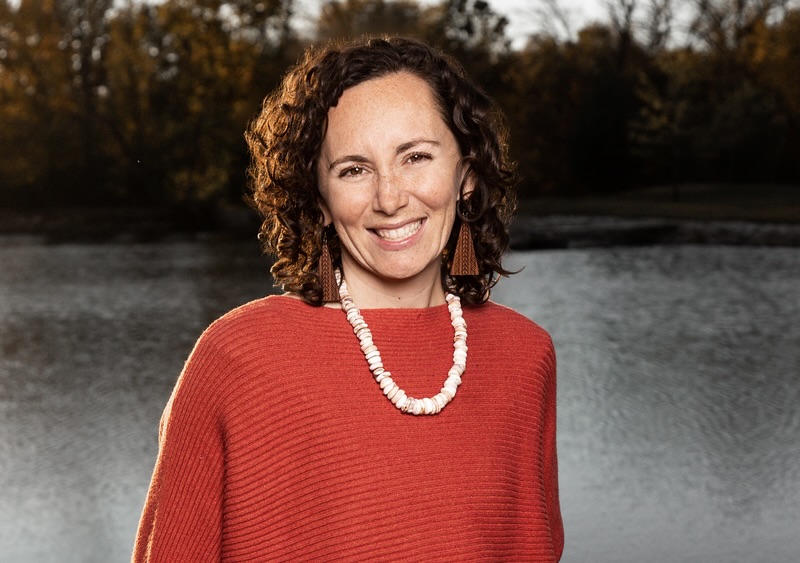
Stephanie Malia Krauss is an author, speaker, and strategist focused on rehumaning childhood and our lives. Her newest book, How We Thrive, explores the urgent need to protect human essentials—like sleep, play, and connection—that modern life restricts or rejects. An educator and social worker who has worked from the classroom to Congress, Stephanie advises states, districts, and national organizations on holistic approaches to preparing and caring for kids. Stephanie is the bestselling author of Whole Child, Whole Life: 10 Ways to Help Kids Live, Learn, and Thrive and Making It: What Today’s Kids Need for Tomorrow’s World. Her work has been featured by NPR, Parents, Good Housekeeping, Newsweek, and more.