93. Escaping the Good Girl Trap and Rewriting Your Midlife Story, with Ellen Baker


There is a perfect storm of transitions that hits women in our 40s, 50s, and 60s: kids leaving home, aging parents, prep for retirement, and menopause. With so much happening at once, it is completely normal to feel frustrated, unfulfilled, or a little bit lost. We often spend our days running on an exhausting loop of "I have to" and forget that we actually have a choice.
In this episode, I welcome successful novelist and mindset coach Ellen Baker. Ellen is the author of four novels, including her latest release, Summerland Cove, and the creator of the Next Chapter Studio. We dive into how the "good girl" conditioning keeps us playing small, why we need to stop outsourcing our authority to others, and how to rewrite your beliefs so you can finally become the main character in your own life.
What You’ll Learn:
- ✔ "Good Girl" Conditioning: How ingrained beliefs to stay small, blend in, and constantly prove ourselves keep us stuck in an exhausting cycle.
- ✔ Outsourcing Authority: How to recognize when you are giving your power away by constantly scanning the room to fix everyone else's problems.
- ✔ The Power of a Small Pivot: Why making a tiny, one-degree shift in your choices—like asking yourself what you need in the moment—can completely change the trajectory of your life.
Episode Chapters:
- 00:00:00 - Escaping The 'Have To' Loop
- 00:01:05 - Inner Circle And Support Space
- 00:02:13 - Why Midlife Can Feel Lost
- 00:04:38 - Ellen Baker’s Reinvention Story
- 00:12:51 - Emotions Point To Misalignment
- 00:16:46 - The Belief That Blocks Rest
- 00:23:25 - Author Your Life With Authority
- 00:27:31 - Trading Obligation For Choice
- 00:31:10 - Fictional Mirror And Tiny Pivots
- 00:34:02 - Find Ellen And Closing Reminder
Links & Resources:
- Ellen's Website: Ellenbakernovels.com
- The Next Chapter Studio: EllenbakerNovels.com/studio
- Ellen's Instagram: @EllenBakerNovels
- Ellen's Book: Summerland Cove
- Substack - Subscribe as a Founding Member! mindyourmidlife.substack.com
Why This Episode Matters
By checking in with your own needs and changing your internal narrative from "I have to" to "I choose to," you can reclaim your agency and find peace even amid midlife chaos.
Take a little bit better care of yourself in midlife.
---------------
Join me on Substack! The benefits are growing as we grow. Subscribe here: mindyourmidlife.substack.com.
Find the GreenSynergy Elixir and Energy Fizz duo at cherylpfischer.com/greens. Grab your water bottle, add these, and enjoy!
Grab your Vitamin G pixie sticks for detoxification and wellness at cherylpfischer.com/vitaming.
🌸 Liked this episode? Share it with fellow Gen X women navigating hormone balance, an empty nest, and/or self-confidence!
🫶 Love this show? Leave a review to help more women over 50 find us.
💡Want menopause advice, mindset shifts, or support with midlife transformation?
- Find out more about the Midlife Recharge at cherylpfischer.com/coaching
- Join the inner circle by subscribing on Substack: mindyourmidlife.substack.com
Let’s talk health after 50, self-talk, and redefining aging for women — without the “midlife crisis” narrative. Every week I'm adding new success strategies for midlife women.
00:00 - Escaping The Have To Loop
01:05 - Inner Circle And Support Space
02:13 - Why Midlife Can Feel Lost
04:38 - Ellen Baker’s Reinvention Story
13:44 - Emotions Point To Misalignment
17:39 - The Belief That Blocks Rest
24:18 - Author Your Life With Authority
28:24 - Trading Obligation For Choice
32:03 - Fictional Mirror And Tiny Pivots
34:55 - Find Ellen And Closing Reminder
Escaping The Have To Loop
Cheryl Fischer
I have to do this. I have to get that done. I have to take her here. I have to take him there. I have to plan this. I have to get that done. I have to get to work. It's a lot, right? We do that to ourselves kind of all day, every day, unless you are really good at having a habit of rest. We just do that to ourselves a lot. Have to, have to, have to, have to. But what if we could think differently? And what if we could choose differently? That's what we're talking about today. Welcome to Mind Your Midlife, your go-to resource for confidence and success, one thought at a time. Unlike most advice out there, we believe that simply telling you to believe in yourself or change your habits isn't enough to wake up excited about life or feel truly confident in your body. Each week, you'll gain actionable strategies and, oh my goodness, powerful insights to stop feeling stuck and start loving your midlife. This is the Mind Your Midlife podcast.
Inner Circle And Support Space
Cheryl Fischer
Before we start today, I want to invite you into something really special, and that is the Mind Your Midlife Inner Circle on Substack. I created this cozy, private space for subscribers so we can connect on a deeper level. You'll get ad-free podcast episodes, weekly unedited, unfiltered audio notes directly from me, and of course, access 24-7 to a private chat where we can lean on each other. If you subscribe this month in July, you will get 20% off of the annual plan as a founding member. And there will be more benefits coming as we grow. Thank you so much for supporting my work and supporting this podcast and allowing me to keep going and keep doing this. And I would love to see you there. Go to mindyourmidlife.substack.com or just click the link in the show notes.
Why Midlife Can Feel Lost
Cheryl Fischer
We've talked about this in previous episodes, but there is something about I think it's the 50s. It was the 50s for me. I'm in my mid-50s now. Maybe it's 40s for you, maybe it's even 60s, right? Broad range of what I'm defining as midlife, 40s, 50s, early 60s. For me, in my 50s, happened to be my kids growing up and going away to school and then having their own place even after that. And my parents starting to have some issues with aging. And looking at could I retire? What would that look like? It's not that far away. And then menopause. So many things happening at the same time. And that no matter who you are and which of those pieces are happening to you in your life, that to me is why there are so many women like you and like me who are struggling a bit at this point in life and feeling frustrated or feeling wait, is this all there is? Or feeling unfulfilled or feeling a bit lost. And it it seems odd on the one hand that that would happen to so many of us all at the same time. But on the other hand, we're coming out of a period of really intense work, family, maybe both, and our bodies are changing, right? So as our kids are growing up, if you have kids, you obviously know this. We want to focus our time on our kids as much as possible. I'm not saying we don't, and it's a lot of time, it's a big focus. So what happens when that focus changes? I still am thinking about my kids every day, and yeah, I don't get to see them very much. So it's a different focus in terms of the day-to-day, hour to hour, what do we need to do in our lives? And we get a little bit lost sometimes when we think, well, what now? And we don't feel like we have a choice, and we don't feel like we have any agency in the situation. And I am here to say, along with my guests today, that we do have agency in the situation.
Ellen Baker’s Reinvention Story
Cheryl Fischer
So joining me today is Ellen Baker. She is a successful novelist with Random House and has four novels out, including her latest one just released, Summerland Cove. And at the same time, she spent a decade going through divorce, rejection, a cross-country move on her own, reinventing herself while writing, and just realized a passion for life stories and for reinvention and created the next chapter studio where she helps midlife women to create a next chapter they love. And you know I love that. So we are gonna talk about how this happens and what you can do. Welcome, Ellen. Thanks for joining me. Thank you so much for having me. I'm thrilled to be here. I am pretty fascinated with what you're doing. So I know that whoever's listening is gonna enjoy this. So let's dive in. You are a successful novelist with four books, including coming out right now in June, Summerland Cove, and you also work as a mindset coach. So, how did you end up putting these two things together?
Ellen Baker
Well, it's a long story, which as a novelist I enjoy, but I'll try to keep it short. So, so it really was like the combination of my personal journey and the journey that I took as a novelist. I always wanted to be a writer. And when my dream came true at age 30, where I got a book deal with Random House and was suddenly in this big, uh, big stage for me as a small Midwestern girl, you know, small town Midwestern person, it was very shocking to my system, I think. And I I was so thrilled and amazed that my dream had come true, but I also began to struggle quite a bit with the disconnect between what my soul's dream was to be a writer and publish with a big publisher and what my personality believed was acceptable for me, um, which was to be small, which was to be invisible, which was to be um not to make any waves and just play an acceptable role. So it wasn't possible to do both of those things at one time. And disaster ensued. Well, I don't want to say that. I again as a novelist, I can be over dramatic. But um what did what did end up happening is um I got divorced, I moved out, I moved from Minnesota out to Maine, and I started to try to figure stuff out of how can I be a writer and still accept um who I am and um bring myself into bring my personality into alignment with my big dream. And so I did study to become a mindset coach because I wanted to understand this. And I also have always felt the desire to help other women with these similar issues because um, especially as I get older and into midlife, I am really passionate about believing that we've all been told to keep too small, we've all been told to keep too quiet. And so I thought if I can figure this out for myself, then I can figure out a way to help other people. So back in 2019, I began studying to be a calling in the one coach with Catherine Woodward Thomas. And that was fascinating. And I learned so much from her. She was such a wonderful teacher. Unfortunately, she passed away just recently. Um, but she taught this identity-based way of saying, you know, this is what I want. Who do I need to become in order to get what I want? And that was a transformative thing for me to begin thinking because I never realized that I had that much agency over who I was being. You know, you sort of think, I am who I am, right? Like this is kind of what I'm stuck with. But to begin to see the way that she taught it was where I began to make the connections with storytelling and with one's own life story. And I've come to believe that our own life stories are our biggest creation, and that when we realize that we can become the author of that story, the possibilities really become endless. So just within the past year, I've developed this new coaching method, which guides people through this process of becoming the author of your own life. And it guides you through realizing where you are outsourcing your authority, where you have more agency than you realize. And it's very much not about blaming yourself or saying that anything is wrong with the way you've been doing things. It's just saying, like, maybe the structure that you've been living in, which has been defined by the beliefs that you've had about yourself. So in my case, it was I need to be small, I need to be invisible. So we all have beliefs like that that keep us from getting to where we may want to want to get. So to realize to begin to identify the pieces of this structure that are keeping you a little bit stuck, and to realize that there is a way to revise those, just as if you're revising a story. And there's also a way in which um we go into how when you revise those beliefs that you can actually see where the story is gonna take you once that belief is revised. Because it's possible to predict based on a belief that you carry around with you where your story is gonna be limited. And once you revise that belief, you can say, Oh, now I can get there. So I'm I'm just so excited about this. I I am just thrilled with the way it's it's unfolding.
Cheryl Fischer
It's really fascinating because what resonated with me quite a bit that you said is the idea of you should be hidden, you shouldn't stand out. Like deep inside you, you believe that. For me, it's similar, not exactly the same, but I have realized over the years that I thought I needed to blend in and not be noticed in a particular way. Like slightly different angle, but almost the same thing. It was kind of like, what would the neighbors think? You know, we have to blend in, we have to be not noticeable. And for someone like me who likes to speak and do a podcast and all this stuff, uh I was, it was uh sort of this cognitive dissonance that I was having that was very confusing for a while. And I eventually realized that you you can change what you think about these things. And I don't think most of us realize that.
Ellen Baker
I think that's true. Um, it has certainly taken me many years and and uh many modalities of, you know, working with mind-body connection and working with, you know, trying to uncover what is it that's truly in there in the subconscious that's driving my behavior, that's driving my actions. But it is really exciting once you figure out a method to get in there and start to shift those around and you realize that you do have more control. And it's not that it creates change necessarily overnight, but once you start to rehearse those new beliefs and once you start to work with those new beliefs and you start to realize that, oh, this is possible for me. I can act in a different way, I can be a different way, I can become comfortable with being a different way. Because that's part of it too, is like our fears keep us um kind of constrained and our our thoughts of, well, I couldn't, I couldn't possibly do that. That's not me. I don't do that, you know. Um, and those are all just stories that we're telling ourselves. So the idea is tell yourself a new story and you'll create a new story. So that I think is just very exciting.
Cheryl Fischer
And you know, it seems, it seems almost too simple. Tell yourself a new story and create a new story, but that's what it is. We're telling ourselves stuff in our heads all day long. It's way more powerful than most of us realize. Yeah, I agree. So, so let's kind of stay in this similar vein of what you and I have both confessed to that we thought that we had to blend in or hide or whatever. I think there are a lot of women out there who are successful, high-achieving women. They get to
Emotions Point To Misalignment
Cheryl Fischer
midlife and the various kind of things come up for them that tell them, I really want to make a change. Maybe they get frustrated or, you know, they're they realize they're tired of where they want to be. Maybe they've always prioritized others instead of themselves. They've always followed directions, been the good girl, or however you want to say it. So, what are some things that women tend to notice that tell them, okay, maybe it's time to make a change?
Ellen Baker
Our emotions are our first cue. And a feeling of frustration, a feeling of anger, a feeling of disappointment or anxiety, all of those are going to be cues that something is misaligned. And I like to speak of it in terms of alignment because it's just, you know, it's an energetic concept in a way, but you can also picture it almost geometrically, like here is uh here is a way I'm feeling, and here is what I want, and they are not aligned. And if you can even visualize it and say, okay, what would I need to believe in order to bring myself into alignment with what I desire? I think um, you know, it's a many layered process because the other problem is uh that we have also been told that we're not supposed to really want anything. Or, you know, if we do want something, it's buried way underneath what everybody else wants, or we are so conditioned not to notice what we want or need that we don't know that we want or need anything. And I speak from experience on that, but I'm learning to recognize my needs and by noticing that the the emotions are the cue. If you're frustrated, if you're unhappy, that's the cue that that something is not in alignment. And there are there are small ways to work on just sort of listening to your body, listening to those feelings a little bit more and saying, okay, what do I need in this moment? And it may not, you know, be a huge um life-changing thing. It's just if you can ask yourself even ask yourself that question is kind of revolutionary in a certain way. Like, what do I need right now? Oh boy, you know, I've never, never really stopped to ask myself that before. But uh-huh. Interesting question, right? So, so that's kind of where where it begins is just noticing those emotions and then responding, like listening to the answer of um what it is that you need or want. And if you don't know the answer, just sitting with the feeling and noticing it. Because we so often we just push through, and then that shows up in symptoms, it shows up in headaches, it shows up in you know, resentment or short-temperedness, and shows up in just feeling tired, feeling like life isn't great, you know.
Cheryl Fischer
So I want to stick with that for a second because I think that we are often scared of feeling our emotions, and I include me in that we it was a hard thing to get used to and to be comfortable with. And I think when we say to ask yourself what you need, I agree with that completely. And a lot of times, as you said, I think it's we're gonna go, I don't know. I don't know. Like, I don't know. So, how is this helping me? I don't know. And I like that you said sit with it, but what can you sort of explain a little bit more what would that look like for someone if they they didn't have the answer and we want them to just kind of sit with that emotion? What does that look like?
Ellen Baker
Well, a process that I teach people is is actually to, as you're sitting with the emotion, ask yourself, what is
The Belief That Blocks Rest
Ellen Baker
the belief that's causing me to feel this emotion? So there's a again, a misalignment between what you want, and it might just be, I want 20 minutes to sit down and read a book. And I I can't find it. Everybody needs something from me. There's too much to do. Everything um feels so pressing and so important that I can't take 20 minutes for myself. So let's say that's a situation, you're just so frustrated, and so then I just advise people just, you know, take a breath, feel that feeling, feel where it is living in your body, and say, okay, what uh what do I really want right now? Okay, if you can answer that question and the answer is 20 minutes to sit down and read this book that I really want to read. Okay, so then what is stopping me from doing that? What belief that I have in my head? And I mean, assuming that there's nobody else in the room telling you you can't do that, but let's just say you're you're by yourself in the house and for the moment, but you feel you can't sit down. So, what is the belief that I have in my own head that's telling me it's not allowed that I sit down and read my book for 20 minutes? And oftentimes you're gonna uncover something like, well, I haven't proved myself worthy of relaxing yet. I haven't proved that I've gotten everything done. My to-do list is still there, and and I value getting my to-do list crossed off. And then, so from there, if you can identify really that gap between what you want and what's happening and what the belief is that's causing it, you can then say, okay, well, what if I chose just in this moment to believe something different? And if I could believe in this moment that I don't need to prove anything to anybody before I sit down for 20 minutes, is the world gonna fall apart if I sit down for 20 minutes? Nope. No, I can know that for a fact. Like it feels like it when you're in that hustle and grind and you're in the moment of like, I've got to, I've gotta do this, and we're so caught up in the proving and the achieving, and the everything has to be just so. But what if you gave yourself the grace to say, I need this time with my book. I just need it. And uh so in order to do that, to allow yourself that and feel good about it, you go into the belief area and say, I believe I am worthy of relaxing before I finish my to-do list. And sometimes you just shorten that to, I believe I'm worthy, because of that, I think is what so much of us are trying to prove with with the achievement and the high stakes that everything feels so important. It's it's that we're trying to prove ourselves. And if we can just let that go, even for that brief window of 20 minutes. And if the to-do list doesn't get done and and you see it doesn't, the world doesn't fall apart and like nobody thinks less of you and nobody loves you less, then you start to create some new evidence that there is a possibility that you could be different, you could do things differently, and you could take that time. So that again is a it's a small shift, but something that I think can create so much more satisfaction and a sense of empowerment in your own life over what you choose to do with your time instead of always thinking you're doing what you have to do, you're doing what needs to be done. But what about choosing, making yourself the chooser?
Cheryl Fischer
I you know, I'm thinking of I'm thinking of a boss I've had who when I first started at the job said to me, and we were in the office full time, said to me, Well, I always go on a walk, either every morning or every afternoon for about a half an hour. So, you know, if you can't find me, that's maybe where I am. You should do that too, or you know, whatever you need to do. And I just for some reason that was shocking to me. Like, you mean you walk out of the office for half an hour and you don't and you're allowed? Like that's allowed. It's okay. And he was like, I need to walk, it's good for me. So I just go and do it and it'll be fine, you know, do what you need to do. And it made me realize that I know that's a very specific specific example, but I had this whole thing about like what I was supposed to be doing at all times. And no one else seemed to care or think that. It was it was me saying, I can't get up, I can't move out of way from my desk, you know, I have to be here chained to the desk. And no one else thought that. It was me. Yeah. So I know what you mean.
Ellen Baker
Yeah, it's that good girl conditioning that is wired in pretty deep, I think, for women in our generation of really feeling like we need to follow the rules, um, be approved of by others. And sometimes that shows up in those ways of, and especially the proving and grinding and a Achieving and and it's never enough. It's never enough. I haven't proved myself yet. And that just is painful. And after all these years, it's exhausting. It's so tiring after after doing that for 40 or however many years.
Cheryl Fischer
Yes. Very good point. I have someone in my life, not me, but someone I'm close to in my life who she really struggles with ever sitting down, ever. And now that we're having this conversation, I'm thinking she says she just can't relax very well, but I think there's probably something deeper in there about the what she should be doing stuff. Um, I'm gonna make sure she hears this episode. We'll see.
Ellen Baker
Oh, good. Well, I do think that it is often the case. And and again, I I speak from experience here. This is kind of my area of specialty because um this is what I did for decades before realizing what I was doing and realizing the cost it was having on my health and on my well-being. And I'm just um loving this new method of just disconnecting from that old self and saying, no, the new self does things differently, you know, like, and it's it sounds a little wacky maybe, but it just works so well because it disconnects you from those beliefs about what you can and can't do. And you just say, No, I'm gonna choose something different this time.
Cheryl Fischer
Yeah. Okay, so so let's talk about that a little bit more because your author of your life method,
Author Your Life With Authority
Cheryl Fischer
you're saying that we can kind of look at our lives as a story where we're the main character. And I don't know if you know the movie The Holiday, but there's a scene in that movie where the main character is having dinner with an older mentor type person, and he tells her she's been acting like a supporting actress in her own life. And she's like, Oh my gosh, of course I'm supposed to be the main character in my own life. So that I immediately thought of that. It's exactly what you're saying, I'm thinking. So walk us through the exercise of having someone say, Okay, if I were the author of a story about myself where I'm the main character, what would I want to happen next?
Ellen Baker
Yeah. So in my method, it is very much a matter of embodiment and of choice. And so by that I mean that the first thing I take people through is a process of moving your authority from wherever you've been outsourcing it. And we get to the kind of the core belief of maybe it's the I need to prove myself or or I need to be a certain way before I can do anything. I'm looking for permission of what I can and can't do. And again, there's no judgment around these these things. It's just useful to recognize that, oh, that's how I've been operating, and I can choose differently. So what I always think of it as is if you think of your energy, you can actually feel when you're projecting your energy out of your own body. And the process of becoming the authority over your own life draws the energy into your body and into the core of your body. And this can be done through breathing and visualizing. And so that's part of it. And once you do that and you do the deep breathing and you say, I am the author of my own life, you feel a shift. Like it just becomes uh a different locus of authority. And once you have shifted that locus of authority and you can and you've learned how to move your energy because it will go back out. Like we're just so accustomed to tuning into other people's needs and what we what we walk in the room and the first thing we do is scan. Um, I've I've actually heard that men look around and look for who they can beat up in a fight and and who they can't, who they could take and who they couldn't. I was I when I heard that, I was blown away. I said, I we don't do that as women. We we look around like who can we make friends with and who's gonna maybe be a uh an issue in some way, or who which which person is upset that we can try to make them feel better. Like I think that's where our energy goes is like to try to understand the room that we're in and try to make it all good. But when you notice that you're doing that with your energy, you can draw your energy back in, and then you make your decisions from within yourself instead of what does that person need and what does that person need. And it's a much calmer feeling and it's a much more grounded and empowered feeling. So from there you begin to make decisions in a different way, and from there also we can begin to think about what it is that we actually want. Um and that's where becoming the author of your story comes in. So it's a it's actually several steps in the process because the first thing is to stop outsourcing your authority in maybe little and large ways, and then um, and then work on some of those internal beliefs and uncovering what they are and rewriting them. And then from there saying, okay, what is it that I really want in my life and who do I need to be to get there? So that really is the kind of the layers of the process.
Cheryl Fischer
And what would you say? I'm just imagining somebody listening might be wondering about what would you say to someone who says,
Trading Obligation For Choice
Cheryl Fischer
Well, that sounds good, but how do I how would I say this? That sounds good, but I have to take care of my kids and I have to go to this thing and I have to do that, and my schedule is full, and I don't how how you know, the outsourcing of the authority thing, I could see people going, Well, I have to do all these things. So I'm not sure how I would do that.
Ellen Baker
That's a great question. I know a lot of people wonder that. So really the first thing to do is to change when you change the locus of authority, the the question or the statement changes as well. And it changes from I have to to I choose to. Um and even by doing that, even if you change nothing that you're actually doing and you're changing nothing about how responsible you are for your kids and how good of a partner you are, and um how good of a school board member you are or anything that you're doing, but you change it from this sense of obligation and proving to a sense of I choose to do this, and then you have your why. I choose to take good care of my kids because I want them to be happy and healthy. I choose to be the best partner I can be because I want my partner to be happy and fulfilled. And so you just operate differently, even if you're doing different things, and I and you begin to feel happier and you begin to realize that, you know, like if I don't want to do that part of that job that I've always done out of habit or thinking I have to, I can choose to say no to that part of it, maybe. And you you begin to little by little, so it's a it's not a it's not a process of like saying no to everything and I'm not gonna be who I was before and I'm not gonna fulfill any of my obligations. To me, one of the most important things about life is to have empathy and compassion for other people and to be a good partner and a good good person in relationship to whomever you're interacting with. But I believe that from but that when we change our locus of authority, we have so much more to give. Do you know that feeling when you've just been like have to, have to, have to, and you're so exhausted and you can't, you feel like you just can't do it anymore. You resent everything and everybody, and you you're not communicating this to anybody. This is, you know, why my marriage ended, because that was how I did marriage. Um, and I didn't know another way to be. And so now I've learned a different way to be in relationship, which I'm still working on. But it is a so much better because I have the right to say no. I have the right to say no, I don't think I want to do that. And it doesn't mean I'm not a good partner, but it means I'm a better partner.
Cheryl Fischer
Mm-hmm. Yeah, and I think this is a trap that so many women are in right now in midlife because we whether or not we gave away our power, whether or not we let other people dictate everything, we've fallen into habits also. And we've had no time to really think about where we wanted to go in life. We've just been doing everything we maybe needed, maybe wanted to do for the last 10 or 15 or 20 years. And I think that what you describe is probably how a lot of women feel at this point in general.
Ellen Baker
Yeah, I actually wrote about that exact thing in my novel Summerland Cove. My main character, Lindy, is 48 years old and she's planning the summer of a lifetime with um her husband
Fictional Mirror And Tiny Pivots
Ellen Baker
David's 50th birthday, her parents' 50th anniversary, and her daughter's wedding. So, of course, she's been driving herself mad, just getting all that ready, and it all needs to be perfect, and it all has to is all on her. And um, and the first event is her husband's birthday, and he doesn't show up for the party, and everything gets thrown into uh chaos, and she really has to reassess everything and all her choices and her priorities, and and I really was um feeling into that problem that that women have at this stage of life of like all that you've put into raising your family, the sacrifices and the the high hopes and the the constant pressure that there is to get it right. And so I yeah, I do think it's a moment that is really high pressure um to say like you're just about to launch your children into the world. You've got parents that are aging, which is another uh problem that my character Lindy has is her dad has dementia, and that's heartbreaking and horrible. And it's just a difficult time of life. We're getting pulled in in every direction and so much change and so much transition, and then the chaos of our bodies and um lack of sleep. So I think what I'm really excited about with offering this author your life approach is that it gives you a sense of agency when everything else feels out of control, I think. Um, and if you can gain sense of agency over yourself and your own choices moment to moment, even if the chaos doesn't change and even if all the relationships are challenging and even if all the transitions are challenging, if you can be at peace with yourself and know how to draw your energy into your body and know how to say, you know, check in and be like, okay, that's okay with me. And oh, no, that's not okay with me. Just having the ability to do that moment to moment, I think, is a saving grace.
Cheryl Fischer
Yeah. Yeah. I that makes a lot of sense to me. Very powerful. And thank you for telling us about your book. It has just released.
Ellen Baker
Well, yes, that was the synopsis. The one thing I'll add is that it takes place on the coast of Maine, which is where I live. And I absolutely love the coast of Maine. I've lived here for 15 years, and it takes place in a summer cottage that this family has had for generations. So that's another piece of the story is their love for this cottage and the transitions they're going through with the generations and uh struggles over ownership and so a lot of Maine Coast summer cottage vibes in the in the story as well.
Cheryl Fischer
Sounds good. Sounds good. Okay, so tell whoever is listening, tell us how people can find you, learn more about your
Find Ellen And Closing Reminder
Cheryl Fischer
books, learn more about your coaching, whatever they might be interested in.
Ellen Baker
Yeah, so thank you again so much for having me. And if people want to find me, they can find me at Ellenbakernovels.com. That's my website where you can find out about my books and events and also about my coaching. Particularly if you're interested in my author your life program, I have an online group coaching community, which is called the Next Chapter Studio, and you can find that at EllenbakerNovels.com/slash studio. Or you can also find me on Instagram at Ellen BakerNovels.
Cheryl Fischer
Perfect. And I will put all that in the show notes to make it super easy. Okay. So the last question I always ask is what is the one thing that you want somebody listening to remember? And I ask that, having in mind that we're all busy, we're all multitasking while we listen to podcasts and we don't remember everything. We just maybe make a note to come back. Who knows? But what is the one thing you want somebody listening right now to take away with them?
Ellen Baker
I want folks to take away that change can begin with a tiny, tiny pivot. Do you know the idea that when you're sailing and you're on the ocean, if you change the degree by, you know, a fraction of a degree, you will end up thousands of miles uh uh from where you would have ended up had you not changed course. And that's what um just doing a small shift, like asking yourself, what do I need in this moment, and then giving that to yourself or asking yourself, what is causing this frustration? Is there something I can change about what I'm doing and who I'm being in this moment? And you don't have to burn it all down, you don't have to be dramatic. You can just do a small change and it can change the trajectory of your story.
Cheryl Fischer
I love that and totally agree. And there's also a book called The Slight Edge that I can't think of the author right now that that talks about this as well. Just these small things and they keep adding up and they keep adding up. Yeah. Great point. Thank you for that. And Ellen, thank you for joining me.
Ellen Baker
Thank you so much for having me, Cheryl. It's been such a pleasure.
Cheryl Fischer
Okay, what do I say at the end of pretty much every podcast episode? Take just a little bit better care of yourself in midlife. And what did Ellen just say? Small adjustments. Small adjustments make a huge difference. It can be shocking, in fact, how that can multiply. And I used to be a geometry teacher, so if you're watching this on the video, I'm I'm showing a straight line and then I'm showing slightly different. And look at how they get farther apart as you go along. Anyway, small things, taking just a little bit better care of yourself, small things, asking yourself what you want, small changes, tiny, noticing glimmers more than you ever used to make a huge difference. What a great thing to take away from this episode. I hope it helps you. Now, if you're listening on Apple Podcast, go ahead down on the Mind Your Midlife page, tap the five stars, leave a couple sentences review. It makes such a big difference. And I will read some reviews on upcoming episodes. So maybe you'll get to hear your review on the podcast soon. Thank you for doing that. And keep remembering, it's your time, just as I said, to take just a little bit better care of yourself on the outside, meaning healthy, take care of your body, and on the inside, and that's all inside your head. Just a little bit better makes a big difference.
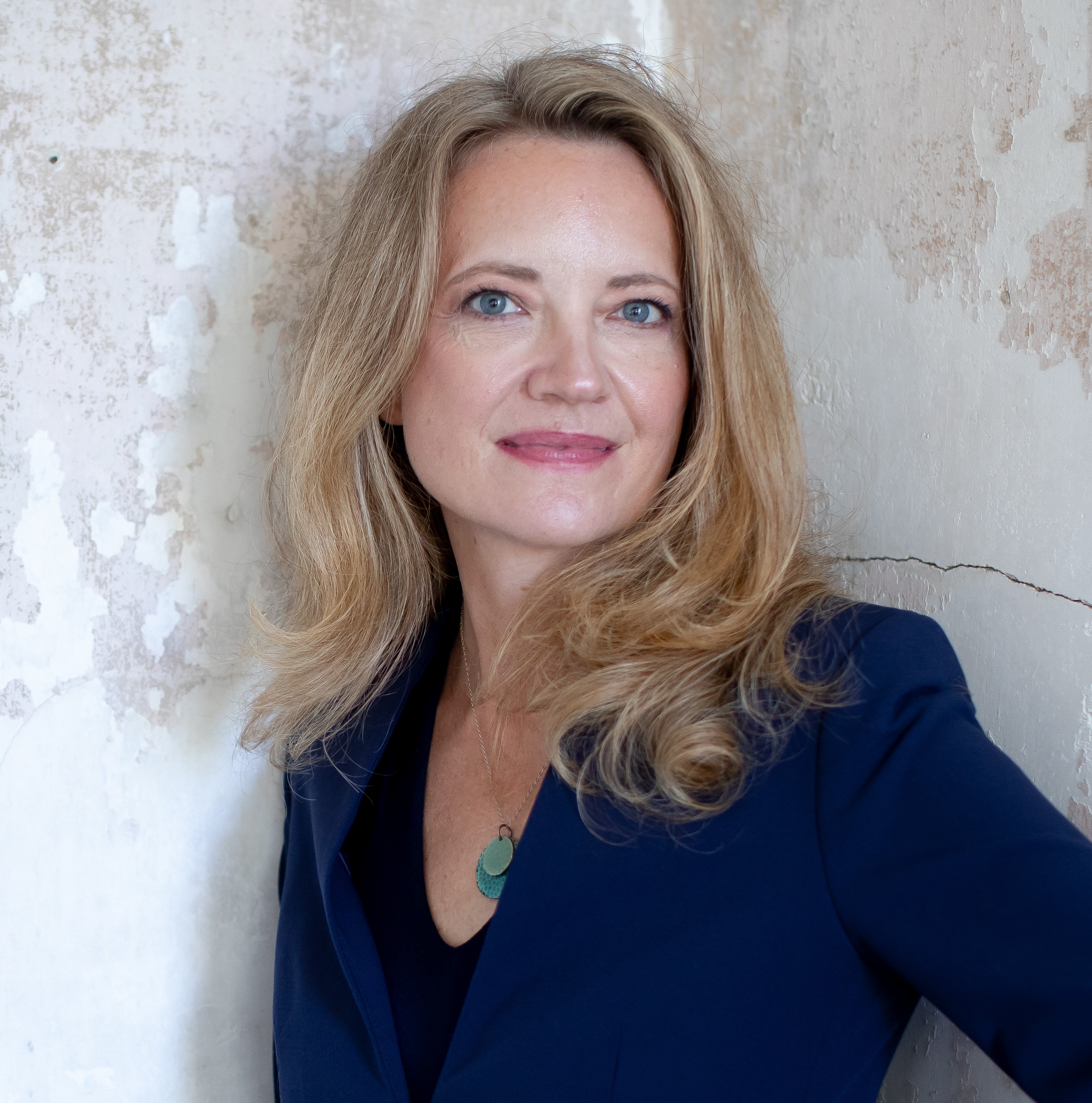
Author and Founder, The Next Chapter Studio
After early success as a novelist with Random House, Ellen Baker spent a decade navigating divorce, rejection, a solo cross-country move, and reinvention before her third novel, The Hidden Life of Cecily Larson, became HarperCollins’ Lead Read for Winter 2024 and was featured in People and Woman’s World. Her fourth novel, Summerland Cove, is new in June 2026. With a passion for life stories and reinvention, Ellen is also the founder of The Next Chapter Studio, where she helps midlife women rewrite the internal beliefs that shape how they show up in their lives so they can author a next chapter they love.