67. Changemakers: How Wine Became A Confidence Tool For Women In Business, with Kristi Mayfield
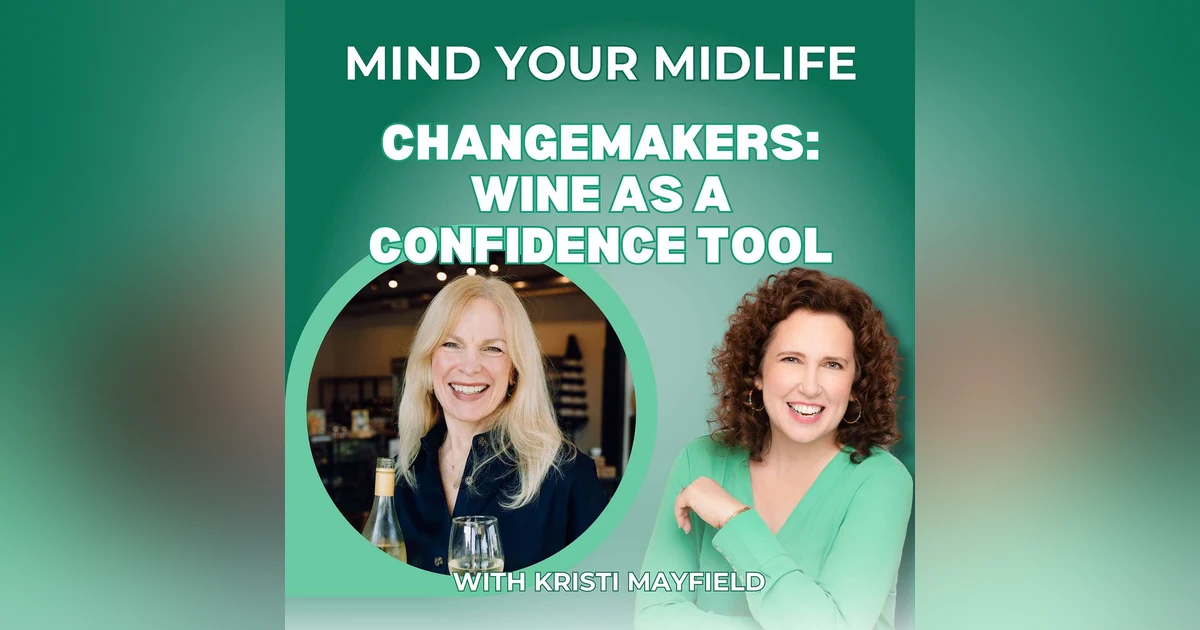


Are you a woman over 40 or 50 with a little feeling in your gut that you wish you could do something else, but worry it’s too late to make a big change? You’re NOT alone — and you’re certainly not done.
In this episode of Mind Your Midlife, wine expert and founder of SIP Society Collective, Kristi Mayfield, joins me to break down career pivots, the power of intuition, and how to turn a passion like wine into a "social power skill" for midlife women navigating networking, business dining, and the fear of reinvention.
If the idea of walking into a networking event or ordering off a wine list makes you anxious — or if you’re ready to finally listen to that inner voice calling for a change — this episode is for you.
What You’ll Learn:
✔ How to turn wine into a "power skill" that builds trust and relationships in business
✔ Practical steps to build confidence when you are the one holding the wine list at a dinner
✔ What women REALLY need to know about the reality of entrepreneurship and letting go of perfectionism
🎯 OMG Moment:
"If you are not investing in yourself, why would somebody invest in you?". Whether it’s time for personal development or money for a coach, you have to value your own growth before you can expect the world to value your business.
Take Action Today:
- Connect with Kristi Mayfield at sipsocietycollective.com and listen to the Everyday Sommelier Podcast
- Find Kristi on social: Instagram, LinkedIn
- The Wine List Challenge: Next time you are out to dinner, don't pass the wine list to someone else. Use it as a tool to ask questions and build a relationship with the table or the server
Why This Episode Matters
Whether you love wine or just want more confidence in social settings, this conversation proves that your "happy place" can become your new path.
Take just a little bit better care of yourself in midlife.
Anniversary Giveaway! See cherylpfischer.com/anniversary for terms and conditions.
**Find bonus episodes by subscribing where you find Mind Your Midlife on Apple podcasts - or go to cherylpfischer.com/bonusepisodes.
🌸 Liked this episode? Share it with fellow Gen X women navigating hormone balance, an empty nest, and/or self-confidence!
🫶 Love this show? Leave a review to help more women over 50 find us.
💡Want menopause support, mindset shifts, or support with midlife transitions?
- Build a mindset for success with the private bonus episodes!
- Book a free Mindset Coaching / Intro Call: cherylpfischer.com/coaching
Let’s talk midlife body positivity, self-talk, and redefining aging for women — without the “midlife crisis” narrative. Every week I'm adding new success strategies for midlife women.
Connect with Cheryl, Midlife Coach: Instagram | LinkedIn | Website
00:00 - Is It Too Late To Change
00:23 - Mind Your Midlife Welcome
01:00 - Meet Wine Expert Kristi Mayfield
03:51 - Birth Of SIP Society Collective
06:42 - Community Over Pretension In Wine
10:34 - Wine As A Social Power Skill
13:17 - Confidence At The Wine List
15:30 - Networking With Grace Using Wine
18:04 - From Defense Sales To Wine
20:57 - Trust, Culture, And Soft Power
23:52 - Leaving Corporate For Passion
25:57 - Building Inclusive Wine Spaces
29:02 - Entrepreneurship Without The Gloss
32:02 - Perfectionism, Support, And Growth
35:12 - Joy Of Community And Vision
38:02 - Practical Takeaways And Next Steps
39:57 - Links, Follow, And Waitlist
41:22 - One Thing To Remember
0:00 Is it too late at this point in your life to make a big change in what you're doing? What if there's that little feeling in your gut or in the back of your mind that you always wish you could blank? That's what we're talking about today. It's not too late. Welcome to Mind Your Midlife, your go-to resource for confidence and success, one thought at a time. Unlike most advice out there, we believe that simply telling you to believe in yourself or change your habits isn't enough to wake up excited about life or feel truly confident in your body.
0:43 Each week, you'll gain actionable strategies and oh my goodness, powerful insights to stop feeling stuck and start loving your midlife. This is the Mind Your Midlife podcast. I am a fan of wine. And you might or may not be, that's okay. This episode isn't really gonna be about wine, but a little bit. More sweet, also bubbly, also rosé. I never drink red. I just, I don't know, it gives me a headache, and I just don't really have a taste for it. I don't find it enjoyable.
1:25 And we all feel differently about this, but on today's Changemaker episode, my guest, Christy Mayfield, is going to be a fun person to talk to. She is a wine expert. And her podcast, Everyday Somalier, is one that you definitely want to check out. If you like me, like wine. She's a wine expert, and she has always been on a mission to make wine be something that any of us can learn about and know and feel great about. And it doesn't have to be about anything highbrow. And you're gonna hear us talk about that. Christy is also the founder of SIP Society Collective, and she is focused on making wine a social power skill for high impact women leaders.
2:19 And that's amazing. We're gonna have a bit of mindset running through this conversation. I am excited to talk to someone who has taken something that she loves, something that is her happy place. You're gonna hear her say that, and made it into a really cool business. So welcome, Christy. Thank you so much for having me. I'm really excited to be on the show today. I'm excited to have you here. And if you're listening, maybe you don't know this. Actually, why would you know this if you were listening? Christy and I met because we were both relaunching our podcasts at the same time, and we both used the same pod launch coaching program to do that.
3:03 So I love that now we're full circle and you're on the podcast. Exactly. Yes, because we launched within or did our relaunches within a couple of weeks of one another. So it was really great to have somebody walking that journey beside me. Yeah, absolutely, absolutely agree. Okay, so this is a change makers episode, which means you are someone who's made some big changes in this midlife window. And I'm torn between how to start, because usually I start by saying, How did you get the idea for this business that you're doing now? And at the same time, I think maybe you need to simply just tell us what you're doing.
3:47 Maybe let's start there. Okay. Well, I think that's a great place to start because my I'll call it my midlife journey to use your terminology, has been multifaceted. And where I am today, what I'm about to launch is the culmination of multiple phases. So in early 2026, I am launching SIP Society Collective, which is a membership for high-impact women transforming wine into a social power skill. And we can get into really what that means here in the next uh next few minutes.
4:33 But getting to this point, it was flipping my business model upside down over the last few months. We'll talk about my corporate career, we'll talk about my midlife transition into wine and how I got there. But I have had a wine education course online under a different brand for several years. I was going to relaunch, rebrand, and relaunch that about mid-summer. And something just didn't feel right because it didn't feel like I was going to be connecting to my ideal customer, the women in the world that I'm passionate about bringing into SIP society and helping them through wine enhance their social presence, their professional presence.
5:29 And I didn't really know how to get to the point of doing so. And so I joined a mastermind with Sarah Simmons, an Impact Innovators mastermind, and very quickly realized that what I wanted to build, the community aspect of SIP society, became the most important part. The wine, the social power skills, the empowered social capital is all what we're building inside it, but it's really the community around wine that I've always been passionate about because wine, like no other beverage, brings people together, whether it's been in, you know, centuries ago, uh bringing political leaders together to talk about where to take Rome or any, you know, historic um, you know, civilization, or whether it is doing a business deal, building a relationship over a bottle of wine with a new client or a prospective client.
6:30 Wine brings people together. So Sip Society Collective is the culmination of all of those transformations that I've made over the past, let's say, year to year and a half. So is it fair to say that this idea came out of trusting your gut a little bit that what you were doing wasn't quite what you wanted to be doing? Was it like an intuition type of thing? Yes, because I've always with WineWise, which is my parent company, I have stood on three principles. One, building a community of like-minded wine lovers who no judgment allowed, no pretension allowed, but truly bond over wine.
7:17 Two, supporting business professionals, service industry professionals, as well as women in finding how to really understand wine in a whole new way. And then third, supporting the wine industry, the people who work so hard day in, day out, year in, year out to put that beautiful liquid into that bottle that we as consumers get to enjoy. So the farmers, the winemakers, and everyone in between. So those are my three pillars and always have been, but I wasn't sure how to execute on pillar number one. Yeah, I hear that. I hear that. And I always appreciated your angle.
7:57 Uh this sort of, I guess you said non-judgmental, like not, I'm gonna say not snooty, because sometimes wine gets very snooty, and I don't really have any interest in that. I just want to know how to find what I like and then enjoy it, you know? And I appreciate always your angle on that for sure.
9:00 Yes. And while I I have myself loved seeing wine coming into the spotlight with Netflix shows like Som and all of the getting to see the inside of how difficult the industry really is to get to those highest levels, Master Sommelier or Master of Wine. Those individuals are the elite of the elite. But what I want everyday wine consumers to know is you don't have to be at that level. You don't have to be a Smolier to have your own wine journey. And if two buck chuck is your favorite wine, go with it. But I want you to understand why, why it is you love that and why it is you might like not like another style of wine so that you can expand your journey, but do it on your own terms because that's what wine is about.
9:53 We wouldn't have a $4 bottle of wine and a $4,000 bottle of wine if there was not a consumer market for it. So I want people to embrace where they are, but learn how to grow beyond that without any fear or intimidation. Love it. Love it. I have always loved that. And goodness, if more businesses operated from that kind of perspective, I think that would be even better. I love it. Okay, so let's go back to what you said about really right around the time this episode comes out, you will have launched this new community, SIP Society Collective. Yes? Correct. So you revamped in the second half of 2025.
10:35 And tell me more about what you mean by using wine in this community to for women to help them grow their businesses. So, for example, let me go back to early experiences in my business career around wine. So I would be the one at the credit with the credit card at the dinner table. I would be the host. And I was hosting in my former career, I was in defense sales. So I was hosting industry leaders, military leaders, governmental leaders to share our platform. But as the host, when you have the credit card, you receive the wine list.
11:18 And most of my business dealings were in Europe, where you they grow up around wine. It's at every dinner table. It's part of their culture, very different than how we have treated wine here in the US culture. And so being the only one at the table that did not have that cultural background, I knew enough to be confused, but not enough to intelligently select wine from the wine list. So my go-to was often early on to hand that wine list to someone else at the table and try to make it look like I, you know, wanted to transfer that experience to them in a way that I was honoring their knowledge.
12:06 At the end of the day, it started to just eat me up because I knew I had wasted an opportunity to build a relationship around that wine list by having better conversations, asking questions, and using that conversation, that relationship-building conversation, maybe to select something built upon the communication at the table rather than transferring that opportunity to someone else. So I want that to be a confidence element that members of SIP society have, where even if you don't know anything on the wine list, you can transfer that into a fantastic relationship-building element rather than passing the power play off to someone else.
12:55 Or walking into a room of 200 people at a networking event and you have one person that you have wanted to approach for years, but you've never gained the confidence to do that because you didn't know how to engage to start that conversation. So with social power skills, you now have the opportunity and what we teach to easily with grace, with confidence, engage in that conversation, not about business, not about that person's title, not about what you would love to get from that relationship, but real relationship building skills.
13:36 So those are the types of things that we teach, not just here's some wine information. That's nice to know, but here's wine information and here's what you can do with it, whether it's in a professional setting, a social setting, you're having some people over for dinner and you want to leverage this new skill, or you are involved in philanthropies and fundraising, and this can become part of that network as well. So those are just examples of what we're building. That's a great example. And in particular, the networking example really speaks to me, and I think will speak to a lot of people because whether it's networking or whether it's for a volunteer organization or who knows what, we're always walking into these rooms where we don't know, well, not always, but walking into these rooms where we don't know people.
14:28 And unless you're really on the far extrovert end, it can be hard to strike up a conversation. That is so true. And even if you practice in your mind how you're going to go have that conversation, something is likely to catch you off guard, uh, kind of maybe diminish your confidence once you walk in for whatever reason. Maybe you're running a little bit late or had a hectic day. So we're not talking about going in and being like the mega Somalia and having all the answers. We're talking about having real relationship-building conversations.
15:11 And that's the confidence level that we want our members to walk away with. And to continue to network with one another, learn from one another about different examples, different experiences, different wines they've tried, things that you only can get from an open-minded, really engaged community and not just reading a book. Yeah. Yeah. Really interesting. Okay, so you've given me a few little hints that this came about from experiences you had in your private prior career. And let's just follow that a little bit more.
15:52 Is this related at all to what you used to do? And how what did it look like to make the switch from defense sales, right, to this? That's a big switch. It is, but at the same time, when you think about, and I was in business development and then in global sales leadership, a couple of elements trickle through all of that. One is is relationships and trust. So the social capital elements of business that we really don't often bring to the forefront.
16:33 We talk about the skills, we talk about the information you need to know. We need, we talk about the sales funnel, we talk about, you know, the technical capabilities and why our product is better than another person's product, et cetera. But in business, we don't teach the and a lot of people call them soft skills. I prefer to call them power skills, because these are the elements that set you apart. These are the elements that get you indoors, nobody else could get into. So I remember times when I would have a side conversation with a customer, regardless of whether that was military, industry, or political uh customer.
17:15 And people would look at me in my own organization like, why are you talking about their vacation? This is a business meeting. But what they didn't realize is that I had a completely different level of trust built based upon those conversations, based upon those relationships that other people didn't see as valuable as I did. So that always set me apart. And my customers would call me in trusting, sometimes very confidential discussions around what we were trying to achieve together, because they knew we had that foundational trust, that foundational relationship.
17:58 In addition to that, it was something I always tried to instill in my team is that yes, I might be the global sales leader, but you and I need to build a relationship outside that. So we trust one another. I trust you because you're in your position to go do the best you can do in your job. And I want you to trust me that I'm going to do the things that I need to do in my role to support you. And I think we forget about those elements sometimes. And then the cultural aspects, I've always worked globally or internationally. And wine is one of those cultural elements, as I talked about earlier, and just embracing when you're in Italy, Italian wine and how that's embedded into culture and how you can infuse that not just into personal relationships, but into business relationships, regardless of whether you where you are traveling.
18:55 So I think from a perspective of the cultural aspects, the trust and relationship building aspects, they are similar, just dramatically different products from, you know, fighter jets and cargo jets to, you know, wine skills. But I I know that there are links that we can all leverage. And that's what I want to build upon. And so how did it happen when you left that career? What was the catalyst? Or how did it happen that you left that and you said I'm starting something new? I had spent uh a lot of time on my own doing wine education and certifications.
19:38 And it just became such a passion because it's the whole thing, not just what's in your class, but the entire industry because it is so it's an agricultural product. I grew up in Missouri. I love the simplicity of a good ear of corn. Um, so those are the things that really drew me to wine. And the more I learned, the more my passion grew around wine. And we're also seeing a decline in wine sales and spirits and everything else right now. Uh, to me, I I wanted to be part of reinvigorating and bringing a whole different perspective to wine. And I kept talking about this.
20:18 And my husband and I took my mother to to Europe. We did this big European trip. And I'm standing in a vineyard in Austria, and my husband looked at me and he's like, You are so in your happy place. And I said, This is this is what like I feel so grounded, I feel so connected. I feel just nothing but happiness and joy right now. And he said, Well, if that's what you Really love, go figure out how to do it. I didn't know what I wanted to do, had no idea. But two months later, I had exited corporate America and let's go figure it out. So it's been, it's been a little bit of a time trying to figure it out because I knew that there was a there was a mechanism, there was a a meaning behind this transition.
21:11 I just didn't have all of the pieces of the puzzle to figure out exactly where I was supposed to be until now. And and I I like that you are kind of pulling all the pieces together because you're talking about women in business-y roles, and yet we're taking this other aspect that is often looked at as fun, wine, and the soft skills. And, you know, it's interesting because one of the things I do is corporate training. And sometimes when we're in corporate type roles, we get so serious like robots. And you know, we have to be serious and sophisticated, and otherwise we won't be respected or whatever, whatever, whatever.
21:54 But what I have learned is humor always helps in a corporate training type of environment. It doesn't matter who I'm talking to, it doesn't matter what type of level the room is, humor always is good, assuming it's not, you know, off-color or whatever. Off-color. And that's a soft skill, too, that you're talking about. And you're right, we don't know those things or we don't get taught those things until maybe some boss that happened to be quite sophisticated and emotionally intelligent maybe told us one time, but otherwise it's not taught. Interesting. So true. And and I have done quite a few corporate events where I've used wine as an icebreaker, um, putting teams together and having them blind a wine and have to create a brand, a marketing pitch, a story behind that wine, or others were well, many different ways of doing it.
22:52 So doing team building, whether it's a leadership team, a new board of directors that's just forming and hasn't worked together before, and doing something outside of your typical team building, whether that's a ropes course, hatchet throwing, top golf, or something like that, uh, this is a social acumen skill, a social power skill that everybody can leverage at some point in time, even if they don't drink. So I always infuse a group that is doing the same activity around a non-alcoholic wine, because you still need to bring that into the fold, because we are seeing a lot more non-alcoholic opportunities.
23:41 The that part of the industry is really growing. The options are getting better and more readily available. And we need that because we want wine should be all inclusive. It shouldn't be exclusive because somebody doesn't choose to drink the alcoholic version of wine. And that's another beauty of these types of events, and that's another beauty of bringing people into the community because it's not just, we're not just there to have a happy hour and a party. It's it's it goes way beyond that. And one of the things I like to teach is how do you maintain and control how much you drink? Because, you know, we pour wine into a glass.
24:23 Well, glasses could be 10 ounces or 26 ounces. And that pour looks a lot different depending upon the glass. So those are the other types of skills that we're learning in Sip Society Collective is, you know, it's okay to have a glass of wine every night, as long as that glass isn't necessarily. It's not a football that you filled to the grim. Yeah. Right. Right. Um, so so you know, embracing that element of what's going on more broadly in our society is hugely important within SIP society. Yeah. That inclusiveness aspect.
25:03 I like that because I there may be someone listening who's thinking, well, this is all well and good, but it doesn't apply to me. I don't drink wine or I don't drink or whatever. And so I appreciate that. You're right. I see more and more de-alkalized, I guess they call it, versions of things. And I have to confess I haven't loved anything I've tried, but they are getting better. They are getting better. Yes, it's it's embracing something different. And I I'm convinced that we're going to get a lot more good things on the market. And there's always a time and place for it, particularly on a Sunday. If I want mimosas with a little brunch with friends, I'm gonna pick a non-alcoholic sparkling wine because I can have that beautiful mimosa experience without the alcohol and continue the rest of my day, but still have that celebratory relationship with my girlfriends over that bottle of wine.
26:01 I like that a lot. I like that a lot. Okay. So you sort of sounded a minute ago like once you left your job and you decided this is where you were gonna go, maybe it hasn't been a smooth path all the time. Maybe it took you a while to figure out what you were gonna do. So, what have been some of the worries or some of the sort of lessons learned that you've had to deal with? I think one of the lessons learned, and this is a big one, and I I applaud anyone who branches out into the role of an entrepreneur. Everyone looks at it like it's, oh, it's so exciting, you own your own business. Oh, isn't that liberating?
26:42 Well, let me just tell you, there are a lot of things in the world of entrepreneurship that are not glamorous. And until you figure out how to construct the systems, identify exactly where your unique niche is in the world, you can do a lot of spinning and you can look just like everybody else out there. And so for me, one of the aha moments is many times I felt like, okay, now's the time to launch. Okay, let me get something out there, let me go do this.
27:24 But when I sat back and listened to that inner voice saying, not yet. It's it's not right. It's it's not uh it's not you. It's not your uh unique gift that you're bringing to the world yet. Uh that was uh sometimes my ego didn't like that. In fact, I can definitely tell you my ego didn't like that. And then learning to hand things off, finding people to support you. You don't have to hire a full team. I mean, I have a bookkeeper um who's not in the US. I have somebody helping me build the things um that we're going to be like the platform that SIP Society will be housed on that I've met online, who's providing me a tremendous service.
28:12 So there's so many different ways to do it, but it it's taken me time to say, you don't have to do it all yourself. You shouldn't have to do it all yourself. Stop trying to be excellent and a perfectionist at everything and find your tribe. Giving up on that perfectionism is also something that's been really, really difficult because I'm kind of that type AAA plus. And I know that that can be a gift, but it can also be a curse. So that has been another part of the journey that's been really eye-opening. And I've really thrived on spending time doing personal development in a way that going back to like power skills.
28:57 We we spent a lot of time in corporate America doing professional, what we call professional development. But it's nothing like what I have learned since launching on this journey on my own. And I devour books now on kind of business professional development, entrepreneurship, et cetera. And it's transformed the way I think about where I am in the world today. Now, there's times when I've spent so much time on the back end that I'm not actively out front uh selling or bringing in any income. I'm very fortunate that in my past career, I was able to, you know, at least have a bank account that I can leverage to do this growth.
29:46 But it is not easy to be an entrepreneur. So I would encourage anybody listening, um, do it, but do it with your eyes wide open and spend as much time on professional, like your own personal growth and development as you can, because it is going to pay off in the long run. Yes. And that is why I'm nodding like a bobblehead, because that is the thing, in my opinion, that makes a difference between success and failure of whatever thing we're trying to do. And the funny part is I, similar to you, I sort of come half from a business background and half from an education background, but I pooed the personal development stuff for a long time until my first entrepreneurial venture, uh a number of years back, when I was like, wait, I'm supposed to make a big goal and then I'm supposed to be excited about it all the time.
30:45 And like, how do what? Like, I had no idea how any of the stuff that is related to mindset and vision and being your own boss and all of that. So, yes, there's a lot of resources out there and it makes a big difference. Right. And some of it coming out of corporate America seems kind of hokey, like a little hocus pocus. Like, is this real? Or do people actually do this? But when you really embrace the fact that if you are not investing in yourself, why would somebody invest in you? Boom. Yeah, exactly right. Exactly right. And I know I'm not there yet.
31:27 So every day on my dog walk, there's either a podcast or an audiobook ringing in my ears. Every morning I try to hide from the dogs and get my quiet time where I can do that self-development. Doesn't always work. There's usually a herd of furry creatures around me begging for my attention. But I'm like, no, this is mom's time. Yeah. Leave me alone. And we have to be selfish and we have to find that because it's it's a gift you have to give yourself. I agree. I agree. Fantastic points for sure. Now, let's flip it from lessons learned and tell me what is your favorite part or multiple maybe favorite parts about your business now.
32:08 One, it's the women that I'm meeting who share this passion around bonding over something that most people don't talk about bonding over, but finding that common thread and just building these new relationships. I have met some of the most amazing people through this journey. And I'm so excited for those I have not yet met. Um that's the most exciting. The other most exciting is just seeing how while it's been a lot longer of a journey than I ever anticipated, and just having the confidence and patience in myself to play it out and let it play out has been really eye-opening and exciting to me because I'm so I'm so excited and enthusiastic about what we're doing.
33:06 And I cannot wait to get into that next phase of building upon what the platform is and really bringing together just an amazing network of women I have not yet met. So those are things that I never really envisioned. I am I'm a natural networker. I love going, oh, wait a second, what'd you just say? Okay, I you need to meet this person, and then you need to meet this person. And that's always been something I've loved doing. And now to be able to bring to the world a platform that will allow that to happen in spades very organically, very naturally over wine, it makes me smile.
33:53 And yeah, so that's that's my happy spot now. I love that you kind of allowed this to happen and you had some ups and downs. It took you maybe longer than you thought, but you clearly have found something that puts everything together the way that you want it to. And so I applaud that for sure. I'm mid I'm mid-journey on that, so I'm watching you. I appreciate that. But it is funny when you when you do find that that piece of going, okay, we're here. I know. Now, granted, there's a lot of work to do behind the scenes, don't get me wrong.
34:37 I mean, it's it's still a day and night uh building process, but just knowing where the visions led is is really exciting. Yeah, for sure. And satisfying. So for anyone listening, if you don't feel like where you are today is where you want to be in a year, just keep turning stones because you're probably closer than you think you are. And maybe it's just looking at it from a different angle or having somebody on the outside look in and help you figure out how to just shuffle, think about it like a Rubik's Cube. The answer's there.
35:18 You just have to make a few more twists and turns to get it to look the way you want it, to get it to be the DNA of that unique element that you're gifting the world. Absolutely. And that's where a program or a mentor or a coach or whatever comes in handy for sure. Absolutely. Okay, so now that we've gotten people all interested in what you're doing, tell us where they can find out more and where can they find you or connect with you. So the website for SIP Society Collective is SIPSociety Collective.com. And so you can go out and just fill out our form to get on our wait list because we'll be announcing the formal launch as we get closer.
36:00 So go ahead and jump on. No commitment, just just join. You can find my podcast at it, it's called Everyday Somalier Podcast on all the platforms. So would absolutely love you to follow. That way you can kind of see how we engage in the world of wine. And then on socials, my Instagram is Christy and it's K-R-I-S-T-I underscore SIP Society Collective. And then you can find me on LinkedIn at Christy-Mayfield. Great. I'll put all that in the show notes so that it's easy to click as well. Perfect. Thank you for that. Thanks for driving. Don't write all that down. No. Click the show notes.
36:40 Okay, let's just follow that because what I always ask at the end of an episode, because I do think people listen while they're driving or walking the dog or doing the dishes or the laundry, it's we can't remember everything. It's not like we're sitting here taking notes. So, what do you say is the one just most important thing that you want somebody to remember from this discussion? One, if you are uh if you are feeling unsettled and you there's something stirring in you, take time to explore it, no matter what. You you never want to wake up a year from now and say, I wish I would have.
37:20 So take take the leap of faith, even if you don't dive in immediately, start exploring. Two, invest in yourself. And then three is find your tribe, find your network of people, whether it's like-minded women or whether it's business professionals or philanthropists or podcast hosts or whatever, find your tribe because the people that are going to be most meaningful in your life may or may not be in it yet. Yeah, I love that for sure. And I think sometimes in our 40s, in our 50s, in these sort of age ranges, we have this little thought in our mind that it's too late. It's too late.
38:01 Maybe I would have tried this when I was younger, but here I am. Like, let me just hang in there until retirement or whatever. Not true. Not true. Not true. My grandmother, uh who lived to 103, almost 104, started her Avon business at the ripe young age of 62. So if she can do it, you can do it. There you go. Perfect. Always a source of inspiration for my family. I love that. Okay. Well, Christy, thank you so much for joining me. I have really enjoyed this conversation. It has been so great to connect and thank you for allowing me to be on your show. It's been so fun to watch your journey in this podcast.
38:44 Okay. Follow your intuition, follow your gut feeling, take a step. And the taking a step part is sometimes the tricky part, right? Because maybe you start doing something on the weekend or in the evening, or you just start learning about something. You do it part-time. We've had episodes with Shannon Russell, with Lemore Bergman about doing exactly that. Episode 32 and episode 34 of Mind Your Midlife. And sometimes when we're taking these small steps, we look at what's happening and we think, well, this isn't working.
39:25 It's too slow. I'm never going to get there. Whatever. Insert story, right? But when you keep going and then you look back after a year or maybe more, a longer term period of time, usually it all makes sense. And this is what has happened for Christy. And it is such an empowering story for all of us to apply. Take steps for that idea or that change or that project that you just can't forget about. That your gut is just telling you, I need to change this, whatever it might be. Take some kind of step.
40:07 Be open to what comes up for you in terms of an idea, a string you might pull, a path you might follow. I'm making all sorts of uh analogies. Just be open and try them. Because maybe the path doesn't lead anywhere, but maybe it does. And we only know by actually trying it. And that has been 2025 for me as well. Although, while on the path in 2025, this podcast grew amazingly. We are a top 2% podcast. Globally. Thank you for listening.
40:48 And let me throw in there when you find an episode that means something to you and gives you an idea to work with or helps you to feel that you are not alone, will you share it? You can post it in your stories, you can post it on your social media wherever you want, you can send it to a friend. Let's make a difference for other women in this phase of life as well. And in the meantime, keep remembering, this is your time to take just a little bit better care of yourself on the inside and on the outside. Just a little bit better care makes a big difference.
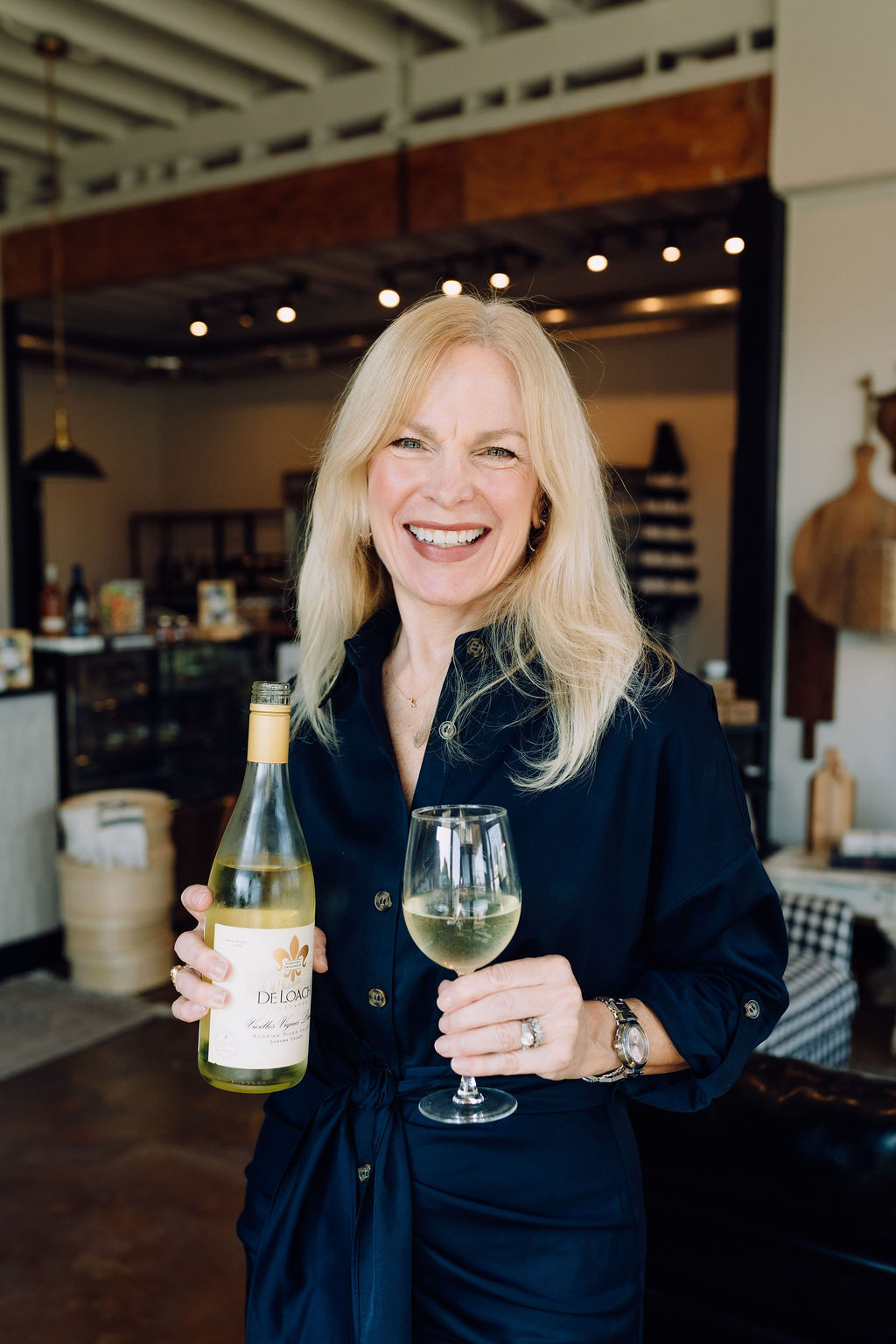
Founder
I make wine a SOCIAL POWER SKILL™ for high‑impact women leaders—turning intimidation into executive advantage. After 20+ years leading global defense business development, I felt the pressure of high‑stakes client dinners with zero wine fluency. That gap cost me confidence and opportunities. I built the solution I needed.
Today, as Founder of Sip Society Collective by WINE WIZE and host of EVERYDAY SOMMELIER Podcast, I innovate, educate, and empower women to convert practical wine fluency (not consumption) into confidence, presence, and measurable social capital. I created the Empowered Social Capital™ methodology to link wine knowledge with executive‑level behaviors—so you can command rooms, architect strategic relationships, and accelerate business outcomes.
What makes this a category of one:
- Business‑first, judgment‑free: replaces snobbery with actionable playbooks for high‑stakes settings (drinkers and non‑drinkers welcome)
- Proven methodology: SOCIAL POWER SKILL™ frameworks + scenario practice for client dinners, boardrooms, and cross‑cultural protocol
- Measurable progress: pre/post confidence scores; data analytics to track your personal wine journey, and community feedback loops
- Community leverage: curated access to high‑impact women for authentic, strategic connections
How we work:
- Empowered Social Capital™: cohort and affinity group programs (virtual + in‑person)
- Executive intensives: bespoke coaching for pivotal meetings, roadshows, and power dinners
- Keynotes and workshops: wine… Read More