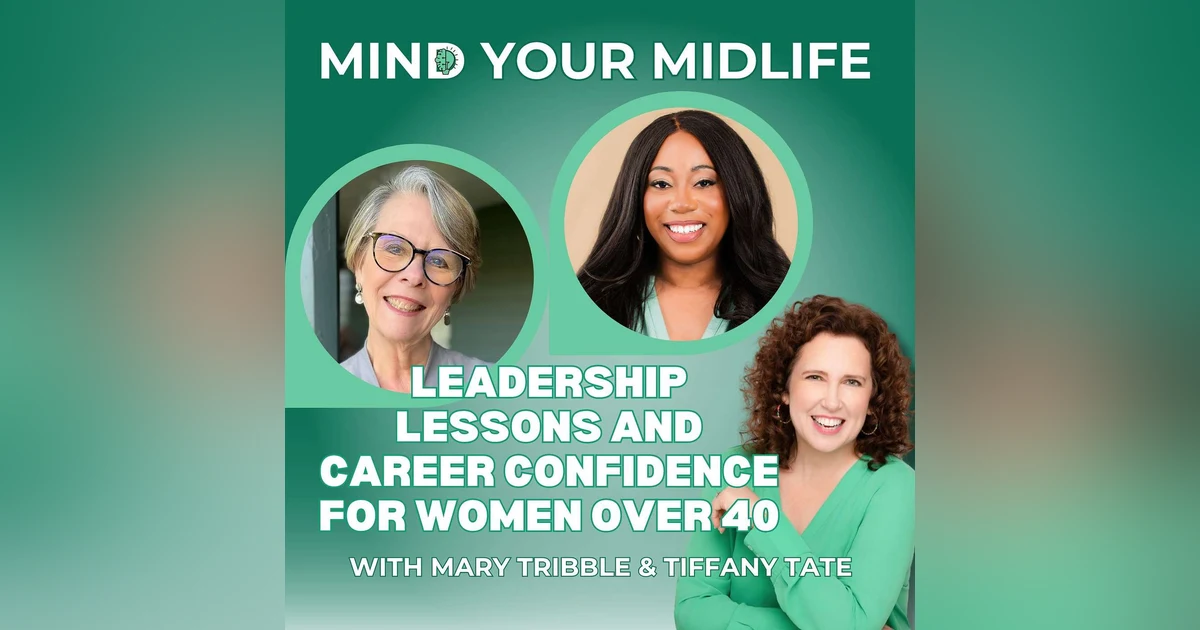
58. Leadership Lessons and Career Confidence for Women Over 40, with Tiffany Tate and Mary Tribble


Ever feel like you’ve been doing all the right things at work—but somehow, you’re still not being seen? You’re showing up, doing great work, but the next opportunity just isn’t coming? You’re not imagining it—and you’re not alone.
In this powerful episode of Mind Your Midlife, I sit down with Mary Tribble of the Wake Women Podcast and Tiffany Tate, CEO of Career Maven Consulting, to talk about leadership, visibility, and confidence for midlife women who want to grow in their careers. We explore how to move past the “invisible ceiling,” why kindness and authenticity matter in leadership, and what it really takes to be seen, heard, and valued in your work life.
BY THE TIME YOU FINISH LISTENING, YOU’LL DISCOVER:
✔ What the “invisible ceiling” is and how it quietly holds back midlife women at work
✔ Why being visible—and not just good at your job—is the key to career advancement
✔ How to lead from where you are, even without a big title
✔ The truth about kindness in leadership (and why it’s not weakness)
✔ How to find support and community when leadership feels lonely
🎯 OMG Moment: You don’t need a fancy title to lead—you just need to start where you are and make your work visible.
Take Action
Ask yourself: Who in my organization knows about the great work I do? If it’s just your boss, it’s time to expand that circle. Build relationships sideways and diagonally—connect with peers, mentors, and leaders who can help amplify your visibility.
Connect with Mary on Instagram.
Connect with Tiffany and Career Maven Consulting on Instagram and LinkedIn.
Why This Episode Matters
Midlife women bring wisdom, experience, and emotional intelligence to the workplace—but too often, we're overlooked. This episode is a call to step into your leadership mindset, advocate for yourself, and create opportunities instead of waiting for them to appear.
🎧 Hit follow now an
Text me to ask a question - I'll answer on the podcast!
Build Your Pitch with Ryan Cunningham: Go to www.cherylpfischer.com/buildyourpitch (or www.cherylpfischer.com/buildyourpitch2) to find out more and sign up! And use code GOLD10PERCENTOFF for 10% off!
🌸 Liked this episode? Share it with fellow Gen X women navigating hormone balance, an empty nest, and/or self-confidence!
🫶 Love this show? Leave a review to help more women over 50 find us.
💡Want menopause support, mindset shifts, or support with midlife transitions?
- Build a mindset for success with the private bonus episodes!
- Book a free Mindset Coaching / Intro Call: cherylpfischer.com/coaching
Let’s talk midlife body positivity, self-talk, and redefining aging for women — without the “midlife crisis” narrative. Every week I'm adding new success strategies for midlife women.
Connect with Cheryl, Midlife Coach: Instagram | LinkedIn | Website
00:00 - Feeling Overlooked At Work
01:05 - Meet Mary And Tiffany
03:08 - Defining Mid-Career And Invisible Ceilings
06:12 - Why Good Work Isn’t Enough
08:43 - Bias, Sponsorship, And Manager Roadblocks
11:06 - Build Visibility Beyond Your Boss
13:20 - The Power Of Being Delightful To Work With
17:02 - Kindness, Directness, And Trust
19:52 - Leadership As A Mindset, Not A Title
22:47 - Conflict, Accountability, And Fear
24:50 - The Loneliness Of Leadership
27:42 - Boundaries, Networks, And Community
30:44 - Making Friends In Midlife
33:42 - Final Advice And How To Connect
0:00 If you've ever gotten frustrated that in your professional environment, it feels like people don't see you. It feels like they don't appreciate you. It feels like what are you still doing there? Especially when we hit like 50s and 60s, right? Then you are gonna enjoy today's episode because we're going to make that make sense and hopefully give you some tips that will really help. Let's talk about it. Welcome to Mind Your Midlife, your go-to resource for confidence and success, one thought at a time. Unlike most advice out there, we believe that simply telling you to believe in yourself or change your habits isn't enough to wake up excited about life or feel truly confident in your body.
0:50 Each week, you'll gain actionable strategies and, oh my goodness, powerful insights to stop feeling stuck and start loving your midlife. This is the Mind Your Midlife Podcast. Today's episode is something very cool and a little bit different. And I'm so excited to welcome two guests to the podcast. So Mary Tribble is joining me from the Wake Women podcast, and we are jointly creating this. So you will see our episode a little bit different, but same guests, same conversation over on Wake Women.
1:30 Make sure to check it out. And then our guest today is Tiffany Tate. So Tiffany is a speaker and a career and leadership expert, and she's the founder and CEO of Career Maven Consulting. So she is here to help us understand leadership and give us that kind of mid-career. What am I going to do now and how am I going to be connected? Advice. Now, Mary led a Charlotte-based marketing firm for 25 years, and she and I are both Wake Forest University graduates. So she returned to her alma mater about 10 years ago to lead the alumni engagement team.
2:16 And that is how she and I connected, and that is where the Wake Women podcast came from. So I am excited that the three of us can have this conversation. I imagine that MidCareer for a lot of us kind of becomes or became a place of stuckness, right? Is that especially when you get into, say, a corporate world or any kind of organization that has a hierarchy to it and somehow seems mysterious as to how it works. And I know when I came to work at um at Wake Force University, I came to work in university advancement. I had never worked in higher education before. Tiffany, I'm sure it showed. Because I was learning from people like you who were teaching me kind of how how the structure, I think higher education is particularly unique.
3:06 But I also, you know, had a lot of exposure with corporations. And so there's an place of being stuck, I think, that people find themselves in in different points in their career. And um, and there's something that Tiffany, you call the invisible ceiling for mid-career professionals. Let's jump off on that as in terms of a topic. I I want to hear more what you mean about that and how you help people navigate around it. Yeah, so um, by definition, I also want to name that sometimes a mid-career and midlife get um interchangeably. Um, in our space, when I say mid-career, you have been a working professional for at least 10 years.
3:49 Somewhere between 10, 15, maybe 20 years you've been in the workforce. Um, and so it's more about time uh clocked than time maybe on the planet. Um I just want to name that. Uh that said, when when I'm talking about invisible ceiling, um, you know, I think when you're talking about women specifically at work, we're probably all familiar with the glass ceiling where you just work really hard and then you hit this sort of um this rung where you can't persist if you don't have adequate sponsorship. And there's a lot of research around the um glass ceiling for women. The invisible ceiling is not gender specific and it really speaks to people who have been working for a while, they've been doing good work, maybe they've gotten promoted, um, they're getting, you know, positive feedback, but they can't seem to like push to the next level.
4:43 They may or may not be interested in being executive level, but they just want to grow in their career, take on more responsibility. Maybe they want to lead people or lead more people, but they're not really clear on how to do that. Um, and so they may not be getting cues as to how to facilitate what happens next. And so often mid-career people, which makes up the majority of the workforce, right? Like there's only a handful of people in the C-suite. Right. And then there's a lot of people, entry-level, first job, interns, but everyone else is sort of in the middle of the row at work. And it can get a little dicey because you might be taking on a lot of responsibility without recognition or additional reward. And so when we are talking about the invisible ceiling, we're really talking about how to help professionals figure out okay, what do I want my work life to look and feel like?
5:31 How do I develop the relationships so that my work is more visible so I can go after higher earning or higher levels of responsibility, uh, whether it's inside my organization or at a new company? Because it's just, it's just sort of murky. Like you're like, oh, I'm doing a good job, but I don't really know how to navigate what happens next. And so part of Go ahead, Cyril. I was just gonna say that makes me curious. Do you find that people when they're saying I don't know how to figure out what happens next? Do they kind of feel like it should happen without them having to take action? Do they do they feel like the path is just gonna go forward and then the shock is that it doesn't?
6:14 Is that kind of what you see? Yes. Uh I think, you know, for it's ironic because some of the same challenges that mid-career professionals face are similar to early career. Um, I know I experienced this when I finished at Wake. I thought, well, I've worked hard and I did all the things on paper that you're supposed to do. So clearly a job should just appear. Um, and then when you get into said job, people should just know you work hard and you deliver. So, like the next thing should happen, but that's not really how work works. And so um, unfortunately, many people who um have always operated on kind of a syllabus paradigm where it's really clear um what activities you're supposed to complete and the grades should come for that.
7:00 That's not really how work works. And you could be doing really well at whatever your technical expertise is, um, but to grow in your career requires um visibility, uh sponsorship. People have to advocate for you. Even some of the skills that you need to be successful in your work as you grow are not kind of the hard-coded things you learn in a classroom or um in a quick hit training. It takes time and constant feedback loops. And people unfortunately don't always receive that. And so they could hit a wall and not really understand why, and not have someone above them coaching them for the performance piece, which is a whole other can of worms we could talk about.
7:43 What about um also when I've observed this in my workplaces when somebody's actually doing good work, but they kinda they have a boss that's in the way, right? I mean, meaning like a boss that's not advocating for them. And um and and and the information that the superior seems to be working on is not is not really telling the whole story. Do you see what I'm saying? I've seen like I've seen superiors kind of seem to like take take pet, you know, people that they that they really want to advocate and employ, maybe they look more like them, or maybe they went to the same school they went to, or whatever, and they tend to elevate one person over another.
8:25 How do you navigate around that? And either one of you can answer that. Yeah. Go ahead, Tiffany. That's a complex one because Mary, what it sounds like you're describing is um kind of the people collisions that happen at work with when bias goes unchecked. So sometimes a manager might not be advocating for you because they just aren't great managers, but they mean well. Right. Other times people aren't advocating for you because unless you know how to recognize when your biases are getting in the way, and we all have them, like bias keeps us safe. If you have a brain, like we like to categorize things as people, right?
9:05 Um, but there's a lot of research around how um, you know, the three of us all went to the same institution. And so there's a little bit of shared experience and understanding there, which isn't inherently bad. But if I'm always interviewing and I only choose people that went to my school or we have this affinity, then I'm missing out on an incredible talent pool that's out there if I don't design my process the right way. The same thing happens internal to an organization that if managers, you know, don't have uh a framework for managing performance or giving people feedback or supporting people, even if they mean well, you're gonna have some um challenges there. Um, but in the not so great scenarios where people don't always mean well or they just do what is easy, a lot of people, typically marginalized people, you know, whether it's because of race or perceived class or gender, um, get left behind.
10:00 And so in those cases, I often tell people your manager should not be the only person that knows the work that you're doing, because that person could get in the way of your work being visible, and visibility is part of the promotion path, not just performance. Um, you need to be visible, you need to be exposed within a company, and other people need to know about the work that you're doing. So um it depends on the type of company you're in um and the culture of that organization. But usually I say day one on a new job, you know, meet your manager, but also start to meet other people who are sideways to you or peers who might be um diagonally adjacent to your manager and have that same level of decision-making power.
10:42 Go to the town halls, sign up for, you know, not all the volunteer things, but a volunteer thing so that you can get FaceTime with people you might not have access to because that will be good for the long run. Yeah. Yeah, I love that. I'm so glad you're saying that because one of the things I coach women on fairly often, related to work or something else, life, is every action we take, there's always some kind of reaction that happens. And maybe it's not obvious because what you're describing is well, why should I go to the town hall? And why should I know the people and why should I be in the group? Well, you just don't know what's gonna come from that, and something will in some way. Yeah.
11:23 Yeah, I remember one time coaching someone that worked in my team, and and um she was working with um not just internal and alumni, but working with some some um high highly positioned people across campus. And one of the things I challenged her with is I said, I want these folks across campus that you're working with to come back and tell me what an incredible worker you've been, because I want your reputation across campus to to really be elevated. Um, and um, and she wasn't actually my direct report either, but um, but I do I think that's really, really important advice.
12:05 And um, and I'm gonna add on one other thing that you um you did a a post on th or you commented, I think, on a post on Threads the other day, and I commented as well, is the value of actually being delightful to work with, right? Just like the value of being nice, just like all three of us are so delightful. Exactly. That's that's why we're we but it really does matter. Kindness matters. And um, and I feel like we're living in a world where it it doesn't, but you know, when when I had a when I owned a company and I had folks that were working with me on my team, um, one of my one of the ways I evaluated folks was not just how awesome they could pull off a major event, that was my business, um, but also how much the clients told me that they enjoyed working with them.
12:58 Did you bring them confidence and trust? Was it um was it a was it a delight to meet with you? And did you, you know, were you on point and you know, and identified problems, all of that? Can you talk a little bit about that? I just I think it's something that's missing in the workplace a lot of times. Yeah, I think, you know, I don't remember where I read this. Um there's a book, um, I'll have to send it to you after, but there's a book I read earlier in my career that's really targeted towards working women, but it's this idea that like you can be ambitious and kind, like the like this idea that you have to be awful to people to get, you know, to advance in your career. And I just I I think I've always sort of known that doesn't feel right, even though I didn't have workplace or talent, culture, language.
13:45 My family raised me to treat everyone the same. Doesn't matter if you're the janitor, you're the president, you know, you're whatever. Um, and I it it sounds so simple now, but even in higher ed, you know, um before I got deep into it, that was just my lens. And I, you know, I'm like, I don't care what your job is, you're a person. So I'm gonna talk to you, and you know, and I really believe that like that has created opportunities for me. It's allowed me to learn things that, you know, maybe I shouldn't have had access to, but people just, you know, were helpful. Um, and I think in the workplace, like sometimes people forget that even when you're in um very high positional roles, you know, like there's sort of this old school 70s, 80s, we should act like, you know, leaders, a la act like a man that is not very kind.
14:37 And I just I've never bought into that. Um and you know, I know we're gonna talk a little bit about leadership as a mindset, but I really do believe that how you treat people is the like foundational to being an effective professional, whether you lead a team formally or not. Um, and it doesn't mean you always get it right, but consistency, um doing the things that you say you're going to do, asking good questions, apologizing when you're wrong, you know, like it's very I think it's simple stuff. But I have had clients that have had really alternate universe experiences at work.
15:18 I've had alternate experiences in some contexts with managers that were just weren't good people. Like they were really smart, but they weren't really good people. And um people don't generally want to follow or work with people that make them feel bad, you know? And so, like, even on my team, I try my best. Like, this is not the Tiffany show. I don't know everything. You're here to make sure that we fulfill our mission. I need you actually to fulfill this thing. And if I've gotten something wrong or something is unclear, or I made a mistake, one of our values is excellence is a habit, it is not a destination. And so that requires us to be really thoughtful about our work and own when we make a mistake because that's the type of culture I want to work in and that I want to build.
16:39 You know, it's interesting. It we somehow sometimes we're taught, I think, that kindness in the workplace is a weakness. And I love what you're saying because it there's there's something invisible that happens inside our heads, even if we think that kindness is a weakness in the workplace, that we still would rather work with the people that we enjoy being with. It's deep in there, and we're never gonna know why we make these decisions, but it's it's totally true that deep in there, if somebody's choosing between two people, of course they're gonna choose the one they rather work with, right? Right, yeah. I mean, maybe not of course, yeah.
17:21 Well, you know, but also I I also want to name like I define kindness and niceness as very different things. So I'm not actually nice. Like to me, being nice is like you're just you know, very uh sort of overly positive and Pollyanna and not being realistic about what's happening. You know, it's like and I hold kindness in high regard, but I also believe deeply in being direct and being honest. Um, and that's you know, feedback is a skill that people have to learn how to give good feedback and receive it. I believe kindness exists alongside that, but um, sometimes it's saying the part that's not so fun to say or holding people accountable, but you can do it with respect for yourself and respect for people.
18:07 And I think sometimes at work, people avoid hard conversations because they are conflict averse or they don't want to make it weird. But it's like we would all be better if we were in spaces where we trusted ourselves and we trusted our colleagues enough to be honest and be kind because we know that it's a safe space to do that, right? But that takes time to build. But I'm not actually very nice. I'm kind of like my pet bunny. I've I'm a little spit of a skeptic. I like that you said trust because that's exactly where I was going, I think, and I just didn't put the word to it. I want to trust that whether somebody's giving me positive or negative feedback, or whether they agree with me or they don't, that they're gonna be honest and I can trust them, and it's safe to have this conversation.
18:53 All those pieces I think are part of trust. Yeah. I have had so many people over the years tell me that they're just not good at leadership. They're they just they don't look at themselves as a leader. Like, how could they move forward? They're not a leader, and I just I just don't think anyone's just not a leader. I think it's about a mindset more than anything else. So tell us more about what you think about that. Absolutely. Um, for a long time I used to facilitate a workshop about um leading from where you sit, because even in deeply hierarchical workplaces, if everyone understands like core tenets of leadership, because you're leading projects, you're leading processes, you might be leading people informally or formally.
19:40 We would, you know, probably all have a lot more fun at work if like people, you know, day one could understand like what is the definition of leadership here and what are the skills that I need to facilitate that. But in general, like this idea that you're not a leader until you get a certain um job is um, as one of my friends says, Malarky, like it's just not true. Like, I didn't formally lead people for many years in my career, but I was informally leading really large projects. And no one sat me down and said, here's how you, you know, manage a matrix team or here's how you manage all of these resources. I sort of had to figure it out until I had support and coaching and all that good stuff.
20:23 Um, and so this idea that, you know, someone is not a leader because they don't have a big title, um, I think holds a lot of people back from creating really interesting work or driving change at work. Um, like we're all leading something. And it might be situational, like it might be a meeting, it might be um a little bit bigger of a situation, like a project for six months. Um, you might be on a team, you know, now work changes so rapidly. You might be on a team for nine months where you're leading these 10 people through a change initiative, and then you did such a great job, they move you over to this other function, and now you formally have these reports and you're changing roles a lot, right?
21:06 I think this generation is slated to change jobs like 30 to 35 times. And some of those jobs might be inside of a company. So um, something I want for all people, but especially women, is to kind of lean into what might feel uncomfortable around leading and like taking charge. Um, because I I think that role clarity invites us to um continue working on our skills around trust building or communication or feedback. I talk about that all the time, um, or managing conflict because you're gonna run into these collisions at work, whether you have a big title or not.
21:46 Um, and so the sooner you kind of roll your sleeves up and get after it, the better you'll off you'll be, I think. Do you think it is the fear of conflict that really is a big piece for people who kind of shy away from leadership, or is there are there other pieces in there as well? I think fear of conflict is a big one. Um, I also think that if you have been socialized or raised, like I was this way. Um if you are listening to this podcast and you went awake, then you probably heard me say this a la early 2000s. I never understood, like it took me well into sophomore year to understand why we had participation as part of our grade in classes, because I was like, I'm doing my work.
22:31 I don't, I don't really know why I have to speak to like get a good grade here. Um, thankfully, I outgrew that and I started to understand that part of the process of learning and really leading in school or at work or wherever is engaging with your peers. It's like having dialogue, it's pushing back on your professor. But I was raised um with very traditional parents, and I thought, you know, the educator, the teacher, whoever is the most senior in the room is always right. Right. And there culturally, there are some aspects of that that are positive and lead to sort of respect when you're at home or in community, right? Like we have reverence for elders. But in class, where you're being invited to challenge or push back, there's uh there's some friction there.
23:19 Um, and so it took me a long time to sort of understand, oh, there's different rules in this context, and actually I do need to show up differently. And it doesn't feel I don't, I still sometimes don't like it, um, but it's necessary because of the role you might be playing at a given time. So I share that just to say that I think sometimes it's a fear of conflict. Sometimes um I think it is a sort of fear of looking like you are not kind or respectful. Um, and I also think, you know, leadership is scary because when you're leading people or leading a project and something goes wrong, even if it's not your fault, you're responsible for it. So like accountability culture is is scary, right?
24:01 It's necessary, but it it is a little bit scary. It can also be lonely, right? I mean, I I you know, leadership when, you know, and I've had lots of conversations with people about this, is that especially when you're in a team and all of a sudden you get elevated above your above your peers, your colleagues that you've been working with. You know, it it it it can be very lonely because of all those assumptions, Tiffany, that you just mentioned that people make when they walk into a room and if somebody has a certain a certain title or responsibility or is leading a certain team, you know, that especially can um can sabotage uh creative meetings, right?
24:45 Brainstorming meetings if if the boss if you if if you feel like you throw out an idea and the boss kind of continually ignores it or tamps it down. Um so it yeah, how do you how do you, Tiffany, how do you, or Cheryl, both of you, because you both you both work with leaders and up-and-coming leaders, how do you how do you solve for that? How do you solve for that lonely loneliness? Is it a part, is is part of that about making relationships that are outside of your department that you just talked about? Unpopular opinion. Okay, so yeah. I think it was in terms of personal loneliness, I think it's really important to have a personal and professional network of people that you trust and that you can talk to outside of your job.
25:30 Um, it's just I think a smart thing to do because it helps you problem solve or get objective feedback and just be yourself, like without the, you know, kind of film we put on sometimes at work. And inside of an organization, you should absolutely be building relationships. Um, I also think that so I just I know we've talked about this, Mary, but I just don't we might make friends at work, but we're not there to be friends. Right? Like, and so I think sometimes when people push past like, oh, I was your peer and now I'm like you're reporting to me. It's weird because the nature of your relationship was odd to begin with. Like you might know way too much about a person.
26:11 Um so I think that can be a little bit tricky when now you have to hold somebody accountable. It's not easy, but it's like I have made great friendships at work, people that I consider friends, and we text and we talk and we hang out. Um, and at work, I always managed a certain level of, you know, um privacy or, you know, not oversharing or, you know, boundaries. Like there are certain things I just didn't do earlier in my career because I wasn't that much older than the people I was serving either. So I had like really hard boundaries, right? And so I share that just to say that sometimes we are lonely because we have unrealistic expectations of what our colleagues should be to us.
26:58 Um, and so building relationships outside of work, I think, is just smart in general as a person, and we require community to solve things and figure things out. So you'll have community at work, but it won't look the same as the community outside of work. And I would echo that exactly. My first management role happened when I was 27, and I was managing people who were around my age and older than me, and exactly what you're saying, it suddenly was a little bit different. But we don't have to all be best friends at work, and maybe there is something that would be oversharing that you save for your other friends.
27:38 And it's interesting because this is a big topic in midlife, too, because as our kids grow up and they leave the house and we're looking towards the end of our career, everything seems to kind of change. And sometimes we lose friends and we need to make a new community and not lose friends because of any blow up, just lose friends because of the situation. The situation is different. The the our how do I say this? Our kids, friends, parents are no longer we're no longer really with them, and that community is a big deal. It's a big deal outside of work to have people that you can really talk about anything with. Absolutely. Yeah. Cheryl, how do you find those people?
28:19 Like, I think, you know, as I prepare for someone leaving me in a few years, just you know, I I think about that a lot and how building adult friendships can be hard. Um, it can be easy and hard depending on what you do, I think, um, and how you how much free time you have. But I'm just curious, like, how do you navigate that? So personally, in a couple of different ways, and this is what I advise people to do as well. And maybe one of these would fit you better than others, but one, it's doing activities, and this is why we joke all the time about how mahjong is getting big and grandma hobbies are getting big. This is why you can make friends if you go and do activities that are kind of social and fun, and that is the solution for a lot of people, and then you just find the people that you really connect with.
29:12 Interestingly, I've also made friends just going to networking events. Um of the best advice I ever got was to walk into a networking event because we all feel a little awkward and about it, and just say to yourself, I want to meet one person today that I really connect with. Like, don't let it be about I need 27 business cards and I have to know all the things, but like let me see if I can find somebody I really connect with. And sometimes that develops into let's go for coffee, and you end up being some meeting someone you can really talk to. Not always, but so it's a lot of activities. But the other thing, let me just give a shout out to my Wake Forest uh what do I call them, friends from college.
29:57 There's a few that now live here locally, and so we've been friends for a million years, and now we're back to getting together more, and so that history sometimes works out well too. I I would agree with that. I I've been dealing with it, so you know, I moved to I lived in Charlotte for 30 years and had all kinds of just good, but the biggest thing about me leaving Charlotte was all my friends. Um, and pi these are people that I had been colleagues with like throughout the city for just decades. So when I came to work at Wake, I had kind of an instant, you know, you kind of have an instant atmosphere of of colleagues and so on, but then when I decided to start with to Through my phased retirement. Then all of a sudden I woke up and I was like, oh my God, I'm in a city that I haven't planted my feet in the way that I planted my feet in Charlotte.
30:45 So how do I do that? And I literally, I just I did it like old-fashioned networking that I did when I was 25 years old when started my company. Was I just had lunch with somebody and said, all right, I'm looking to connect to people. I want to get involved in the community. And one thing, I mean, I just did it like old-fashioned networking, one thing left to another. And and there are there are also opportunities I think that you have to go outside your comfort zone sometimes to say yes to. And that's what Cheryl was talking about in terms of in terms of activities. There's um there's a a group of women that have been meeting for dinner um the first, what is it, the first Tuesday of every month for like 25 years.
31:25 And these are all um women who have worked, most of women who have worked in higher education one way or the other, but not Wake Forest by, I mean some Wake Forest, but not all Wake Force. And I got invited to join that group about three or four years ago. And it's one of my lifelines now. And it's a different group of people that shows, you know, some people have moved away, people some people have moved on, but you know, those those if somebody asks you to do something like that, say yes. Say yes, for God's sake. Tiffany, I am always excited to hear what what you're doing next. And thank you so much for your wisdom and insight. Uh once again, any lasting thoughts that you want to leave our our folks with?
32:08 How do they find you on social media and so on? Yeah, you can find me um on social media at Instagram or LinkedIn or threads, my name Tiffany Waddell Tate, and you can follow our company online at career mavenconsulting.com and sign up for my newsletter, which I'll share the link for the show notes. But if I were to leave listeners with one last thing, it would just be that whatever you're experiencing in and around your work is probably changeable, whether you change the situation or you change your job. So just a reminder that you're not a tree, you can't actually move. So you are not a potted plant. We all need that reminder sometimes.
32:50 That's a really good reminder. Okay, thank you all so much. I took away from this conversation some really powerful lessons about visibility and about really self-belief. No matter what phase of our career we're in. Tiffany talked about making sure that you're visible, not just to your boss, but to other people in your company or other people in your industry, and then finding sponsorship. And that's another word almost for mentorship. It is really important to be making those connections and seeking out those relationships.
33:35 But then if you remember, maybe not like best friend relationships in our place of work. So she said that was an unpopular opinion. I think it's probably valid. The other thing I want you to keep in mind is lead from where you sit, lead from where you are now. And Robin Sharma wrote a great book, The Leader Who Had No Title, which really taught me a lot of lessons about that. You can lead from wherever you are in all sorts of different capacities. But that leadership also involves being open. Because if you remember, we just had a quick little discussion about learning how to question our professors in class and learning how to have dialogue back and forth.
34:19 I have one parent who really was so reluctant to ever question her doctors. And we kind of worked with her on, you know what, we need to get a second opinion or we need to ask more questions, or did you ask this or that? Because I think with each generation, maybe we've been more willing to question the experts. They might be experts in their area, but we have our story as well, and we know how to advocate for ourselves. So I hope you have taken so much out of today's episode. Make sure you have hit the follow button because next week we are gonna be talking about empty nesting. And I may have been avoiding this subject for a little while, but we're gonna lay it all out there and talk it through.
35:07 So I will see you then. And in the meantime, remember that in midlife, it's time to take just a little bit better care of yourself. Just a little bit better care makes a huge difference.
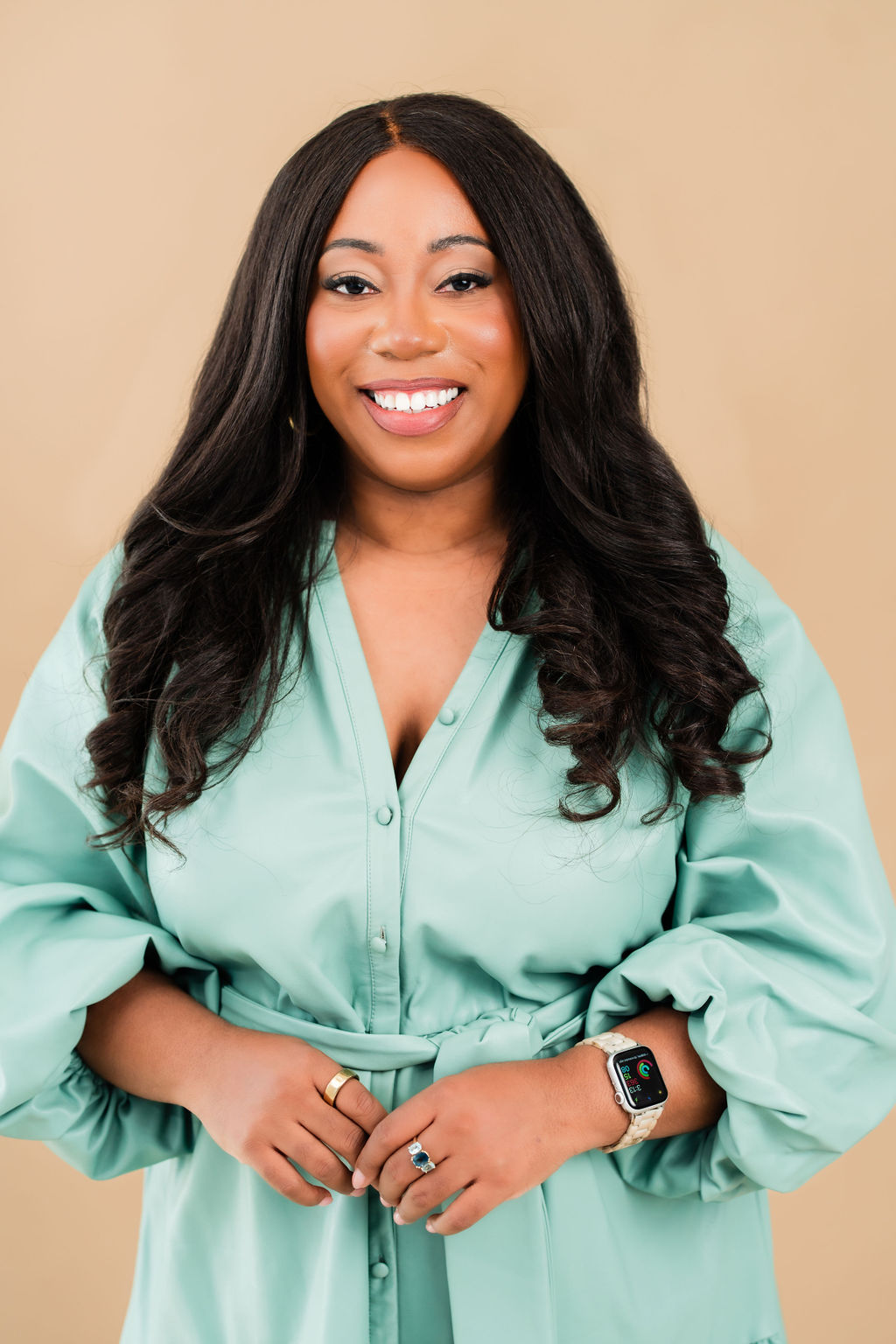
Founder & CEO, Career Maven Consulting
Tiffany Tate is a keynote speaker, career and leadership expert, and the Founder & CEO of Career Maven Consulting. She leads a boutique leadership development firm that partners with organizations to engage, advance, and retain mid-career professionals and executives through career coaching, learning & development programs, and talent advisory.
A trusted voice on the future of work, Tiffany’s thought leadership has been featured in Forbes, CNN Business, Well+Good, The Everymom, The Muse, and a variety of podcasts. She is a sought-after speaker for conferences, leadership retreats, and corporate events, known for blending candor, strategy, and research-backed insight that inspires action.

Mary Tribble has built her career on the power of storytelling to connect people and convey purpose. After graduating from Wake Forest University in 1982, she founded and led a Charlotte-based event marketing firm for 25 years. There, she used large-scale events as a platform to help corporations and nonprofits communicate their mission and values with authenticity and impact. She was honored as BusinessWoman of the Year, Entrepreneur of the Year, and was inducted into the Event Solutions Hall of Fame.
In 2014, Mary returned to her alma mater to lead the alumni engagement team, shaping experiences that deepened the bond between Wake Forest and its graduates before retiring to create and host Wake Women, a podcast by and about the women of Wake Forest University. A public speaker, writer, and podcaster, Mary has dedicated much of her work to elevating stories that inspire. She earned her Master of Liberal Studies degree in 2019 and published Pious Ambitions: Sally Merriam Wait’s Mission South, 1813–1831with the University of Tennessee Press. She served on Wake Forest’s Slavery, Race, and Memory Project, co-chaired the Universities Studying Slavery Conference in 2020, and continues to speak on topics of leadership, history, and community. She uses her expertise to consult with nonprofits and cultural institutions, helping them craft narratives that engage constituents and communicate vision and values.