Permission to Thrive and to Redefine Your Midlife, with Dr. Wendy O'Connor (Ep. 48)


(Episode 48) Ever find yourself asking, “Is this really it?” You’re not alone—and you’re not stuck. In this empowering episode of Mind Your Midlife, Cheryl Fischer sits down with Dr. Wendy O’Connor, a Stanford-trained positive psychologist and success coach, to talk about what it truly means to thrive as women over 40. We dig into the difference between success and happiness, how to stop living by everyone else’s “shoulds,” and why giving yourself permission to thrive may be the most importan...


(Episode 48) Ever find yourself asking, “Is this really it?” You’re not alone—and you’re not stuck.
In this empowering episode of Mind Your Midlife, Cheryl Fischer sits down with Dr. Wendy O’Connor, a Stanford-trained positive psychologist and success coach, to talk about what it truly means to thrive as women over 40. We dig into the difference between success and happiness, how to stop living by everyone else’s “shoulds,” and why giving yourself permission to thrive may be the most important self care decision you make in midlife.
Dr. Wendy brings deep insight into why so many midlife women feel unfulfilled even after achieving all the traditional milestones—and how to finally shift your mindset so you can live with confidence, joy, and meaning.
BY THE TIME YOU FINISH LISTENING, YOU’LL DISCOVER:
✔ Why success and happiness are not the same—and why both matter for midlife women
✔ How “shoulds” and old roadmaps keep women over 40 and 50 stuck in self-doubt
✔ The mindset shift that helps you give yourself permission to thrive without guilt
✔ How to move through regret and create your next chapter with clarity and self confidence
🎯 OMG Moment: Happiness is not a luxury—it’s a foundation. Giving yourself permission to redefine your life now is the next step to creating the life you really want.
Take Action
Notice the “nudge.” That little voice inside that asks, Is this really it? or Could life feel better than this? Instead of ignoring it, honor it. That’s your intuition guiding you toward your next chapter.
Connect with Dr. Wendy at drwendyoconnor.com or on Instagram.
Listen to the 'second act' episode with Shannon Russell (episode 32).
Why This Episode Matters
For too long, midlife women have followed a script of “success” that doesn’t always bring fulfillment. This episode is your reminder that midlife is not a crisis—it’s your chance to redefine success, reclaim joy, and create a life that feels meaningful to YOU.
🎧 Hit follow now so you don’t miss a thing!
Text me to ask a question - I'll answer on the podcast!
Subscribe to receive bonus episodes at cherylpfischer.com/bonusepisodes.
🌸 Liked this episode? Share it with fellow Gen X women navigating hormone balance, an empty nest, and/or self-confidence!
🫶 Love this show? Leave a review to help more women over 50 find us.
💡Want support through menopause, mindset shifts, or midlife transitions?
- Join the collective by subscribing on Patreon or grab the bonus episodes!
- Book a free Mindset Coaching / Intro Call: cherylpfischer.com/coaching
Let’s talk midlife body positivity, self-talk, and redefining aging for women — without the “midlife crisis” narrative. Every week I'm adding new success strategies for midlife women.
Connect with Cheryl, Midlife Coach: Instagram | LinkedIn | Website
0:01 If I say the phrase permission to thrive to you, I wonder what comes to mind, because when I work with clients on mindset, we're digging into what's all that stuff we're telling ourselves inside our head. A lot of it tends to be messages that absolutely are not permission to thrive. It's self-criticism, it's worries, it's what ifs, and that's what we want to talk about today. You get permission to thrive. Let's talk about it. Welcome to Mind your Midlife, your go-to resource for confidence and success.
0:45 One thought at a time. Unlike most advice out there, we believe that simply telling you to believe in yourself or change your habits isn't enough to wake up excited about life or feel truly confident in your body. Each week, you'll gain actionable strategies and oh my goodness powerful insights to stop feeling stuck and start loving your midlife. This is the Mind your Midlife podcast. Our brains are wired to keep us safe. I feel like I've said that sentence so many times. I should have a dollar for every time I say that sentence. Our brains are wired to keep us safe, and that's a good thing, and yet in our everyday lives, we're not facing danger typically as if we were running from a wild animal or something like that.
1:40 We've learned not to touch the hot stove and to look both ways when crossing the street, and we're handling those dangers, but we're not facing overarching danger, and yet our brains and our nervous systems are wired to keep us safe from dangers like that. So sometimes we do what maybe I'm going to call an over safety. We make ourselves smaller to keep even more safe from things that feel like a challenge. And so today, my guest, dr Wendy O'Connor, and I are going to be talking about giving yourself permission to thrive, and we have to then also talk about what in the world does that mean?
2:27 What does success mean? What does happiness mean? Are they the same thing? How do you decide? Is it what somebody told you to do, is it not? That's a lot of stuff. So Dr Wendy O'Connor is joining me. As I said, she is a Stanford trained positive psychologist and success coach. She helps women exactly as we would love to do design meaningful, intentional and fulfilling lives. So let's chat. Welcome, wendy. Thanks for joining me. I'm excited to be here. Thank you for having me. Let's start with this. Defining what success means, I know, is a powerful topic for you, so let's talk about why it is that we each need to decide that for ourselves.
3:17 So what happened for me was about maybe 10 years ago now. I went through a period of time where I realized I had checked all the boxes. I got past some pretty epic milestones I went to Stanford for grad school, I got married, I had three children, I started two private practices. Everything on paper looked exactly how we would typically define success. Yet inside it didn't feel that way and I felt like I was languishing. I was checking the boxes, I was going through the motions, I wasn't feeling lit up, even though I thought I had designed my life the way I wanted it to be.
4:05 And so one thing I quickly discovered during this period of time was that the reason, the biggest reason that I wasn't feeling my best was because of the terms I was using to define what success meant or what happiness meant, or what life should be or should look like or should feel like. And it wasn't until I started to challenge those old beliefs that I started to realize oh, there's so much freedom available and so much happiness available to us when we stop living the conditioned life, we stop following what people tell us to do. You should go to school, then you should go to college, then you should get a job, a good job, a secure job, then you should get married and buy a house.
4:52 And we're told there's a stepwise process and when you do all those things you'll be happy and successful. Yet so many women wake up one day being like I did all the things, I'm a high achiever, I'm a go-getter, I want to succeed. Yet why am I not happy? The missing pieces were following the wrong roadmap. So defining your own terms of what success and happiness mean to you are pivotal to you feeling successful and happy. Yeah, it's such a good point and if I'm hearing you correctly, it's not that you're saying I regret going to grad school. You're saying I want to make my own decision and do my thing because I want to do it. Is that fair?
5:33 There's no regret whatsoever, there's only awareness that couldn't have come earlier. So that's one of the things I think women will say I wish I thought of this earlier, I wish I knew this earlier. But we have to remember we're in situation. We're not going to build awareness until we're in situations. So once you're in a situation and you wake up to the reality that what life feels like isn't how life looks and there's a discrepancy that we could heal or up, level or change, there's a discrepancy that we could heal or up, level or change, that's when it becomes our responsibility, then, to take ownership over that and to make some changes. I'd be sitting here with regret if I was telling you 10, 20, 30 years ago I had this thought that I wasn't following the right path, and then I just kept following it.
6:21 But when I realized, oh, I'm not happy because I'm just following a roadmap that's more prescribed and not mine by design, that's the answer, and so then I make decisions appropriately at the time. I'd be sitting here with regret if I hadn't. Yes, I love that explanation because regret is. I don't want to take us like too far down the side path, but regret is such a big deal, especially for women in their 50s, which is where I am. We have a moment to sit and think and we go oh why? Did. I do that thing 10 years ago, and if we get stuck in that it becomes a problem. Yeah. What do you find for women in their 50s?
7:03 The biggest sources of regret are what are women regretting? A lot of times it's revolving around kids, because at this point in life our kids are leaving, as they should be. That's healthy and good, and that's also really hard and emotional, and we're losing control, if you will. I don't know how much control we had even in high school ages, but that feels like a lot. And so there's. I don't know why I didn't do this. Why are they not wanting to be around me? It just, I mean, could be a million things related to that. Maybe I made bad decisions when they were growing up, just questioning, questioning, questioning.
7:46 And then the other thing is, I think, whether you've had kids or not, when retirement starts to be a little bit closer and it seems a little bit more real and it's not like 20 years down the road, it's kind of like we look at our career path and go, huh, like what'd I do that for? I gotcha. Okay, that makes sense. Yeah, I think it's a really it is an interesting conversation, because the life that we want to live is a life without regret. We want to live a life that feels aligned with who we are and what we want and, more than that, what feels meaningful to us.
8:28 We want a life that reflects what we value, where we derive meaning, what makes us truly fulfilled, so we can be our best for others as well. So the ideal is that we're choosing to design lives on our terms so that we can avoid the future regret that so many may go through. Yeah, and to your point, if we're realizing it now, then okay, let's shift it now. Like, don't worry about that, we didn't realize it before. Right, correct, correct, okay, excellent, excellent framing of the issue. I also heard you say in there a couple of shoulds, and so I think when we're talking about success, that's probably always going to come up, because to me the should is like what does I don't know who I'm looking at, but what does the world say would be success for a woman with my education, or whatever, whatever.
9:26 And that's, it's still a should, right? It is, and the question that women ask themselves too often is what should I be doing or what should I do next? What I believe is a more beneficial, powerful question to ask ourselves is what do I want to be doing? How do I want life to feel next? And the shoulds really just get woven in there because, again, we're following these conditioned roadmaps, assuming there's a right way to go through life, and so when there is in our minds a right way, then the question is the should.
10:09 What should I be doing? There's a right way. I need to get closer to that path. But the question that's more powerful and leads you to more fulfillment is how do I want life to feel next and what do I most want? And that's where we start taking into account happiness in addition to just what is the definition of success. Right. I mean in my personal and professional life, which are woven deeply together. Success doesn't exist if I'm not happy. I won't feel successful if I'm not enjoying this, if I'm not enjoying what I'm creating, how I'm living in my business, how I'm supporting my clients, if I'm not happy, that's not success to me.
10:55 So they go hand in hand, and I think that's probably another reason sometimes we feel a bit astray is that we separate those definitions sometimes a little bit too far, and so we're aiming just for the big S instead of seeing them as extensions of one another. Yeah, I think what you're saying is a very healthy way to look at it and think about it, but I agree there's often a disconnect between what is success and what is happiness, and which one should I be going for and how could they ever be together. So do you, do you have any thoughts on kind of why that happens or where that comes from, that disconnect?
11:39 Because, we are conditioned to follow this path towards success. That's why it's because this has been the prescription Do this, do that, get this milestone, get to this level, get to this achievement and there you go. That's what you need. Success is what's going to lead you to happiness, Right? It's not true? So we haven't been taught to value our own inner happiness as much as we've been taught to value external success. That's why there's such a disconnect. But when you take the two terms together and you say I want to hold these together, I want both prevalent in my life. I want and this is the way I look at success. I want what makes me happy to lead to success and success be the byproduct of my fulfillment and happiness Me following my purpose, me leading with my strengths, me living in line with my values.
12:34 The byproduct gets to be success, Right, and that's not the way we've been taught. You're right. Success, I think, has been probably taught to most of us, as, as you said, milestones or labels or you know achievements that you need to check off, and happiness is like a touchy, feely thing that you can do on the weekend. And there it is. That's exactly why we wake up one day going this is as good as it gets. I did all the right things and this is how I'm feeling. This is what I'm waking up to, the Sunday scaries needing to recover over the weekend from a week that was brutal and caused me to burn out.
13:19 We've got it wrong, and so when we start to really look at our lives through this lens of ooh, the things that I seek outside of myself get to be byproducts of what I do to create the inner healing, inner peace, inner happiness within me. That's when it feels so much more empowering and exciting to create your future, because what we realize is that the better we feel inside with who we are, how we're living our lives, etc. The more beauty, the more abundance, the more gets to appear in our lives as a result of living that way. Those things get to be the results.
14:01 Yeah, absolutely, absolutely, absolutely. And it brings me to so, when we were talking before, we liked the idea of naming this episode Permission to Thrive, and I love that phrase because there's so much packed into that, because everything you're just saying it's crazy that maybe, particularly as women, we wouldn't allow ourselves to think that way or to appreciate that we could be happy and figure out how or I don't know, just not give ourselves permission. And so I'm not even sure what my question is.
14:43 Just tell us more about what happens when we talk about this permission to thrive idea and when women don't give themselves that permission. It's a big word in my world. Permission is a foundational approach to what's next. A lot of women will come into my world and ask things like what should I do next and I want to be happier, and what should the next decision be and what's the right path forward, and all of that not realizing that their answers will come to them so much more effortlessly, more flowy, more naturally once they consider just giving themselves permission to dream, to feel inspired, to feel creative, to feel excited about what's possible, without knowing exactly what that is.
15:34 And so permission to thrive, permission to be happy, permission to be your best lit up self has to start with what you are even going to allow yourself to consider in front of you what's happened in the past, what they've been taught, what they have believed, what they've been shown, what people are doing around them, instead of taking these moments of transition in life or moments of growth or different chapters or seasons in life to simply ask themselves what am I wanting, what am I longing for, what am I wishing for?
16:16 What do I want to create or have, even Not even create, but just have in my life that I don't? Those questions aren't being asked because not enough women are giving themselves permission to think outside the box, and it's quite literally that box that we've been raised in and society has taken us through this path of there's a right way and a wrong way. That's what you need to know. But the truth is there's society's way and there's your way, and one of those is going to make you substantially happier than the other. You know, as you were saying that, I was just sort of realizing that. I wonder if it's also because maybe deep down somewhere we're thinking that if we're trying to be happy then we're taking away from someone else's happiness that we care about.
17:13 It's like a zero sum game thing, like how can we be trying to be happy? We're supposed to be making sure our families are happy. I just wonder if we feel like we're kind of taking away from someone else sometimes too. I don't know. I'm sure We've got a lot of people pleasing in us. We've got a lot of nurturing tendencies within us. We've got a lot of love to give. However, we often don't know the best ways to optimize the love that we have to give, the caring that we have to offer, the service that we can be to one another. We think it's the endless giving of ourselves and our energy, not realizing that happiness isn't selfish.
17:57 I will tell you from firsthand my own experience. I'm a much better mother to my three daughters when I am happy in my life, with my life, with my lifestyle, with my boundaries, with my self-care, than when I'm tired or depleted or not setting those boundaries appropriately. I'm a different mom. So that's the thing that there is a lot of concern about happiness being selfish. And I need to spend 10 hours a day at a spa to be happy, and that's the picture women have of how they're going to be, these thoughtless, careless women that are so self-absorbed.
18:38 That's not it. It's realizing that there is a very different you that exists when you're well-fed, well-slept, well-cared for. Who, by the way, no one else is doing that for you, but you yes. Then there is the version of you who is not. And so, looking at happiness and I strongly encourage my clients and women in general to look at happiness as not a luxury, it's a non-negotiable, it's a building block, it's foundational. This is what we are serving from this vessel myself, my mental, my emotional and my physical. If those parts of us are not tended to, not nurtured, not cared for, we will not be showing up as our best selves for other people.
19:23 And, to be honest, I think at this point in my career I roll my eyes a little bit and my head goes to another excuse to not focus on yourself. And honestly, I think that the most the fear isn't so much that we're going to truly become these selfish witches of humans Right, I think the fear is that, more often than not, women aren't in touch with what truly makes them happy, and doing that work is not appealing, not exciting and not in the comfort zone that we primarily live in. Yeah, I think you've hit something, because we can say, oh, maybe it's selfish to take care of ourselves and not take care of other people, and that's not even what we're saying.
20:14 Still, you can take care of other people. But that's the surface level. I think you might have hit on something very interesting there. The deeper level and this is what I end up coaching people on a lot is really deep, deep, deep in our heads. What do we really think that we could maybe do and what are we willing to try, with maybe the risk that we won't like it or we won't be able to do it as well as we had hoped, or it won't work out like? We think that sometimes those things are really scary, and maybe that is underlying a lot of this. Could be. There's a big fear of failing, and there's a big fear for a lot of women of having chosen the wrong choice, and so that can be a big factor in how we make decisions.
21:04 But what I find is that you don't even need to believe 100% that you're capable, need to believe 100% that you're capable, meaning you don't have to believe 100% that you can absolutely achieve the thing that you want to go for. To do it, you need to believe that you can handle it. If you don't get there, you need to believe you can handle it. If it's uncomfortable, you need to believe it's worth trying, it's worth fighting for, it's worth it. Comfortable, you need to believe it's worth trying, it's worth fighting for it's worth it. But you don't actually need, especially in the beginning, to truly believe it's 100% possible, because this is another barrier for women's growth and success and happiness.
21:44 Is this idea that I should be able to see it 100% to be true? I should be able to believe that it's mine already, and we hear about this. A lot in manifestation work is, you know, seeing it as yours already, having it already, and a lot of women are like I can't see it and I don't believe it, and so I'm not going to go for it. And so my positioning on this is don't worry about whether or not you believe it a hundred percent yet. Why would you? Your brain hasn't contemplated this before. It hasn't been there before. There's no evidence potentially yet that you can achieve this level of success or happiness or lifestyle that you crave, if you're really honest with yourself. But what you do need to believe is that you're willing to try and that if you were to achieve it, it would be worth it, and you're going to get uncomfortable and you're okay with having your own back.
22:30 That's what you need to believe, and that's all you need to believe. I love it. I love it, and if you're listening, you could maybe just pause and rewind the last two minutes and listen to that again. I think it's worth it. So it reminds me of a coach that I once was talking to years and years ago, who was saying that one thing that she asks her clients sometimes to do is figure out, okay, what would the worst case scenario be, what's the worst thing that could happen when you start this or go for this or whatever? And I was like, really Like, should we be focusing on the worst thing? But the point was, if that worst thing happened, you'd be okay.
23:12 The point was, if that worst thing happened, you'd be okay. Right, like, how would you handle it? Let's talk about it, would you be okay? And 99% of the time, yes, I would be okay. So then, all right, let's do it, we can figure it out. That's right, and so many people don't look over the cliff. So I call the what ifs the cliff. What if I fail? What if it doesn't work? What if I have to do this? What if it goes this way? And then I will say it's like you're standing at the end of a cliff but you're not looking over. You're not looking to see if it's a one inch drop or if it's a one mile drop. You're not looking at what's on the other side of the what if Answer question what if? What answer it get to the conclusion that you're most afraid of.
23:56 Let's see how far down is that drop? It could be an inch, but because we're not looking over the edge, you don't know, and you're letting what your interpretation of a what if? You're letting that interpretation be your reasoning for not trying, because the feeling that's generated from a question like what if? Is fear, and so you're letting fear make a decision. Instead, what I encourage women to do is to look over the cliff. What if? What happens? Fill in the blank, finish the sentence. Look over the edge. How significant of a drop is that really? Not how does it feel, but what's the reality around that possibility?
24:37 And then what would happen. So this is something that has been such a game changer for my clients is realizing that they're not looking over the edge. They're just paralyzed by a what if? Question. Right, but if we really let ourselves be paralyzed by what if we'd never leave the house? What if I get hit by a car? What if I run over somebody? What if I never get back? We wouldn't leave. If we just let everything be a what if you know? Answer your own questions, look at the likelihood of any of those things actually happening, create a reality around that possibility, but don't let fear make your decisions for you without letting yourself feel more informed by looking over that edge.
25:19 Such a great point and, and I would add to that, I can see that this is something I mean you're a coach, I'm a coach that is worthwhile for someone to do with a coach, because when we start down the what if? Path, then a coach is going to help us to maybe not get so stuck in that that we're like now everything is terrible and I'm telling myself I'm an idiot all the time, which is the way the brain sometimes goes. But, yeah, very powerful to realize that we can handle what comes and it's going to be okay, agreed, Okay. So now that I'm on this topic, let me remember to ask you how can people find you if they want to learn more about what they, what you're doing?
26:05 Sure, so I'm mostly on Instagram, although most all platforms have a little bit of me these days, but you can find me on Instagram at Dr Wendy O'Connor, and feel free to come introduce yourself, say hi, ask me anything. I love to meet new people, so that's a great way for us to connect and, of course, if I can ever support any of your listeners, I'd be happy to, so that's the best way for me. Yeah, perfect, and I'll make sure that's in the show notes. So I find that when I'm listening to a podcast, I am thinking, wow, good point, wow, good point, wow, good point. And then I don't necessarily remember it all because I was doing the laundry or driving the car or whatever at the same time. So I always want to ask, as we reach toward the end here, what is the one thing that somebody who's listening you really want them to remember?
26:56 This thing and take it away from this discussion? I might call it the OMG, like I have to remember this one thing. What would you say that is? Remember to give yourself permission to redesign your life Whenever you hear the the nudge. To redesign your life. Whenever you hear the nudge, whenever you feel like is this really it? Whenever you wonder how can I live happier, answer those questions. Let yourself not be intimidated by the unknown or all that is possible for you.
27:38 Let yourself instead use this blank canvas of your next chapter as an opportunity to truly script it the way you want to, not the way you've been conditioned to. I love it and I love that you said when you hear or feel that nudge, because that's our intuition, which usually is right on the money for sure, and always good to listen to that. Absolutely Well, Wendy. Thank you so much for joining me. It's been a great discussion. I've loved it. I feel like we could talk for hours. There's so much fun here to discuss, so I really appreciate you having me on today. So I really appreciate you having me on today. Wendy and I are continuing the conversation over on Patreon specifically with some tips she is giving for that emptiness phase that you heard me talking about.
28:23 That is one of the sort of emotional, I'm not sure what to do struggle periods. So make sure that you have joined me in the Patreon midlife pivot community, patreoncom slash mind your midlife and you will grab that as well. Hope to see you there and I love that. Wendy's OMG was number one. Notice the nudge that's intuition, gut feeling so powerful. And then give yourself permission to investigate. Let's look forward, as opposed to always turning back forward to say, okay, now I see, now I know, now I recognize, or maybe even, as you heard Shannon Russell some episodes ago when we talked about your second act, I'll make sure that's in the show notes.
29:16 Also, as you heard her say, maybe you're just a different person now than you were when you made a different choice. That's okay. Let's go forward. Give yourself permission to follow that and see where the path goes. Fantastic way to leave this episode. If you're listening on Apple podcasts, it would be so amazing if any episodes have been meaningful to you, if you would go and leave a five-star rating and write a quick review. It helps so much to get the podcast out to the people who will really appreciate it and benefit from it.
29:58 So thank you for that and, in the meantime, make sure you remember to slow down, maybe take a breath, notice what's around you, what's going on in your head, and let's create something amazing.
Positive Psychologist + Life Strategist for Women
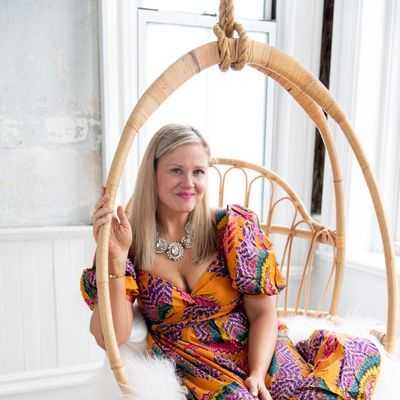
Dr. Wendy is a Stanford trained positive psychologist and success coach. She helps women design their most meaningful, intentional, and fulfilling lives. Utilizing her evidenced-based success method, Dr. Wendy has helped thousands of women worldwide live a life they're obsessed with.