83. How to Stop Emotional Eating and Heal Your Hunger in Midlife, with Tricia Nelson
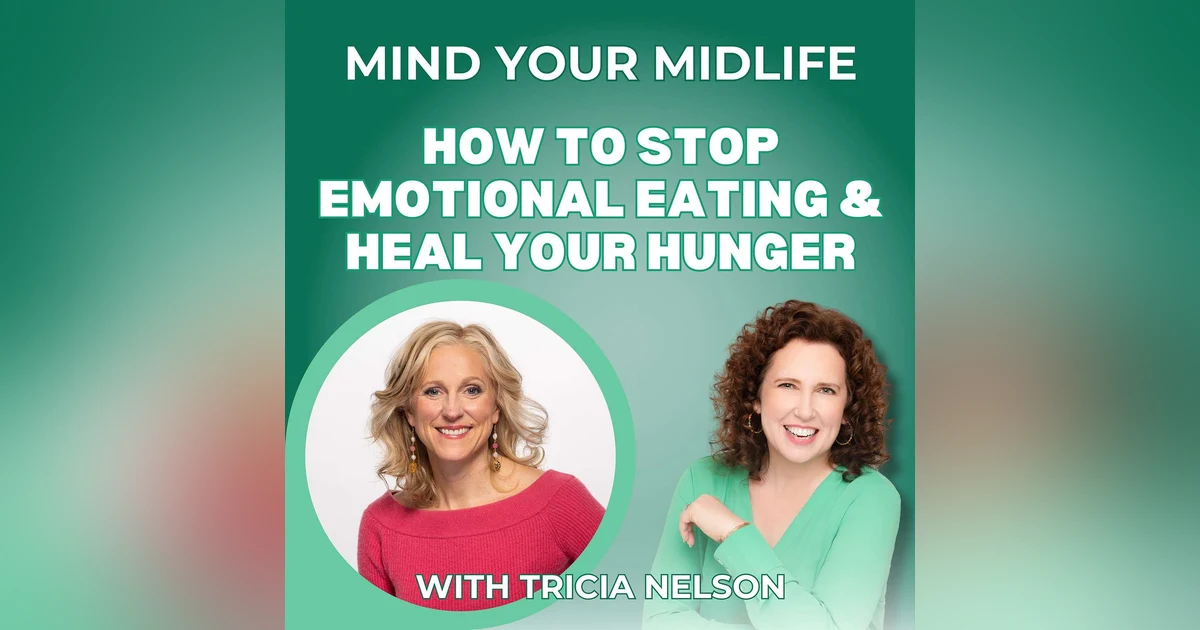


There is something that affects so many women in their 40s and 50s, yet we tend to suffer in total silence: emotional eating. We often carry deep shame around our eating habits and falsely believe we are the only ones struggling.
In this episode, I welcome emotional eating expert Tricia Nelson. Tricia is the creator of the Heal Your Hunger system, host of the Confessions of a Binge Eater podcast, and her TEDx talk on "garbage eating" has over a million views. We dive deep into why smart, capable midlife women feel out of control around food, why restrictive diets are a trap, and how to finally heal the underlying stress and emotions driving your hunger.
What You’ll Learn:
✔ The Three Drivers of Unhealthy Eating: How buried emotions, the addiction to being "busy," and ingrained habits trigger the compulsion to eat
✔ The Restriction Trap: Why going on strict diets or using intermittent fasting to stay out of the kitchen usually backfires and leads to bingeing
✔ The Real Root of the Problem: Why overweight is a symptom of overeating, and overeating is ultimately a symptom of "what's eating me".
Episode Chapters:
- 00:00 - Suffering in silence with emotional eating
- 05:20 - Is food really self-care?
- 10:39 - The three main drivers of the compulsion to eat
- 16:17 - Using food to numb out the discomfort of idle time
- 19:11 - The trap of restriction and the emotional eating spectrum
- 23:44 - The deep shame of "garbage eating"
- 31:43 - Why overweight is just a symptom
- 37:44 - Stop blaming yourself for diets that failed
Links & Resources:
- The Emotional Eating Quiz
- Tricia's Book: Heal Your Hunger: Seven Simple Steps to End Emotional Eating
- Tricia's Podcast: Confessions of a Binge Eater
- Tricia's Instagram: @tricianelson_
- Cheryl's Midlife Recharge: cherylpfischer.com/coaching
- Episode 81: How to Love Your Menopause Body
Why This Episode Matters
By stripping away the secrecy and addressing the emotions driving the hunger, you can completely change your relationship with food and your body.
Take a little bit better care of yourself in midlife.
Find the GreenSynergy Elixir and Energy Fizz duo at cherylpfischer.com/greens. Grab your water bottle, add these, and enjoy!
🌸 Liked this episode? Share it with fellow Gen X women navigating hormone balance, an empty nest, and/or self-confidence!
🫶 Love this show? Leave a review to help more women over 50 find us.
💡Want menopause advice, mindset shifts, or support with midlife transformation?
- Find out more about the Midlife Recharge at cherylpfischer.com/coaching
Let’s talk health after 50, self-talk, and redefining aging for women — without the “midlife crisis” narrative. Every week I'm adding new success strategies for midlife women.
00:00 - Why Emotional Eating Stays Hidden
05:20 - When Comfort Food Turns Costly
10:39 - The Three Drivers Behind Compulsion
17:35 - Boredom, Identity, And Idle Time
19:11 - Restriction And Fasting As Triggers
23:44 - Shame Cycles And Garbage Eating
26:42 - Trisha’s Turning Point And New Approach
33:18 - Why Knowledge And Willpower Fail
35:03 - First Steps, Quiz, And Getting Support
38:37 - Stop Blaming Yourself And Next Actions
Why Emotional Eating Stays Hidden
Cheryl Fischer
There is something that really affects so many women in our 40s and 50s and beyond, and we tend to suffer in silence, and that is emotional eating. Now, last week on the podcast, we talked about body image and our mindset around our bodies in midlife. So if you haven't listened to episode 82 from last week, I'll put it in the show notes. Just go grab it, listen to that one as well. These two go together really nicely. This week, we're talking about emotional eating. And what comes along with that is often shame, not liking how we look, stress. It's all of that together. It's hard and we don't talk about it. So that's what we're gonna do today. Stick with me. Welcome to Mind Your Midlife, your go-to resource for confidence and success, one thought at a time. Unlike most advice out there, we believe that simply telling you to believe in yourself or change your habits isn't enough to wake up excited about life or feel truly confident in your body. Each week, you'll gain actionable strategies and, oh my goodness, powerful insights to stop feeling stuck and start loving your midlife. This is the Mind Your Midlife podcast. I know that if you're listening to this podcast, you may be struggling in silence with some sort of eating habits that you're not happy about. Now you may not. You may be feeling very healthy about your eating habits, and that's amazing, but you never know who in your life might need support as well. And quite frankly, sometimes we just need to hear that the things that we find difficult are also things that other people might find difficult. We're not different, we're not odd, we're not worse than anyone else, to use terms that we kind of tell ourselves. And boy, when we talk about emotional eating or food addiction or binge eating, there is a lot buried in here about what we tell ourselves. And when you start talking about something that has shame involved, ooh, watch out. Whatever you're telling yourself is probably not anything you would ever say to anyone else in your life. Never, maybe not even your enemy. We are so hard on ourselves. And so I want today to have a conversation with my guest about what emotional eating looks like, how it happens, kind of where it comes from, and then what can we do if we recognize some of this in ourselves? And guess what? You can get better. Your habits can get better. When I was in my 20s, I was binge eating, and it took me a while to recover from that. And there are things I do to this day because of that experience. For example, I never count calories, I never count macros, ever. I eat in a certain way so that I can eat healthy, but I know that that is not good for me. Everyone is different, and some of this food and counting stuff, that's just the symptom. And you're gonna hear us talk about that. My guest today, Tricia Nelson, lost 50 pounds by identifying and healing that underlying stuff that she was dealing with with her emotional eating. She was masking her emotions. She has since spent 30 years researching what was going on with that addictive personality, with that emotional eating, and she's created a process for overcoming that. So she is the creator of the Heal Your Hunger System, the writer of a best-selling book called Heal Your Hunger: Seven Simple Steps to End Emotional Eating. And she hosts the podcast Confessions of a Binge Eater. She also has done a TED talk on garbage eating that has over a million views. So I am excited to talk to her today. Okay, welcome, Tricia. Thank you for having me. Great to be here. I this is a topic that's kind of near and dear to my heart. So I'm excited to be talking about this. Thanks for joining me. All right. So let's dive in. I feel like in midlife, in our 40s and our 50s, our bodies kind of start changing sometimes. And that means that maybe we get upset, we feel like our bodies are betraying us, or we get more critical, or we get careful about our eating habits. And then maybe some of us realize that there's a lot of emotions involved with that. And so we're going to be talking about emotional eating today. And you frame this as a self-care topic. So tell me more about what you mean by that.
When Comfort Food Turns Costly
Tricia Nelson
Uh well, in part, self-care. Um, there's many different pieces to the puzzle. But yeah, in large part, I mean, when we're overeating, when we're choosing to eat the snacky foods, obviously we're not putting the best foods in our body for our highest and best health and optimization, right? So, I mean, it's fundamentally not good self-care when we're eating carbs and sugar and processed foods. Um, however, we can know that till the cows come home and and yet we do it anyway. So it's uh, you know, there's the rub. And having been 50 pounds overweight and and having been addicted to those foods, like I just wanted those. And anytime I ate sugar, I wanted more sugar. So um, so it was tricky because those are the foods that brought me comfort in the moment. So we can sometimes feel like, yeah, but I'm being good to myself because I'm allowing myself to have the chocolate or I get to have this Sunday. I've worked so hard all week long. I'm rewarding myself. So, you know, trust me, I've done it all. I've said it all, I've done it all. Um, so so we think sometimes uh as food as self-care. And the thing is, we have to sort of play the tape forward. And what happens when we lose control and then we binge and then we feel stuffed and sick, and we're like stuck on the couch, and we cancel, you know, brunch with the girlfriends the next day because we just are doing a little sheet therapy and pulling the sheets over our head. So, so it's like, hmm, did I just reward myself or did I just punish myself? And so it's a common theme for us, and that certainly was my pattern. And um, and so we have to really dig into it a little bit more, like, wow, why would I put foods in my body that made me feel like crap? You know, why would I eat to feeling completely stuffed? You know, why would I gain that weight when I was doing so well for so long, you know? And so really, really important that we like look into this and and start to ask the important questions, like what's going on underneath? And that's what we fail to do so much of the time. And lack of self-care, frankly, Cheryl, shows up in so many ways and so many self-sabotaging ways. Like we stay up too late doom scrolling on Facebook, or you know, we just burn the candle at both ends and you know, trying to prove our worth. Will you prove of me? Will you validate me if I do this extra project at work? You know, we're constantly seeking that validation when we don't have it for ourselves. So these are some of the issues we have to flesh out and start asking ourselves about in order to really have a healthier relationship with food. Like it doesn't just happen, it does take intention, but it also takes removing the focus from the symptom of food and weight. Like that's just it's where we go. How do I get this weight off? How do I look better in my genes? You know, and we're constantly, what diet should we go on? Should we do keto? Should we do intermittent fasting? Yada yada, when we need to start thinking, like, what am I doing to myself and why am I doing that?
Cheryl Fischer
Yeah, exactly. And there's some, I I can see how I I always say everything in moderation, you know, maybe occasionally you eat the cake or you go out for the whatever, or you know, it's fine to eat unhealthy things occasionally, but there's some point at which it does get connected with emotions, and you mentioned binging, there's some point where we're kind of losing control, I guess, is where it changes into something that can be a problem. So what does it look like? How can someone know that?
The Three Drivers Behind Compulsion
Tricia Nelson
Yeah, I mean, certainly we can um have a lack of self-care in in our um restriction, right? If we're super restrictive with food and super like in diet culture of this is good and this is bad, the black and white, that's not self-caring either. So that's definitely not what I'm talking about. So um, and it leads to binge eating anyway, right? It's just like like nothing's been solved. But it's really changing our relationship with food, where food becomes how we care for ourselves and um and we're eating things that really nurture and sustain our bodies and gives us energy. And so that's and that's harder to achieve when we're stressed, when we're burning the candle at both ends, and when you know, we we're struggling in self-confidence. And so it's like food is the barometer. I mean, we can look at our relationship with food and see what's going on with us. You know, when when things have gone to hell in a handbasket, it's like, okay, pump the brakes, what's going on? And so often it has to do with stress. Stress is a so there's three main, to me, three main drivers of unhealthy eating habits and and unhealthy on one on one side, and then the compulsion to eat, you know, the binge eating when we we absolutely are like, I have to have food now, like Katie bar the door. And so that compulsion, feeling compelled to eat when we're not even hungry, that comes from three places. And the first is emotional, you know, so often we're out of touch with our emotions. And, you know, the women I serve are busy professionals, you know, they're smart, they've been to therapy, you know, they've done all kinds of, they did Janine Roth in the 80s, you know, they did all kinds of workshops and self-love workshops, blah, blah, blah. And yet it doesn't translate to food, you know? And so it the thing is, it seems strange that we are, you know, needing to uh address our emotions when we've been in therapy forever. You know, we like we're like, I know what's, you know, I know what my stuff is, like I know what the trauma was, right? So we think we know, but there are emotions on a daily basis in our present day life that are getting completely pushed aside um because we're so damn busy. And our busy can be a compulsion in and of itself because it keeps us distracted from what we're feeling, or it keeps us distracted from a relationship that really needs some closer attention or some boundaries that we're not drawing in relationships with our parents or with our kids or grandkids. And so, you know, there's a lot that deserves attention that has nothing to do with, you know, the big T trauma back in our past. It's like day to day, we are piling on emotions and we're stuffing them down, you know, with those late night, you know, uh bowls of popcorn and cereal. And so really important to know that it's those emotions, if we don't get intentional about attending to our emotional selves, uh, then we're gonna be looking for food because sugar and carbs are such an awesome way to stay numbed out, you know? So that's the first, that's the first way that that's the first thing that drives that drive to eat, the food noise, if you will. Like everybody's looking for meds now to quiet the food noise. The food noise comes from buried emotions, it comes from stress, you know, which is being too busy, being addicted to busy and validation seeking, you know, and and being on the hamster wheel, which even though it's stressful and not fun, we're a little addicted to it because we love feeling needed and wanted. So there's some feedback loop going on there. And then the last thing also is just the habit, the habit of having food be your happy place, the habit of food being the place where you just like chill out at night and you the the cares of the day fall away. And it's just you and your food, and it's like leave me alone. I deserve this. You know, it's been a busy day. And so the habit of that, of using food for comfort, you know, of it being your your solace, of it being your buddy, of it being your way to tune everything else out, and and also as a way to just stop being so damn responsible because we're so good at taking care of everybody else. It's like, damn it, this isn't my time, you know, and yet we're not necessarily making choices that serve us. And so that those are the three things that uh to me, we need to really put a spotlight on like the emotions, the stress, and just the habit of using food for emotional reasons.
Cheryl Fischer
And you know, it's interesting. I remember when my kids were younger, I would always read don't use food as a reward, because you're teaching that habit of I want to, I did something good, so now I get the food. And so we would do it sometimes, but we would try to vary it at least so that it wasn't always, ooh, something good happened, now I get food. But I I do think a lot of us have that habit from just our experiences. Would you agree with that?
Tricia Nelson
Yeah. I mean, it's just easy to do. Like when we're working so hard and we're so ultra responsible and we're caring for so many people, it's like, where's mine? Especially because it's so unlike it's a thankless job being a mom. You know, it's a thankless job being a mom or a daughter to aging parents. Like it's, you know, it's stressful and nobody's really stopping to say, wow, you're doing a good job, you know? And so we do that for ourselves through food. And it's just an easy fallback. Um, but it is uh a pretty pernicious habit that take on takes on a life of its own.
Cheryl Fischer
Yeah. And I I think the first one you mentioned, the emotions, that to me, or maybe for me, that was the trickiest piece when I was I was binge eating when I was back in my 20s for a while. And it was, it was hiding emotions, exactly as you say. And I was in therapy for a period of time, and she would say to me, Well, how do you feel about that? How do you feel about that? And I couldn't answer. I had no idea.
Tricia Nelson
Yeah, because it I mean, we we're not necessarily very in touch in our 20s for one thing. So, you know, it takes it takes some time, you know. I mean, most of the women I serve are in their, you know, 50s, 60s, and 70s, just like people listening here. Cause it takes time for us to wake up to our emotional selves. Like we're on that drive, you know, and on the on the wheel for so long. And when we are eating, we don't know how we feel because the food does numb us out. And it's really hard to wake up. It's just like being drunk all the time. It's like, who the hell knows what we're feeling? You know, I I feel tired, you know, that's about it.
Cheryl Fischer
But I have to stay busy.
Tricia Nelson
Yeah.
Boredom, Identity, And Idle Time
Cheryl Fischer
Yeah. Yeah. And I would think I feel like even though midlife is a period of tremendous change, which I talk about all the time, it feels like everything is changing, our kids, our parents, our bodies, our careers, everything. However, we do have typically a little bit more time than we might have had in the past 10 or 15 years. And I think if we are in that sort of second category where we're addicted to being busy, that could be particularly hard at this period of time if suddenly we have a free evening and we don't have to take kids anywhere and we just don't know what to do with ourselves. Do you find that to be the case for some people?
Tricia Nelson
Yes. I have so many people say, Oh, I just eat because I'm bored, you know, like I have all this idle time and I don't know what to do with myself. I think bored is a misnomer. It's really we have time on our hands and we're not comfortable with being with ourselves. And so, um, you know, and bored becomes the the catch-all term, but it's really like super uncomfortable with that idle time and also uncomfortable with not being distracted. And so it's I I think that is hard for people. And it also comes with a lack of understanding of who we are now. You know, you've gone through all these stages of life, and now like who, who the hell am I? Kids are gone, you know. What's what's next? You know, I'm heading heading towards retirement, and and boy, is that really gonna be an eye-opener, you know? Like, like, where's my purpose gonna come from? So I think all that stuff definitely contributes to that unconscious eating, that just nervous snacking, you know, just to keep ourselves a little bit distance from some of those existential questions that make us feel super anxious.
Cheryl Fischer
Yeah, yeah, absolutely agree. And you mentioned earlier, too, that sometimes people fall into the trap of going really hard on a diet. And maybe is it because they go too far that's the problem, or they they try to be overly strict in kind of a response to this?
Shame Cycles And Garbage Eating
Tricia Nelson
Absolutely. I mean, it's a trap. I I it's the craziest thing, but emotional eaters, and if people don't know if they're an emotional eater, by the way, I just want to mention that I have a quiz on my website. Um, it's an emotional eating quiz that people can take and um takes like three minutes, but it'll tell you if you're an emotional eater or an actual food addict because it's a spectrum, and where you are on that spectrum, you know, is determined basically by two things the number of consequences that you have and the level of control that you have. So if you take that quiz, you'll get a score based on those two things. Um, the high end of the spectrum is food addiction, which I totally was food addicted. But um restricting is crazy because every emotional eater, you know, whether they're on the high end of the spectrum or not, we're all it's to me, overeating and undereating are driven by emotions, whichever side you're on. You know, if you're restricting, you're doing it for emotional reasons. You know, if you're if you're like a little mouse with a Lara bar all day long, like something's up, right? Like you're you're trying to control something, you know, and if you're trying to control it, it's out of control. You know, even if your eating is restrictive, it's emotionally driven, which is why I like the umbrella term of emotional eating. Um, but the the restricting is a setup because at some point we binge, you know, that's why intermittent fasting is tricky for us, because you know, we can, I mean, some people use intermittent fasting just because they're so out of control of food. It's like, let me stay out of the kitchen for 14 hours. That way, at least I'm guaranteed not to eat during that time. And I'm always like, yeah, that's not really a winning solution. Let me just stay out of the kitchen. Like, like there's gotta be a better way, like then avoidance of the kitchen. But the point is, you know, when we do open up our window and we have a tendency to overeat or be dysregulated with food, that went open window can cause binging, you know, and just being out of control. So the starving thing doesn't work well for us. And I really think in part it's because, you know, at one time in our lives, food saved our lives. You know, when we did have trauma in our past or major dysfunction, you know, when everything was chaotic and out of control, the thing that was there for us was food. And so there's a little part of us, you know, deep down in our psyche, which remembers food saving our lives in some cases. You know, it's not like we had drugs or alcohol we could turn to when we're seven years old and having abuse, you know? So so the food was there for us. So there's a piece of us that if we go too long without eating, if we're in starving mode or fasting mode. Um, sometimes it can trigger that sort of life and death feeling, like, oh my God, I'm gonna die. Like I where's where's my food? And and then it causes the overeating subconsciously. Like we don't say, Oh, I think I'm gonna die, I'm gonna eat. It's more of a subconscious reaction. But the black and white, you know, oftentimes as emotional eaters, like I used to be like, oh, I'm gonna skip lunch, and then you know, I'll really get ahead, or I'll be able to eat more later, you know, or then I can eat that yummy, rich cake. And then I'd overeat. Like it, I could never quite judge, okay, I missed this many calories at lunch. I'm gonna eat that many calories later. Oh, hell no, it was those calories, and then might as well have those as well, you know. So it got away from me really fast. And so the machinations we do, or I'm gonna exercise extra so I can have the cake or whatever. Some people might have it down to a T, but I always overshot the mark. Like I messed up the calculation somehow and lost control, you know, and it was hard for me to exercise. Once I'd binge, it was hard for me to exercise, exercise off what I'd binge. I was amazed that I could, you know, I could eat 2,000 calories in a sitting. And then when I'm eating health, like ice cream and cookies and popcorn, whatever. And then when I was eating clean, eating salads and good, healthy proteins and fats, how full I'd get on a salad. I'd be like, how could that be? I just ate like a pint of Ben and Jerry's, you know, it's it's kind of crazy. So not just, but when I was in binging mode, I could pack away so many calories. But anyway, not everybody ate like I did. I was truly food addicted. But, you know, we do crazy things around food. And then what's even worse is we feel ashamed. Like we're like, you know, in my TEDx talk, I um describe what I call garbage eating, where I would I'd get my favorite foods at the store and I'd start to watch my favorite TV shows. And I didn't plan on eating all those foods, but then before I knew it, I'd eaten a good bit of it all. You know, I'd gone back for seconds and thirds, and I never put the lid back on the pine of Ben and Jerry's. And then I felt so sick, and then I'd just throw that that food out and um like the anything that was left, the remains. Like I was so like so full. I'd be like, oh my God, I'm never eating this again. I'd throw it out, and then I'd go back and get it later when I had more room in my stomach. And I was like, oh my God, I am the worst person in the world. So I reenact that in my TEDx talk, and boy, did it hit a chord with so many people who have done the garbage eating thing. The problem is you think you're the only one. And so then people are like, I'm the worst person in the world, and it's my big secret. Nobody's ever gonna know. Never mind that everybody's doing it. Not everybody, but you know what I mean? It's like a certain, a certain kind of person is doing that, and we all think we're the only ones, and then it it just leads to more eating because we're hiding this terrible, shameful, dark secret that we think is only ours, and and it just it completely perpetuates the cycle.
Cheryl Fischer
Right, because you're eating to hide from that emotion that you feel about eating, yeah. Absolutely. Absolutely.
Tricia Nelson
And you're beating yourself up, and then you know, after a flogging, you just want to be comforted with more food.
Cheryl Fischer
Absolutely. I get it, I get it. And so you've shared your story quite a bit. What was it for you that was the turning point where you started to make some changes?
Why Knowledge And Willpower Fail
Tricia Nelson
Yeah. So I was incredibly blessed in that I um I started my search. I had a older sister who is an emotional eater, and she had heard the term emotional eating, and this is back in the 80s, and she came home and she's like, I am an emotional eater, and I did not like my sister. So I was like, that's the stupidest thing I've ever heard of. And then and then, of course, I'm like, I'm not an emotional eater, I just like food. So that was my declaration. But I'll be darned, you know, not too long after that, I'm noticing how I am with food. And I'm like, you know, uh, not really normal around food. And my girlfriends, you know, we go to, I grew up in the Northeast, so we'd go to Friendly's ice cream, and you know, they've it was a sandwich shop, and we'd get like a sandwich and would come with fries, and they'd they'd eat their sandwich and pick up their fries. And I would look at them like they were the strangest people in the world because I'd eat my fries and pick up my sandwich. And um, and then I'd be like, I want their fries too. So it was hard for me to not eat the ooey gooey chewy sweet foods, ice cream, hot fudge sundae. I mean, hot fudge sundae, you know, you have that long spoon, totally dating myself here. Um, you that long spoon and the long everybody listening's gonna know, don't worry. So, so I'd, you know, they'd start to eat a hot fudge sundae, you know, they get they do the cherry, the jick whipped cream, they eat a few bites, and then they push it away and they're like, I'm full. And I'd be like, full? What does full have to do with it anyway? You know, and so I just started to realize I'm not like them. Like I am different around food. So this term emotionally eating started to really, you know, filter into my consciousness to where I realized I'm not normal. So I started this quest of trying to figure out what to do, and I did so many different things. I mean, I did 12-step programs, I did eating disorders therapy, I read all the self-help books, and you know, I was going at it pretty hard so that by age 21, my pattern was to be on some kind of strict food plan, lose weight, and then blow it and go back up the scale again, which of course is not, I was definitely not the only one on that, on that ride. Absolutely. Yeah. And so after doing that several times, I'd actually lost a bunch of weight, lost like 40 pounds. And I remember I was on this very strict flu food plan where if there's one green bean at a place, like you blew it and you had to start your day count over. And so here I was, I was doing the strict weighing and measuring, and then I was I had a friend over and I put a big thing of red grapes in a bowl. And I uh after visiting for a couple hours, I walked my friend to the door and came back, and all the grapes were gone. And I was like, Where'd the grapes go? And it wasn't like he hadn't eaten them, and I just thought, I'll be damned. I I just ate a whole bowl of red grapes. Now, red grapes, no big deal, but I knew where I was headed, right? The red grapes, which were not on the plan, were about to turn into donuts at the donut shop at the end of the street. And so, and sure enough, and so I was like, I cannot keep doing this. I cannot keep blowing it and then gaining all the weight back, which is so unhealthy. And and I had just fit in, I just started fitting in my cute clothes and I felt so like great and I'd spent all this money, and and boom, I I was kind of done at that point, Cheryl. I just thought I can't do it. I cannot. And I actually, to be honest, I was so young, and I just thought I can't do this for another 70, 80 years. I can't do the yo-yo dieting thing. So I was very blessed to just think I there's no way I can do this. And I uh was very blessed to meet somebody who was more of a spiritual mentor, and he had been obese and used uh he'd kind of overcome that through spiritual and and emotional psychological means, and he started to mentor me, and everything turned around because I was no longer dieting, I was no longer focused on food and weight, which are symptoms. You know, overweight is a symptom of overeating, and overeating is a symptom of what's eating me. And so that's that's what we did. Like, what's eating me? And and how do I change the patterns that were set at, you know, not so long ago, but definitely when I was a kid at that point. So that changed everything. And then I started working with him to help others, and literally I did that through my 20s, 30s, 40s, and now my 50s. And so that's what I do. I just have devoted my life. He's passed on now, um, bless his heart, but he helped me heal, and I'm just carrying on everything I learned from him and the work that we did, you know, the work we did together with people uh so laboriously was like just one person at a time, you know, in the living room, sort of like old school, you know, just one, like just sitting with people and teaching them things, which was so unduplicatable and unscalable. And so what I did um is I founded Heal Your Hunger 10 years ago and uh put everything that we used to do with people, I put it in a book, I codified it, put it in a book um called Heal Your Hunger, started my podcast, which is now Confessions of a Binge Eater, and and started my online program. So I started helping women online overcome emotional eating, and I've never looked back. It's been so fabulous and and fun and rewarding. And I've I've helped like thousands of women heal their relationship with food as a result.
Cheryl Fischer
I love that. I love that. And the quote you just said, and I don't know if I'm gonna get it. You said overeating is a symptom of, do you remember what you said?
Tricia Nelson
Over yes, overweight is a symptom of overeating, and overeating is a symptom of what's eating me.
Cheryl Fischer
I love that. So appropriate because and at this period of time, I feel like we think we should have it together. You know, I'm in my 50s as well. Like, why shouldn't we know what we're doing at this point? Like, we should have it together, and so maybe we even hide things like this even more because there's even more self-judgment. I don't know.
First Steps, Quiz, And Getting Support
Tricia Nelson
Yes, yes. Well, when we do have it together in so many areas of our life, it's so like we feel so ashamed for not being able to control food. I hear it all the time. Women are like, you know, I have degrees, I have a high-paying job, I, you know, I've got like I've raised a family. What the hell? Like, I like why when I can control so many things in my life, why am I so out of control with sugar or with carbs and with food in general? Like this is so out of alignment, but it's it doesn't matter, or people are like health practitioners or doctors, and they're like, you know, I help people heal, and I'm at night, you know, raiding the cupboards. And so there's extra shame about that. But it's like people need to be so compassionate with themselves because this isn't something that degrees can fix. Like it's not about how much you know. And of course, the more out of control we are, the more we study and we read the books and we do the what like read the studies, and knowledge will not fix this. Like it's a deeper problem. We need to go deeper to heal it. And I don't mean therapy, I mean like just having a a system for healing emotional eating specifically, because you can go to therapy and it won't impact your food problem. If if nothing, if nothing else, it'll actually sometimes make it worse. Like I used to binge after my therapy sessions because it like totally unlocked all this, and then and then I'd go run for the, you know, run for the food to pack it all down again. Because I didn't have a system for dealing with my emotions in a healthy way. It was it would just tip me over. Yep. And then of course, food's the thing I would turn to.
Cheryl Fischer
Yep, yep. Because again, you made a habit out of that, or it allowed you to avoid something. Absolutely. Okay, so I will make sure that your quiz link is in the show notes. So if someone is is thinking, oh, that might be me, she might be talking about me. Obviously, they should take the quiz, which is why I said that. But also, what is maybe the a good first step for someone who's listening who's like, oh, I think if there's a little too much identification with what I'm saying, I totally get it.
Stop Blaming Yourself And Next Actions
Tricia Nelson
You're in good company with jillions of other women. The quiz is a great first step because it's quick and and it'll tell you, it'll give you a personalized score, it'll give you some next steps. Um, my book is is on my website as well. So everything's at healyourhunger.com. Um, even a link to my podcast, which is confessions of a binge eater. I am Tricia Nelson underscore on Instagram. I have lots of inspirational posts on on um Instagram. But that quiz is a great first step. You know, find out your personalized score and then next steps. And, you know, it there's the good news is there's a way out of it. Like you can stop like hating yourself and hating your body, you know, and get back on track. Like get back on track, feel in control around food. Um, it doesn't have to be, you know, something that that just kind of discolors everything. And it does like our how we eat and what how we're relating with food as women, it affects everything. Yeah, like it's not just about not fitting in our bikinis. Like it affects our sex life. It affects, you know, our show up and how confidently we show up at work and with our friends. I mean, it affects whether we show up at the at the reunion, you know, um, on Zoom with our video on. I mean, it's it is coloring everything, our health, our spirituality, our mobility, our, you know, how we're gonna show up with our grandkids one day. So it's pretty important that we put the spotlight on this and start taking care of it and getting support for it. And that's the other thing too, Cheryl. I just want to end with it's okay to get help with your eating. You know, we have a lot of self-judgment about that. We don't mind hiring a trainer. Like we're we know damn well we're gonna train, we're gonna do better at the gym, you know, and and go like finish the reps when somebody's standing there, you know, tracking us, timing. Making us do it. Yeah. Like there's no shame in that. But when it comes to food, oh that's fine, I'll figure it out on my own. No, you won't, or you would have already. So get coached, like get support, you know, get with a community of people who are on the same track of making healthier choices. It's gonna make it so much easier, you know. And people are like, oh, it's so silly to, you know, not be able to control how many cookies I eat. But I'm telling you, it's much harder than cocaine or alcohol because those you can stop. Like food, you have to eat. You have it's harder. It's harder than any other addictive habit. So, yes, get support. You deserve that.
Cheryl Fischer
Good point. And I suspect that might actually be the answer to my last question, but I'm gonna ask it anyway, just to see. People are driving, they're doing their laundry, they're half listening when they listen to a podcast. So, what's the one thing that you really want somebody listening to take away from this discussion?
Tricia Nelson
I would say stop blaming yourself for all the things you've tried that haven't worked for you. Stop blaming yourself for the money you've spent on diets, the money you've spent on programs, you know, to, you know, end your belly fat or deal with your carb issue, whatever. Like, because they're usually focused on food, the symptom of food and weight. Not that you can't learn good things from those things, but they haven't unlocked the magic key to stopping the madness. And and we as emotional eaters always blame ourselves as if we failed. And I'm here to say you didn't fail. Those things failed you because they didn't get you, and same with even uh GLP1s, Ozempic. Like people will put the weight back on if they don't have a deeper solution, you know, and so you didn't fail any of these things. They failed you when they didn't give you tools for being being able to actually sustain the weight loss. Like you can't just lose weight and everything's gonna be happy. You will absolutely put the weight back on if you don't have other things in place, dealing with your emotions, dealing with your stress, creating new habits for self-care. Like without those things, 98% of the time you will gain it back. You're in good company. It's not it's not just you, you're not a failure. You you know, you were trying hard at the wrong things. So it's time to try hard at the right things.
Cheryl Fischer
Yeah, I appreciate that message because the more we blame ourselves for stuff, the worse it gets. So 100% agree. Yeah. Well, Tricia, thank you so much for joining me. This has been really interesting.
Tricia Nelson
Thank you for having me. It's such a pleasure.
Cheryl Fischer
Tell you what, every time the answer to what's the one thing you need to remember is just perfect for a podcast about mindset in midlife. Please stop blaming and shaming yourself. Even if you're listening to this, because you're curious, see what you might learn, but maybe you're not hearing that anything kind of describes you and you're not feeling like you have an emotional eating issue. There might be something else. Ooh, haven't we talked about all those menopause symptoms? We tell ourselves we must be crazy, nobody else must be experiencing this. It's not true. It's not just you, it's not your fault, and you can get better. And if that isn't an empowering message to be running around in your brain, I don't know what is. It's not just you, you can get better. If you went around telling yourself, I can get better, that's just as good as one of my favorite affirmations. I can figure it out. I'm gonna figure it out, I can figure it out. It's very much, yes, I can. Maybe it'll be a bumpy ride, but yes, I can, and you can. So if you're curious or you're hearing something that feels maybe like you're identifying with it, make sure to go to the show notes, take Tricia's quiz, it's a quick little quiz, find out kind of where you sit on that spectrum that she described. And then if eating is not really the aspect that you're looking for help with, but you are struggling with moving forward, you are struggling with making decisions, you are feeling like you need a reset at this point in your life. Go to CherylPFischer.com/ coaching and check out the midlife recharge. It might be exactly what you need. And in the meantime, keep remembering midlife is your time to take just a little bit better care of yourself, just a little bit better on the inside and the outside, and it makes a huge difference.
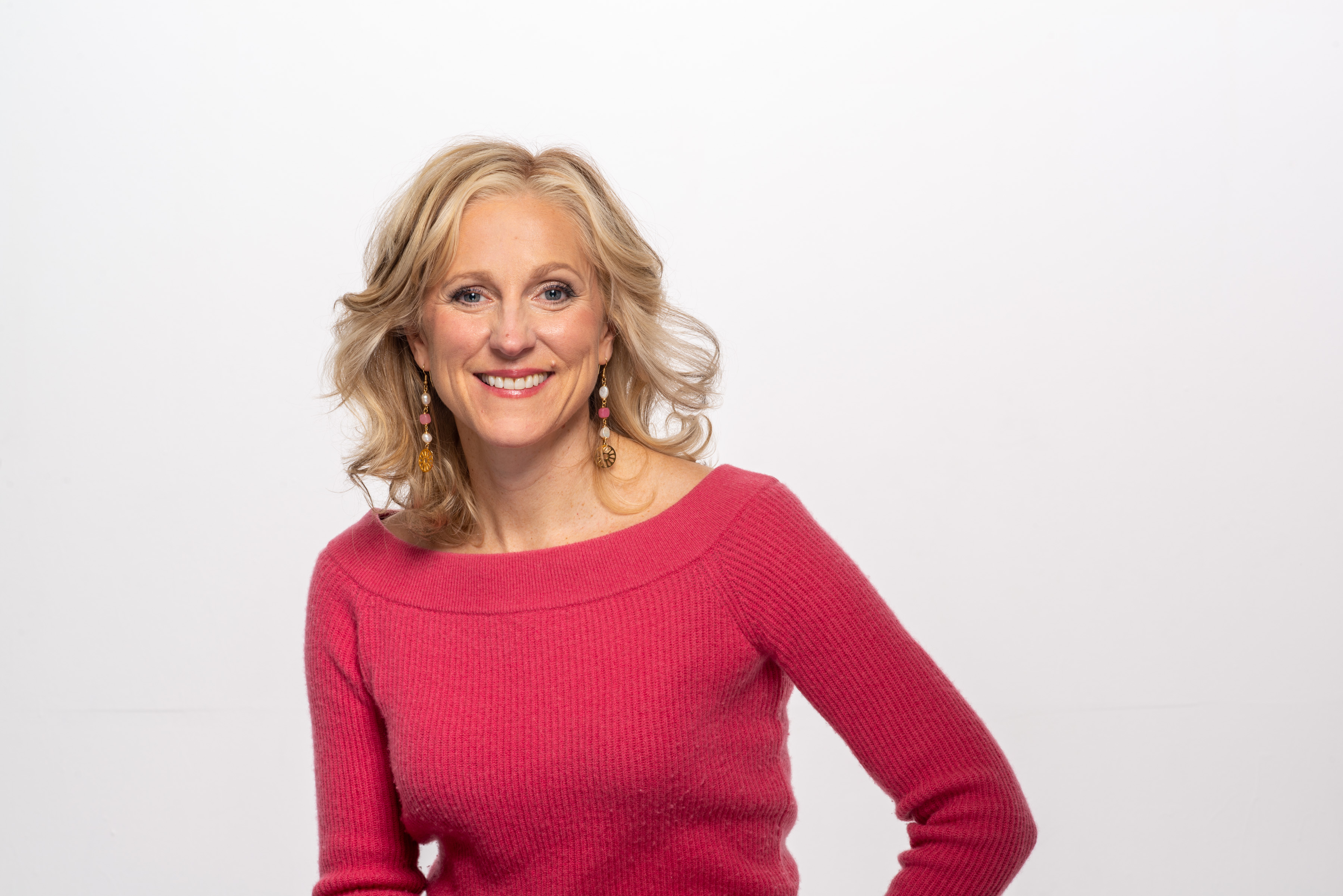
Emotional Eating Expert and TEDx Speaker
Tricia Nelson lost fifty pounds by identifying and healing the underlying causes of her emotional eating. Tricia spent years masking her painful emotions with food. She has spent the past thirty years researching the hidden causes of the addictive personality. Based on her research and personal experience of healing, Tricia developed a step-by-step process for overcoming emotional eating.
Tricia’s proprietary system includes identifying the common personality traits that lead to overeating, which she lays out in her “Anatomy of the Emotional Eater”; learning how to "de-stress and eat less” by practicing her "6 Self-Care Success Secrets"' and sleuthing out one of the three of the primary triggering emotions when one is tempted to overindulge (she refers to as the “PEP Test”). Tricia’s Heal Your Hunger system and online programs have helped over 1,000 women transform their relationship with food. PainKiller. Escape. Punishment
Tricia is the author of the #1 bestselling book, Heal Your Hunger, 7 Simple Steps to End Emotional Eating Now and is the host of the popular podcast, Confessions of a Binge Eater. Tricia’s TEDx talk has garnered over 1 million views. Tricia speaks on stages worldwide and frequents media such as NBC, CBS, KTLA, FOX and The List. Tricia lives in Los Angeles and spends part of her summers sailing on the coast of Maine with her life partner.